The Ultimate Guide to the Perfect Roast Turkey: A Thanksgiving Dinner Classic Worth Mastering
Have you ever wondered why some home cooks can produce a Roast Turkey that’s both juicy and golden, while others end up with dry meat and overcooked skin? The secret lies not in complicated techniques but in understanding temperature control, brining, and resting. Preparing this dish at home isn’t just about saving money—it’s about creating a memorable centerpiece that brings family together, especially during a Thanksgiving dinner that you can tailor to your own tastes. From selecting the right bird to nailing the perfect internal temperature, this guide will transform your holiday cooking.
Ingredients & Kitchen Tools
Here’s everything you’ll need to create a showstopping roast turkey.
Ingredients
– Whole turkey (12–14 lbs) – Fresh or fully thawed frozen; choose organic or free-range for richer flavor.
– Kosher salt (½ cup) – For dry brine; enhances moisture and seasoning deep into meat.
– Black pepper (2 tbsp) – Freshly ground for peppery kick.
– Garlic powder (1 tbsp) – Adds savory depth without overpowering.
– Onion powder (1 tbsp) – Complements garlic and helps caramelization.
– Unsalted butter (½ cup, softened) – Basted under skin for crispiness and flavor.
– Fresh herbs (rosemary, thyme, sage) – Each 4–5 sprigs; infuse aroma during roasting.
– Olive oil (2 tbsp) – Helps browning on skin.
– Carrots, celery, onion (roughly chopped) – For the roasting pan; creates natural gravy base.
– Chicken or turkey broth (1 cup) – Keeps pan juices from burning.
Kitchen Tools & Utensils
– Roasting pan with rack – Elevates turkey for even heat circulation.
– Instant-read meat thermometer – Essential for accuracy; avoid guessing doneness.
– Baster or silicone brush – For applying butter and juices.
– Kitchen twine – To truss legs for even cooking.
– Sharp carving knife and fork – For clean slices without shredding.
– Large cutting board – Preferably with a groove to catch juices.
– Aluminum foil – For tenting if skin overbrowns.
Optional substitutions: Ghee instead of butter (dairy-free), dried herbs if fresh unavailable (use 1 tsp per fresh sprig), and apple cider vinegar to deglaze pan for extra tang.
Prep Time & Cooking Schedule
Planning ahead ensures your holiday stress stays low. This schedule breaks down every phase.
| Stage | Time Required |
|——-|—————|
| Thawing (if frozen) | 24 hours per 4–5 lbs in refrigerator |
| Dry brine resting | 24–48 hours (uncovered in fridge) |
| Bringing to room temp | 1–2 hours before roasting |
| Roasting | 2½–3 hours at 325°F (12–14 lb bird) |
| Resting after roasting | 30–45 minutes (crucial for juicy meat) |
| Carving and serving | 15 minutes |
Why this matters: The dry brine needs at least 24 hours for salt to penetrate deep fibers. Resting allows juices to redistribute, preventing a dry texture. Always add 15–20 minutes buffer per pound if your turkey is larger than 14 lbs.
Step-by-Step Instructions
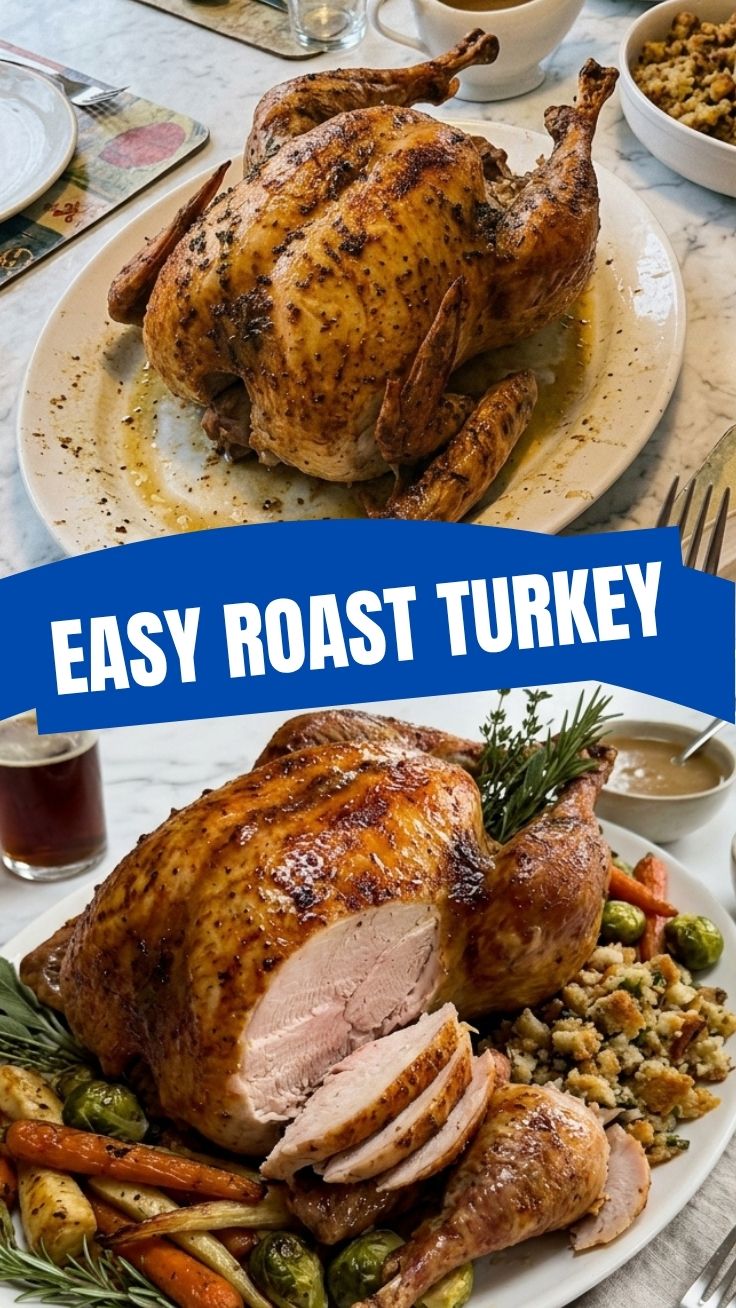
Follow these steps for a foolproof method that yields a Roast Turkey with crispy skin and tender meat—the perfect centerpiece for your Thanksgiving dinner.
1. Prepare the dry brine. Combine salt, pepper, garlic powder, and onion powder. Pat the turkey dry with paper towels—moisture prevents skin crisping. Rub the mixture all over, including under the skin of the breast and thighs. Place bird on a rack over a rimmed baking sheet, refrigerate uncovered for 24–48 hours. This step locks in moisture and seasons from within.
2. Bring turkey to room temperature. Remove from fridge 1–2 hours before roasting. This reduces cooking time and prevents uneven doneness. Meanwhile, preheat oven to 325°F (163°C) with rack in the lower third.
3. Apply butter and aromatics. Loosen skin over breast gently using your fingers. Spread softened butter under the skin and over the entire exterior. Place fresh herb sprigs in the cavity. Tuck wings under the bird and truss legs with kitchen twine.
4. Roast with confidence. Set turkey breast-side up on the roasting rack. Add chopped carrots, celery, onion, and broth to the pan. Roast uncovered for 2 hours, basting every 30 minutes with pan juices. If skin browns too quickly, tent loosely with foil.
5. Check temperature. Insert thermometer into the thickest part of the thigh without touching bone. Target 165°F (74°C). For breast, aim for 160°F (71°C) as carryover cooking will bring it to 165°F. Typically a 12–14 lb bird reaches doneness in 2½–3 hours.
6. Rest like a pro. Remove turkey from oven and transfer to a cutting board. Cover loosely with foil—do not wrap tightly or steam will soften skin. Let rest 30–45 minutes. This allows juices to settle, making carving easier and meat juicier.
7. Carve and serve. Remove twine. Using a sharp carving knife, slice each breast against the grain. Separate legs and thighs at the joint. Arrange on platter, drizzle with pan juices, and garnish with fresh herbs.
Pro tip for texture: If the turkey finishes cooking but skin lacks deep golden color, switch oven to broil for the final 3–4 minutes, watching closely to avoid burning.
Nutritional Benefits & Advantages
A well-prepared roast turkey is more than just delicious—it’s a powerhouse of lean protein. A 3-ounce serving of white meat provides about 25 grams of protein, minimal saturated fat, and essential B vitamins including niacin and B6 that support energy metabolism. Turkey also contains selenium, an antioxidant that supports thyroid function, and tryptophan, an amino acid that promotes serotonin production. When you skip excessive butter and oil, this dish fits seamlessly into low-carb, high-protein, or Paleo diets. Plus, the homemade version lets you control sodium levels (drastically lower than store-bought rotisserie birds) and avoid preservatives.
Tips Variations & Cooking Advice
Flavor variations: Swap classic herbs for a Cajun rub (paprika, cayenne, thyme) for a spicy kick, or try a citrus marinade (orange, lemon, lime) to brighten the profile. For an Asian-inspired twist, glaze with a mix of soy sauce, honey, and ginger during the last 30 minutes.
Alternative cooking methods:
– Spatchcocking (butterflying) cuts roasting time by 30–40% and ensures even cooking—flatten the bird by removing backbone, then roast at 425°F for about 70 minutes.
– Grilling adds smoky flavor; use indirect heat with wood chips for a 12 lb bird (2½–3 hours at 325°F).
Dietary adaptations: For dairy-free, replace butter with olive oil or plant-based butter. Gluten-free? Use tamari instead of soy sauce in glazes and ensure broth is certified gluten-free. Low-sodium option: reduce salt in dry brine to 2 tablespoons and use unsalted butter.
Portion changes: A 12–14 lb bird serves 8–10 people with leftovers. Scale up or down: 8–10 lb for 4–6, 16–18 lb for 12–14. Adjust roasting time by 5–7 minutes per pound.
Common Mistakes to Avoid
– Skipping the brine. Without dry brining, the meat dries out during roasting. Even a 12-hour brine makes a difference.
– Not patting dry. Moisture on the skin steams instead of crisps. Always use paper towels before applying rub.
– Overcooking. Using only a pop-up timer is risky—always rely on an instant-read thermometer. Remove the bird at 160°F (breast) and let carryover heat finish.
– Opening the oven repeatedly. Every peek releases heat and extends cooking time. Use oven light and baste quickly.
– Carving too early. Resting is non-negotiable. Cutting into hot turkey lets all juices run out, leaving dry meat.
Storage & Meal Prep Tips
Refrigeration: Carve leftover meat from the bone and store in airtight containers. Use within 3–4 days. Keep turkey separate from stuffing to avoid sogginess.
Freezing: Wrap portions tightly in plastic wrap then foil, or use freezer bags. Freeze up to 3 months. Label with date and portion size.
Reheating: For best texture, reheat slices in a covered baking dish with a splash of broth at 300°F for 15–20 minutes. Avoid microwaving, which makes meat tough. Alternatively, use leftover turkey in soups, salads, or sandwiches.
Broth from carcass: Simmer the bones with aromatics for 2–3 hours to create a nutrient-rich stock. Freeze in 2-cup portions for future recipes.
Conclusion
Mastering the art of a perfectly cooked Roast Turkey is a skill that will elevate every Thanksgiving dinner you host. By dry brining, monitoring temperature with precision, and allowing a proper rest, you ensure every bite is juicy, flavorful, and golden. The effort you invest pays off in more than just taste—it creates a comforting tradition that your family will look forward to year after year. I encourage you to try this method, note the differences, and experiment with the variations. Once you experience the difference, you’ll never settle for dry turkey again. Share your results—did you try a new herb blend? Let me know in the comments. And if you’re looking for other holiday classics, browse our collection of side dishes and desserts.
FAQs
1. Can I brine a turkey for less than 24 hours?
Yes, a minimum of 12 hours still helps, but 24–48 hours yields the deepest moisture and seasoning. For shorter brines, use a little more salt to speed absorption.
2. My turkey breast is dry but thighs are undercooked—what went wrong?
This often happens when the oven is too hot or the bird is not trussed. Use a lower temperature (325°F) and tuck wings, tie legs. Alternatively, spatchcock for even cooking.
3. How do I fix salty turkey if I over-brined?
Soak carved meat in unsalted broth or water mixed with lemon juice for 15–20 minutes. Rinse and pat dry. Next time, reduce salt in brine by half.
4. Can I stuff the turkey and still achieve safe cooking?
Yes, but only if you use a food-safe stuffing (cook to 165°F in the cavity). The danger is that stuffing can block heat, so increase roasting time by 30–45 minutes and double-check temperature.
5. Why is my skin tough and leathery instead of crispy?
Leathery skin often comes from not drying the bird thoroughly before roasting, or from covering it with foil too early. Always dry brine uncovered, and only tent if browning too fast in the last hour.
Quick way to grow Roast Turkey in 3 easy steps
Ingredients
Equipment
Method
- Preheat your oven to 375°F (190°C) and arrange the sliced turkey breast in a baking dish.
- Pour the broth over the turkey and sprinkle with herbs, salt, and pepper, then cover the dish with foil.
- Bake for 45-60 minutes until heated through, then remove the foil for the last 10 minutes to lightly brown if desired.