The Ultimate Wild Rice Pilaf Recipe: A Savory, Nutritious Side Dish You’ll Make on Repeat
Have you ever wanted a side dish that’s hearty enough to steal the spotlight yet versatile enough to complement almost any main course? That’s exactly what you get with a perfectly cooked Wild Rice Pilaf. This isn’t just any grain blend—it’s a nutty, chewy, and deeply satisfying dish that elevates weeknight dinners and holiday feasts alike. Preparing it at home not only saves money but also lets you control the flavor profile, sodium levels, and add‑ins. Whether you’re looking for healthy Wild rice recipes to round out your meal rotation or simply want a foolproof method for fluffy, flavorful rice, this guide has you covered. Let’s dive into the recipe, techniques, and tips that ensure perfect results every time.
Ingredients & Kitchen Tools
Ingredients
– 1 cup wild rice – Not a true rice but a grass seed; it has a firm texture and earthy flavor. Do not confuse with a wild rice blend.
– 2 cups low‑sodium vegetable or chicken broth – Adds depth; avoid plain water for best taste.
– 1 medium onion – Finely diced; yellow or sweet onion recommended.
– 2 cloves garlic – Minced.
– 1 medium carrot – Diced small.
– 1 celery stalk – Diced small.
– ½ cup dried cranberries – For sweetness and pop of color.
– ½ cup chopped pecans or slivered almonds – Toasted for extra crunch.
– 2 tablespoons olive oil or butter – For sautéing.
– 1 teaspoon dried thyme – Optional but classic.
– Salt and black pepper – To taste.
– Fresh parsley – Chopped, for garnish.
Kitchen Tools & Utensils
– Medium saucepan with tight‑fitting lid
– Cutting board and chef’s knife
– Measuring cups and spoons
– Wooden spoon or silicone spatula
– Colander (for rinsing wild rice)
– Small skillet (for toasting nuts)
Optional Substitutions
– Broth → Mushroom broth for deeper umami.
– Dried cranberries → Raisins, chopped apricots, or dried cherries.
– Nuts → Sunflower seeds or pumpkin seeds (nut‑free option).
– Olive oil → Coconut oil or ghee (dairy‑free if using oil).
Prep Time & Cooking Schedule
– Prep time: 15 minutes (wash, chop, measure)
– Cook time: 45–55 minutes (depending on rice brand)
– Resting time: 5–10 minutes after cooking (covered, off heat)
– Total time: Approximately 1 hour 10 minutes
Planning tip: Wild rice takes longer than white or brown rice, so start this dish while your main protein (roasted chicken, pork chops, or tofu) is in the oven. The timing works beautifully for a coordinated meal.
Step‑by‑Step Instructions
1. Rinse the wild rice under cold running water in a fine‑mesh strainer for 30 seconds. This removes excess starch and any debris.
2. Toast the nuts (optional but recommended): In a small dry skillet over medium heat, cook pecans or almonds for 2–3 minutes, stirring frequently until fragrant. Set aside.
3. Sauté aromatics: In a medium saucepan, heat olive oil (or butter) over medium‑high heat. Add onion, carrot, and celery. Cook 4–5 minutes until softened. Add minced garlic and thyme; cook 1 more minute.
4. Add rice and liquid: Stir in the rinsed wild rice, then pour in the broth. Add ½ teaspoon salt (or to taste) and a few grinds of black pepper. Bring to a boil.
5. Simmer covered: Reduce heat to low, cover tightly, and simmer for 45–55 minutes. Check at 40 minutes: rice should be tender and most liquid absorbed. If still hard, cook 5–10 more minutes. Temperature tip: Keep the heat low enough to maintain a gentle simmer—too high burns the bottom.
6. Fluff and rest: Remove from heat, leave covered, and let steam for 5–10 minutes. Then fluff with a fork.
7. Stir in add‑ins: Gently fold in dried cranberries, toasted nuts, and fresh parsley. Taste and adjust seasoning.
Chef’s note: For a more robust flavor, you can cook the Wild Rice Pilaf in half broth, half apple cider. This sweet‑savory twist pairs beautifully with roasted poultry. Many Wild rice recipes use similar techniques, but the key to fluffy grains is not lifting the lid during simmering—steam is your friend.
Nutritional Benefits & Advantages
This pilaf is a powerhouse of nutrition:
– Wild rice is a whole grain rich in fiber, B vitamins, magnesium, and zinc. It contains more protein than most other grains (about 5–6 grams per cooked cup).
– Cranberries provide antioxidants and vitamin C.
– Nuts offer healthy monounsaturated fats and vitamin E.
– Vegetables add fiber and phytonutrients.
The dish is naturally gluten‑free, low in saturated fat (if using oil), and can be made vegan by using vegetable broth and skipping butter. It’s also diabetic‑friendly due to its low glycemic index compared to white rice.
Tips, Variations & Cooking Advice
– Texture control: If you prefer a softer pilaf, cook 5–10 minutes longer with an extra ¼ cup broth. For a chewier bite, reduce liquid by ¼ cup and cook exactly 40 minutes.
– Flavor variations:
– Herb‑lover’s: Add 1 tablespoon fresh rosemary or sage with the garlic.
– Citrus twist: Stir in 1 teaspoon orange zest after cooking.
– Spicy: Add ¼ teaspoon red pepper flakes with the aromatics.
– Dietary adaptations:
– Gluten‑free: Already GF if using certified gluten‑free broth.
– Dairy‑free: Use olive oil instead of butter.
– Low‑FODMAP: Omit garlic and onion; use garlic‑infused oil and substitute leek greens or spring onion tops.
– Cooking method swap: Try cooking the pilaf in a rice cooker (use 2¼ cups broth per 1 cup rice) or instant pot (high pressure 25 minutes, natural release).
Common Mistakes to Avoid
| Mistake | Solution |
|——–|———-|
| Undercooked rice | Always rinse rice first; ensure liquid fully covers rice by 1 inch before simmering. |
| Mushy, broken grains | Do not stir while cooking. Wild rice splits naturally but excessive stirring ruins texture. |
| Burnt bottom | Keep heat low after boiling; use a heavy‑bottomed pan. |
| Forgot to season | Add salt at the beginning (½ teaspoon) and adjust after fluffing. |
| Soggy add‑ins | Fold nuts and dried fruit in after cooking, not during. |
Storage & Meal Prep Tips
– Refrigeration: Store cooled pilaf in an airtight container for up to 5 days.
– Freezing: Freeze in portion‑sized bags or containers for up to 3 months. Thaw overnight in the fridge.
– Reheating: To maintain texture, reheat in a covered skillet over medium‑low heat with a splash of broth or water (or in the microwave with a damp paper towel). Stir once halfway. Avoid high heat to prevent drying out.
– Meal prep: Make a double batch on Sunday. Divide into containers with roasted vegetables and protein for easy grab‑and‑go lunches. The flavors actually deepen the next day.
Conclusion
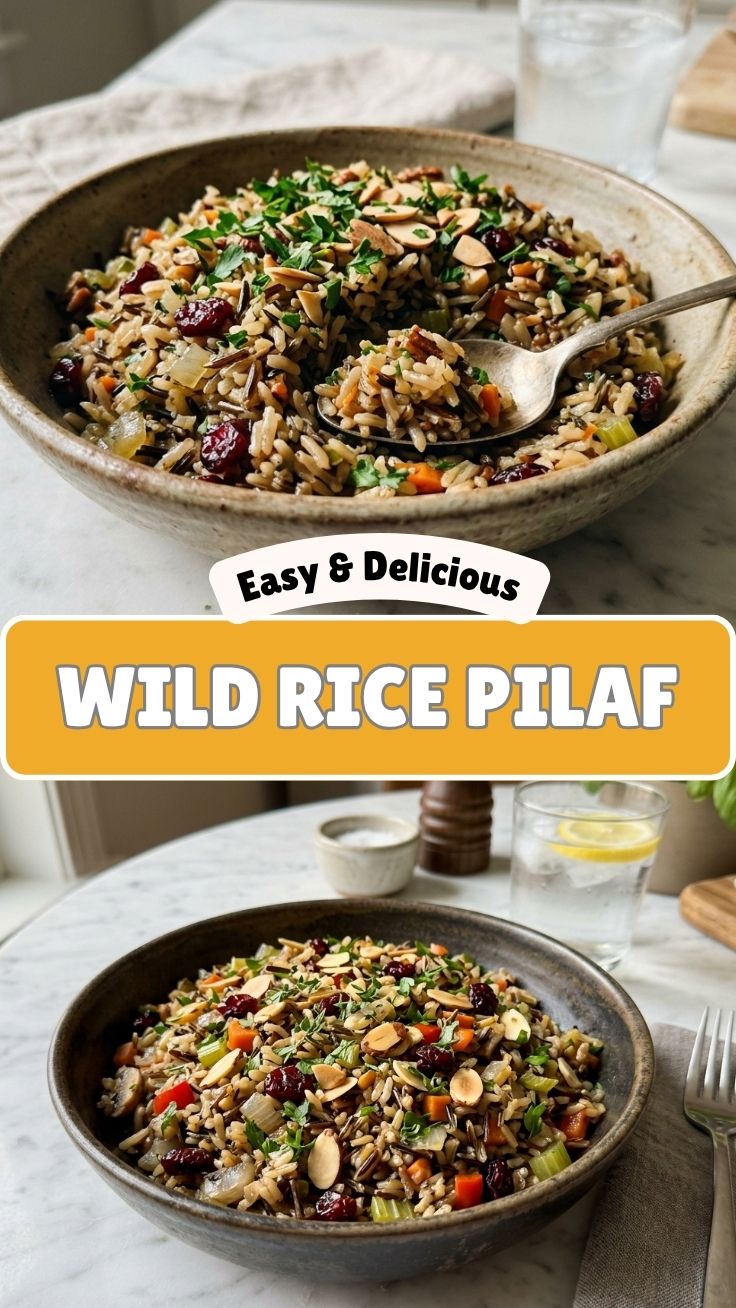
This Wild Rice Pilaf proves that a humble grain can become the star of your table—nutty, chewy, studded with sweet cranberries and crunchy nuts, and bursting with aromatic veggies. Whether you’re serving it alongside honey‑glazed chicken or stuffing it into roasted acorn squash, this recipe is a keeper. If you’re on the hunt for more Wild rice recipes, you’ll find endless inspiration from hearty soups to stuffed peppers. I encourage you to try this pilaf tonight, share your results in the comments, and explore related dishes that celebrate whole grains in delicious ways. Happy cooking!
FAQs (Frequently Asked Questions)
1. Can I use a wild rice blend instead of pure wild rice?
Yes, but adjust cooking time. Blends often contain brown rice and cook faster—usually 25–35 minutes. Reduce liquid to 1¾ cups per 1 cup blend and check at 20 minutes.
2. Why is my pilaf too salty?
If using salted broth or adding salt twice, reduce or omit initial salt. To fix, stir in a tablespoon of unsalted cooked white rice or a squeeze of lemon juice to balance.
3. Can I make this pilaf in an Instant Pot?
Absolutely. Sauté aromatics using the “Sauté” function. Add rinsed rice and broth (2 cups). Cook on High Pressure for 25 minutes, then Natural Release for 10 minutes. Quick release remaining pressure, fluff, and add cranberries and nuts.
4. How can I make this dish nut‑free?
Swap pecans or almonds for toasted sunflower seeds or pumpkin seeds. Or omit nuts entirely—add extra dried fruit or a handful of cooked lentils for protein.
5. Can I double the recipe?
Yes. Use a large pot (at least 5‑quart) and keep the same rice‑to‑liquid ratio. Cooking time may increase by 5–10 minutes due to larger volume. Do not crowd the pot—steam needs room to circulate.
Wild Rice Pilaf
Ingredients
Equipment
Method
- Rinse the wild rice thoroughly under cold water and finely chop the onion and celery.
- In a medium saucepan, melt the butter over medium heat. Add the chopped onion and celery, then sauté until softened, about 5 minutes.
- Stir in the rinsed wild rice, chicken broth, salt, and pepper. Bring the mixture to a boil, then reduce heat to low, cover, and simmer for 40-45 minutes, or until the rice is tender and the liquid is absorbed.
- Fluff the pilaf with a fork before serving warm as a side dish to your favorite main course.