The Ultimate Guide to Perfect Meatloaf: A Comfort Food Classic Worth Mastering
Have you ever wondered why some Meatloaf turns out perfectly moist and flavorful, while others end up dry and bland? The secret lies in technique, ingredient ratios, and a few pro-level tips that transform simple ground beef into a tender, savory masterpiece. Making this classic dish at home not only saves money but gives you complete control over quality and flavor. Whether you’re feeding a family or meal-prepping for the week, mastering meatloaf is a skill that pays delicious dividends.
Ingredients & Kitchen Tools
For the Meatloaf:
– 2 lbs ground beef (80/20 blend) – The 20% fat content ensures juiciness; leaner blends risk dryness
– 1 cup breadcrumbs (plain or panko) – Acts as a binder; panko creates a lighter texture
– 2 large eggs, lightly beaten – Helps bind ingredients together
– 1/2 cup whole milk – Adds moisture; buttermilk offers tangy depth
– 1 medium yellow onion, finely diced – Provides sweetness and texture
– 3 cloves garlic, minced – Essential for savory aroma
– 1/4 cup fresh parsley, chopped – Brightens the flavor profile
– 2 tbsp Worcestershire sauce – Adds umami and complexity
– 1 tsp kosher salt + 1/2 tsp black pepper
– 1/2 tsp smoked paprika – Optional, but adds subtle smokiness
For the Glaze:
– 1/2 cup ketchup
– 2 tbsp brown sugar
– 1 tbsp apple cider vinegar
– 1 tsp Dijon mustard
Kitchen Tools:
– Large mixing bowl (metal or glass)
– 9×5-inch loaf pan (or baking sheet for free-form)
– Sharp chef’s knife
– Cutting board
– Measuring cups and spoons
– Small bowl for glaze
– Meat thermometer (digital preferred)
– Parchment paper or foil
Optional substitutions: Gluten-free? Use crushed pork rinds or gluten-free oats instead of breadcrumbs. Dairy-free? Replace milk with unsweetened almond milk or beef broth.
Prep Time & Cooking Schedule
| Stage | Time | Notes |
|——-|——|——-|
| Prep time | 15 minutes | Dice onion, mince garlic, gather ingredients |
| Cooking time | 55–65 minutes | At 350°F, until internal temp reaches 160°F |
| Resting time | 10–15 minutes | Essential for juices to redistribute |
Plan ahead: The meatloaf can be assembled up to 24 hours in advance and stored in the refrigerator. This allows flavors to meld beautifully. If time is tight, using pre-diced frozen onions (thawed and drained) can knock 5 minutes off prep.
Step-by-Step Instructions
1. Preheat oven to 350°F and line a rimmed baking sheet with parchment paper (or lightly grease a loaf pan).
2. Sauté the aromatics – In a small skillet over medium heat, cook the diced onion in 1 tablespoon olive oil for 4–5 minutes until translucent. Add garlic and cook 30 seconds more. Let cool completely—this prevents the heat from cooking the raw meat prematurely.
3. Create the panade – In a large bowl, combine breadcrumbs and milk. Let sit for 3 minutes until the breadcrumbs absorb the liquid. This mixture keeps your Meatloaf exceptionally tender.
4. Combine ingredients – Add the ground beef, cooled onions/garlic, beaten eggs, parsley, Worcestershire sauce, salt, pepper, and smoked paprika to the panade. Mix gently with your hands—overworking develops toughness. Stop as soon as ingredients are evenly distributed.
5. Shape the loaf – Transfer the mixture to the prepared baking sheet (or loaf pan). Form into a compact loaf shape about 8×4 inches. Smooth the surface with wet hands for a clean finish.
6. Apply the glaze – In a small bowl, whisk ketchup, brown sugar, vinegar, and mustard. Spread half the glaze over the top and sides of the uncooked loaf.
7. Bake – Place on the middle rack and bake for 45 minutes. Remove from oven, spread remaining glaze evenly, and return to oven. Continue baking 10–20 minutes, or until a meat thermometer inserted into the center reads 160°F.
8. Rest – Allow the meatloaf to rest for 10–15 minutes on the pan. This step is non-negotiable: slicing too early causes precious juices to run out, leaving you with a dry interior.
Pro tip: If you prefer a caramelized crust, switch the oven to broil for the final 2–3 minutes after glazing. Watch closely to prevent burning.
Nutritional Benefits & Advantages
This classic meatloaf offers surprising nutritional value for a comfort food. Each 6-ounce serving provides approximately:
– 28g protein – Ground beef is a complete protein, supporting muscle repair and satiety
– Iron (15% DV) – Essential for oxygen transport in the blood
– Zinc (30% DV) – Supports immune function and wound healing
– B vitamins – Particularly B12 and niacin for energy metabolism
Choosing 80/20 ground beef delivers conjugated linoleic acid (CLA), a beneficial fatty acid associated with reduced inflammation. The onion and garlic add prebiotic fibers that support gut health, while the parsley contributes vitamin K for bone health.
Note: To reduce saturated fat, substitute half the ground beef with lean ground turkey or plant-based crumbles.
Tips, Variations & Cooking Advice
Flavor Twists:
– Italian-style – Add 1 tsp dried oregano, 1 tsp fennel seeds, and 1/4 cup grated Parmesan to the mixture
– Tex-Mex – Replace parsley with cilantro, add 1/4 cup salsa to the meat, and top with chipotle-infused ketchup
– Smoky bacon–wrapped – Weave bacon strips over the top before baking for extra richness
Cooking Methods:
– Air fryer – Cook at 350°F for 30–35 minutes (flatten loaf to 1.5 inches thick for even cooking)
– Slow cooker – Form into a loaf shape, place on foil sling, and cook on low for 4–5 hours
– Grill – Use indirect heat at 350°F for 45–55 minutes; avoid flare-ups from the sugary glaze
Dietary Adaptations:
– Gluten-free – Use crushed cassava chips or gluten-free breadcrumbs; confirm Worcestershire sauce is GF (Lea & Perrins is)
– Dairy-free – Substitute milk with unsweetened oat milk; skip butter in sautéing
Common Mistakes to Avoid
| Mistake | Solution |
|———|———-|
| Overmixing | Mix until just combined—count 15–20 gentle folds maximum. Overworking compacts the proteins, creating a dense brick. |
| Skipping the panade | The breadcrumb-milk mixture is your insurance against dryness. Never omit it. |
| Using lean meat | Ground beef with less than 15% fat produces dry results. If using 93/7, add 2 tbsp olive oil or grated zucchini. |
| Not using a thermometer | Guesswork leads to overdone or undercooked centers. 160°F is your target for food safety and texture. |
| Slicing too soon | Cutting into the meatloaf before resting causes juices to spill onto the cutting board. Patience pays off. |
Storage & Meal Prep Tips
Refrigeration: Store cooled leftovers in an airtight container for up to 4 days. Wrap individual slices in parchment paper for grab-and-go lunches.
Freezing: The cooked meatloaf freezes beautifully for up to 3 months. Wrap tightly in plastic wrap, then foil, or use a vacuum sealer. Thaw overnight in the refrigerator before reheating.
Reheating Instructions:
– Oven – 350°F for 10–12 minutes, covered with foil to prevent drying
– Microwave – 45–60 seconds per slice on medium power; place a damp paper towel over the plate
– Air fryer – 350°F for 3–4 minutes for a crispy exterior
Meal prep bonus: Double the recipe and freeze one uncooked loaf (without glaze) for later. Thaw in fridge overnight, glaze, and bake as directed.
Conclusion
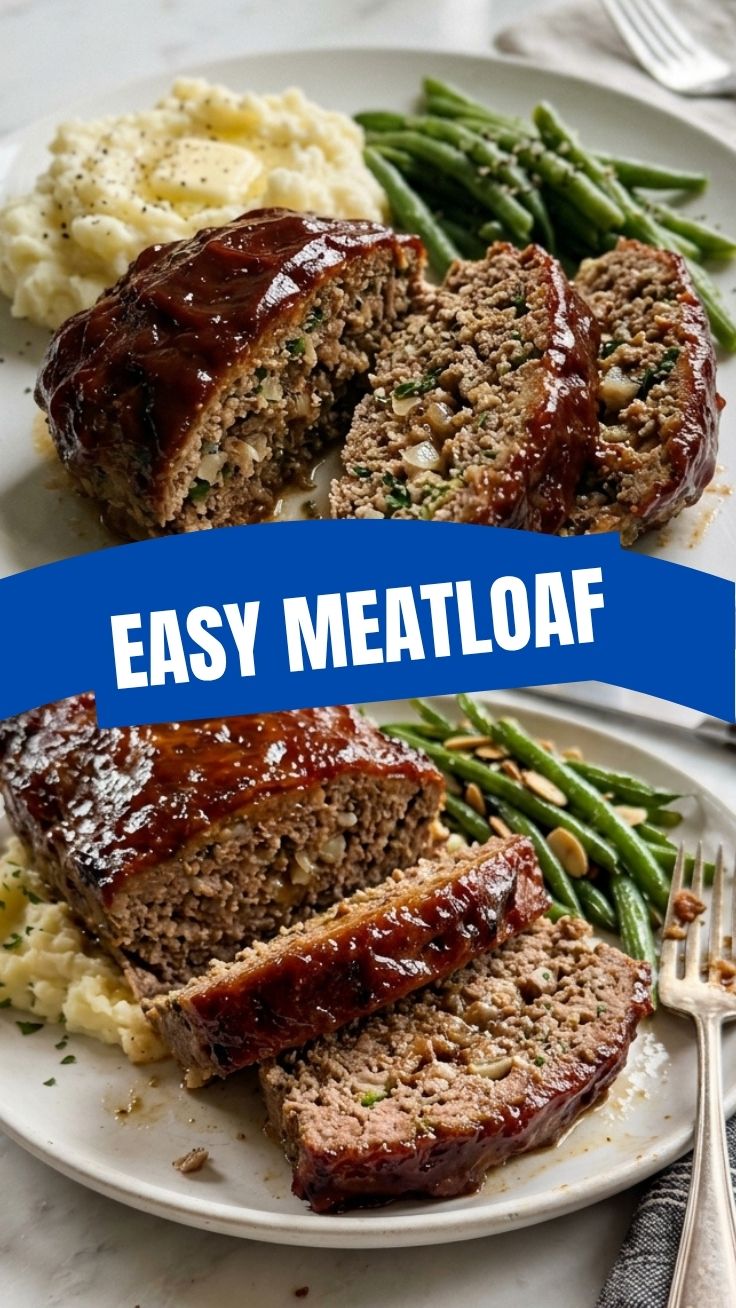
Mastering Meatloaf is about understanding the science of moisture, the art of seasoning, and the patience of resting. When you start with quality ground beef and follow these precise techniques, you’ll consistently produce a tender, flavorful dish that rivals any restaurant version. The glaze caramelizes into a sticky-sweet crust, the interior stays juicy, and every slice holds together beautifully. Whether you serve it with mashed potatoes, roasted vegetables, or between two slices of bread for the ultimate leftover sandwich, this recipe deserves a regular spot in your meal rotation.
Try this recipe this weekend and share your results in the comments—I’d love to hear how your glaze turns out or if you invented a creative variation. For more comfort food classics, explore our companion guides on shepherd’s pie and beef stroganoff.
FAQs
Q: Can I use ground turkey or chicken instead of ground beef?
A: Absolutely. Just add 1–2 tablespoons of olive oil and 1 extra egg yolk to compensate for the lower fat content. Cook to 165°F internal temperature.
Q: Why did my meatloaf fall apart when slicing?
A: Three possible reasons: not enough binder (increase breadcrumbs by 2 tbsp), under-resting (always wait 10 minutes), or overmixing (which can actually weaken the protein structure). Check your ratios next time.
Q: Can I make this meatloaf without eggs?
A: Yes. Substitute each egg with 3 tablespoons of unsweetened applesauce or 1 tablespoon of ground flaxseed mixed with 3 tablespoons of water (let sit 5 minutes to gel).
Q: How do I prevent the glaze from burning?
A: Apply the second half of the glaze halfway through baking, not at the beginning. If your oven runs hot, tent the loaf loosely with foil for the last 15 minutes.
Q: Is it safe to reheat leftover meatloaf more than once?
A: For safety and quality, reheat only the portion you plan to eat. Repeated heating increases the risk of bacterial growth and dries out the meat.
Quick way to grow your best classic Meatloaf in 1 panMeatloaf
Ingredients
Equipment
Method
- Preheat your oven to 350°F (175°C) and lightly grease a large baking pan.
- In a large bowl, combine the ground beef, breadcrumbs, milk, egg, chopped onion, minced garlic, ketchup, Worcestershire sauce, salt, and black pepper. Mix thoroughly until all ingredients are well incorporated, but avoid overmixing.
- Shape the meat mixture into a loaf and place it in the prepared baking pan.
- In a small bowl, whisk together the ketchup, brown sugar, and Dijon mustard for the glaze. Spread this glaze evenly over the top of the meatloaf.
- Bake for 50-60 minutes, or until the internal temperature reaches 160°F (71°C).
- Remove the meatloaf from the oven and let it rest for 10 minutes before slicing and serving.