Why This Greek Salad Will Become Your Go-To Summer Meal
Have you ever bitten into a restaurant Greek salad and wondered why it tastes so much better than the ones you make at home? The secret isn’t complicated techniques or hard-to-find ingredients—it’s about understanding the balance of flavors and textures that make this dish truly shine. Preparing this Greek Salad at home gives you complete control over quality, freshness, and customization, while saving money and reducing food waste. Plus, by embracing the core principles of the Mediterranean diet, you’re investing in a eating pattern backed by decades of nutritional research for longevity and wellness.
—
Ingredients & Kitchen Tools
Fresh Produce
– 4 large ripe tomatoes – Use Roma or vine-ripened; avoid refrigerated tomatoes as they lose flavor
– 1 English cucumber – Partially peeled for visual appeal; seeds are fine
– 1 medium red onion – Thinly sliced; soak in cold water 10 minutes to reduce sharpness
– 1 green bell pepper – Deseeded and sliced into rings
– 1/2 cup Kalamata olives – Pitted preferred; substitute with Castelvetrano for milder flavor
Cheese & Herbs
– 200g block feta cheese – Never pre-crumbled; brine-packed feta offers superior texture
– 2 tablespoons fresh oregano – Or 1 teaspoon dried Greek oregano
– Fresh parsley for garnish – Optional but adds brightness
Dressing Components
– 1/4 cup extra virgin olive oil – Must be good quality; single-origin Greek preferred
– 2 tablespoons red wine vinegar – Substitute with lemon juice for variation
– 1 teaspoon dried oregano – Rub between palms to release oils
– Salt and black pepper – Flaky sea salt works best
Kitchen Tools
– Large mixing bowl
– Sharp chef’s knife
– Cutting board
– Measuring spoons
– Small jar for dressing (optional but useful)
—
Prep Time & Cooking Schedule
Total active time: 15 minutes
Resting time: 10 minutes (essential for flavor development)
Total time: 25 minutes
The beauty of this dish is its simplicity. While the actual prep takes under 20 minutes, letting the salad sit for 10 minutes before serving allows the tomatoes to release their juices and the dressing to penetrate the vegetables. This is non-negotiable for achieving authentic flavor. Plan to serve immediately after resting—this salad does not refrigerate well once dressed.
—
Step-by-Step Instructions
Step 1: Prepare the vegetables
Cut tomatoes into wedges or large chunks—avoid dicing too small, as they release too much liquid. Slice cucumber into half-moons about 1/2-inch thick. Thinly slice red onion into rings, then separate the rings. Slice bell pepper into rings and remove seeds and membranes.
Step 2: Build the salad base
In a large bowl, combine tomatoes, cucumber, onion, bell pepper, and olives. Do not add the feta yet. This allows the vegetables to absorb the dressing first.
Step 3: Make the dressing
Whisk together olive oil, red wine vinegar, dried oregano, salt, and pepper in a small bowl. Taste and adjust—the dressing should be tangy and herbaceous. For a true Greek Salad, the dressing should be bold enough to cut through the richness of the feta.
Step 4: Dress and rest
Pour dressing over vegetables and toss gently. Let rest for 10 minutes at room temperature. This step is crucial for flavor development; the vegetables macerate slightly, creating a light, flavorful juice.
Step 5: Add feta and finish
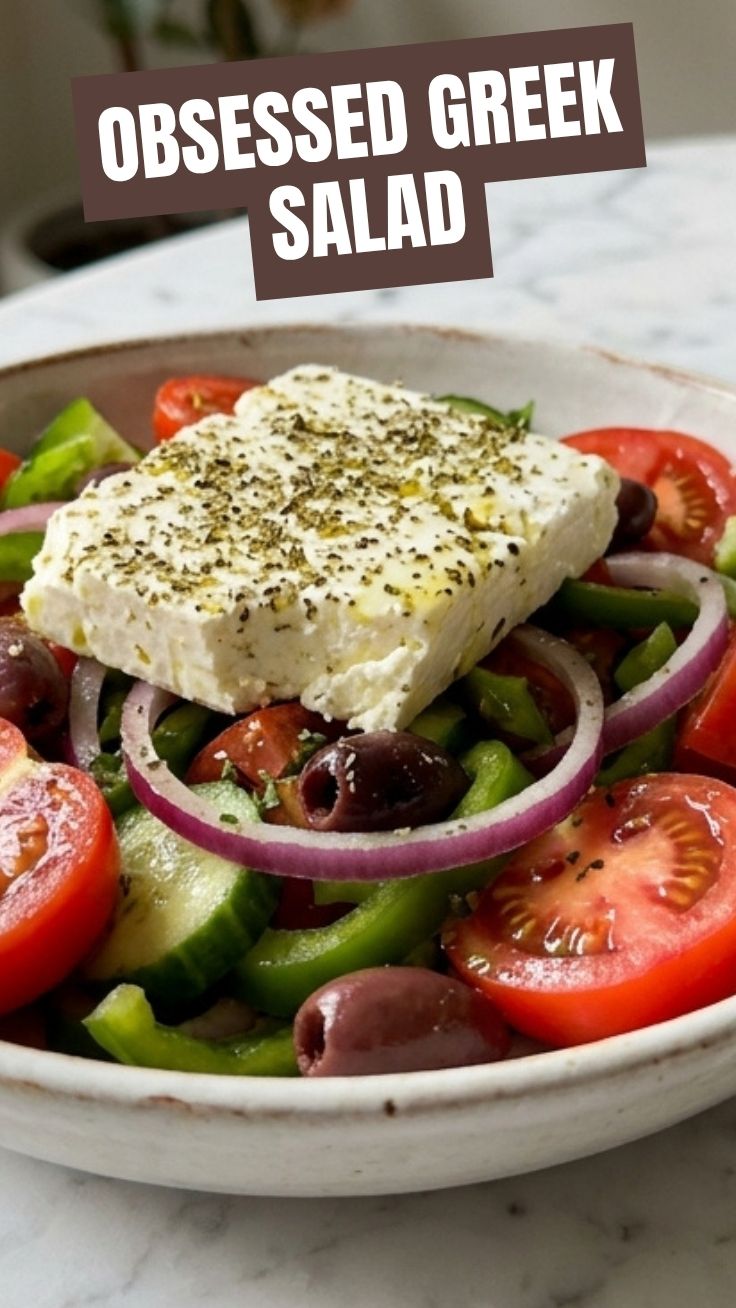
Place the block of feta on top of the salad—do not crumble it. Drizzle with a little extra olive oil, sprinkle fresh oregano, and finish with cracked black pepper. This presentation is traditional and allows each person to cut their own portion. The Mediterranean diet emphasizes whole, minimally processed ingredients, and this preparation honors that philosophy.
—
Nutritional Benefits & Advantages
This salad is a nutritional powerhouse. Tomatoes provide lycopene, a powerful antioxidant linked to reduced heart disease risk, which is better absorbed when paired with olive oil. Feta cheese offers calcium and protein while being lower in fat than many aged cheeses. Olive oil is rich in monounsaturated fats and polyphenols that reduce inflammation. The high fiber content from vegetables supports digestive health and satiety. A single serving contains approximately 280 calories, 18g of healthy fat, and 8g of protein, making it either a satisfying side or a light main course.
—
Tips Variations & Cooking Advice
Flavor variations:
– Add chickpeas for protein and fiber (popular in Mediterranean diet variations)
– Include capers for extra brininess
– Substitute mint or dill for oregano
Dietary adaptations:
– Dairy-free: Use marinated tofu or cashew cheese
– Low-sodium: Rinse olives and use reduced-salt feta
– Gluten-free: Naturally gluten-free, but check vinegar labels
Portion changes:
– For a main course: Add grilled chicken, shrimp, or chickpeas
– For a side: Reduce feta and olives by half
Alternative methods:
– Try grilling the bell pepper and onion for a smoky twist
– Serve inside a hollowed-out tomato or bell pepper for a deconstructed version
—
Common Mistakes to Avoid
Mistake 1: Using pre-crumbled feta – It’s coated in cellulose to prevent clumping and lacks the creamy texture of block feta. Solution: Always buy block feta and cut it yourself.
Mistake 2: Chopping vegetables too small – This creates a watery, mushy salad. Solution: Keep pieces large—wedges, not dices.
Mistake 3: Dressing too early – If you dress and refrigerate, the vegetables become limp. Solution: Dress just before serving, or keep dressing separate.
Mistake 4: Skipping the resting period – The magic happens when salt draws moisture from tomatoes, creating a natural dressing. Solution: Always rest 10 minutes.
Mistake 5: Using low-quality olive oil – This is the star ingredient; poor oil ruins the dish. Solution: Taste your oil first; it should be peppery and fruity.
—
Storage & Meal Prep Tips
Refrigeration: Store undressed salad (without feta) in an airtight container for up to 2 days. Keep dressing separate. Add feta and dress just before serving.
Freezing: Not recommended—vegetables become mushy and waterlogged upon thawing.
Meal prep: Chop vegetables and store in separate containers. Make dressing in a jar. Combine only when ready to eat. Pre-crumbled feta will lose moisture, so keep it as a block until serving.
Reheating: This salad is served cold. If refrigerated, let it sit at room temperature for 15 minutes before serving to restore flavor.
—
Conclusion
This Greek Salad proves that simplicity, when executed with care, creates something truly memorable. By focusing on quality ingredients and proper technique, you transform everyday vegetables into a dish that celebrates the vibrant flavors of the Mediterranean diet. The key takeaways are simple: use fresh, ripe produce, invest in good olive oil, and never skip the resting period. Try this recipe this week and experience how a few small changes can elevate your cooking. Share your results in the comments or tag us with your creation—we’d love to see how it turns out!
—
FAQs
Can I use cherry tomatoes instead of large tomatoes?
Yes, but halve them and expect less juice—this will reduce the natural dressing effect. Add a splash more vinegar if needed.
How do I stop the onion from being too sharp?
Soak sliced onion in cold water for 10 minutes, then drain and pat dry. This mellows the bite without losing crunch.
Can I make this salad ahead of time?
Only if you keep dressing and feta separate. Combine components no more than 30 minutes before serving. The salad does not keep well once dressed.
What’s the best feta cheese for this recipe?
Greek feta made from sheep’s milk or a sheep-goat blend. Avoid French or Danish feta, which are creamier and less salty.
Is this salad suitable for weight loss?
Absolutely. It’s nutrient-dense, high in fiber, and moderate in calories. The healthy fats from olive oil and feta promote satiety, helping you feel full longer.
Best way to grow a 7-Ingredient Greek Salad
Ingredients
Equipment
Method
- Dice the cucumber, tomatoes, and thinly slice the red onion.
- Combine the prepared vegetables with Kalamata olives and crumbled feta cheese in a large bowl.
- Drizzle the extra virgin olive oil over the salad and sprinkle with dried oregano.
- Toss gently to combine all ingredients and serve immediately.