Perfect Baked Tilapia: A Simple and Healthy Dinner Option
Have you ever struggled to cook fish that turns out dry or bland? I remember my first attempt at baking fish—it was a disaster. But with the right technique, you can master Baked Tilapia that is juicy and full of flavor. Making it at home saves money, reduces sodium, and allows you to experiment with various tilapia recipes that suit your taste. Baked tilapia is a versatile, affordable protein that cooks quickly, making it ideal for busy weeknights. Whether you’re a novice or a seasoned cook, this recipe delivers consistent results with minimal effort.
Ingredients & Kitchen Tools
Ingredients:
– 4 tilapia fillets (about 6 oz each) – mild flavor, sustainable option.
– 2 tbsp olive oil – for moisture; substitute with avocado oil.
– 2 tbsp lemon juice – adds acidity and brightness.
– 2 cloves garlic, minced – fresh preferred, or ½ tsp garlic powder.
– 1 tsp paprika – for color and mild smokiness.
– ½ tsp salt – adjust based on dietary needs.
– ¼ tsp black pepper – freshly ground for best flavor.
– 2 tbsp fresh parsley, chopped – garnish; optional.
Kitchen Tools:
– Baking sheet – rimmed to catch juices.
– Parchment paper or aluminum foil – for easy cleanup.
– Small mixing bowl – for seasoning blend.
– Pastry brush – for even coating.
– Tongs – for handling fillets.
– Instant-read thermometer – optional but recommended for precision.
Substitutions: Use butter instead of olive oil for richer flavor. Swap lemon with lime or orange juice. Add cayenne for heat or dill for herbal notes.
Prep Time & Cooking Schedule
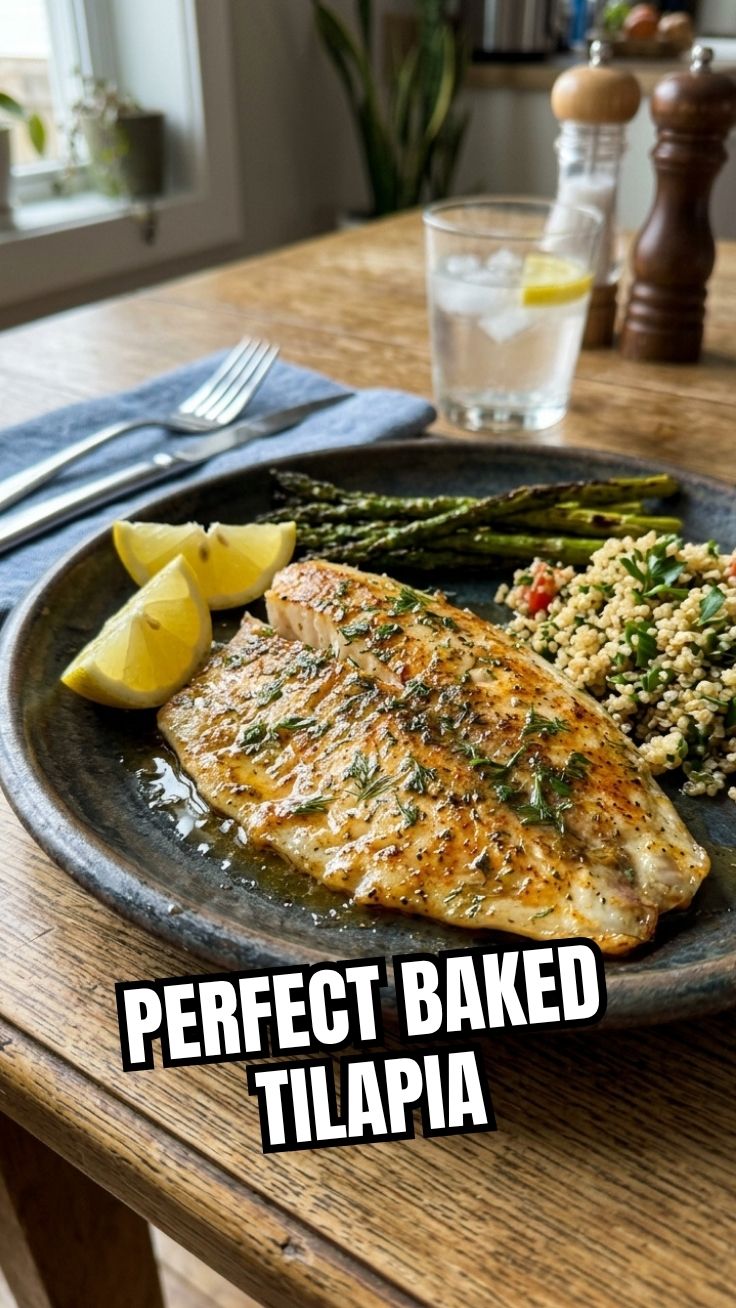
– Prep time: 10 minutes – pat fillets dry, mix seasonings.
– Optional marinating time: 15 minutes – allows flavors to penetrate.
– Cook time: 12–15 minutes at 400°F (200°C) – exact time depends on fillet thickness.
– Resting time: 5 minutes – lets juices redistribute for moist results.
– Total time: 30–35 minutes – perfect for a quick dinner after work.
Plan ahead: This dish pairs well with steamed vegetables or rice, which can cook while the fish bakes. For busy nights, marinate the fillets in the morning for deeper flavor.
Step-by-Step Instructions
1. Preheat your oven to 400°F (200°C). Line a baking sheet with parchment paper or foil to prevent sticking.
2. Prepare the seasoning blend: In a small bowl, whisk together olive oil, lemon juice, minced garlic, paprika, salt, and black pepper until combined.
3. Brush the fillets: Use a pastry brush to coat both sides of each tilapia fillet with the mixture. Reserve a small amount for basting.
4. Arrange on the baking sheet: Place fillets in a single layer, spaced apart for even heat circulation. Drizzle any remaining seasoning over the top.
5. Bake for 12–15 minutes, until the fish flakes easily with a fork and the internal temperature reaches 145°F. The edges should be slightly golden.
6. Garnish with fresh parsley and serve immediately with lemon wedges.
Practical tips: For even cooking, ensure fillets are of similar thickness. If using frozen fillets, thaw completely in the refrigerator and pat dry before baking. The seasoning blend can be doubled for extra flavor. This method ensures your Baked Tilapia remains tender every time. For more inspiration, explore other tilapia recipes that incorporate different herbs and spices.
Nutritional Benefits & Advantages
Tilapia is a lean source of protein, providing about 21 grams per 3-ounce serving. It’s low in saturated fat and rich in selenium, an antioxidant that supports thyroid function, and niacin (vitamin B3), which aids metabolism. Baked preparation avoids added oils or breading, keeping calories moderate (around 110 calories per fillet). This dish fits heart-healthy diets, low-carb regimens (like keto), and gluten-free lifestyles naturally. The lemon and paprika enhance flavor without reliance on salt, making it suitable for sodium-conscious eaters. Additionally, the omega-3 fatty acids in tilapia support brain health, though levels are lower than in salmon.
Tips Variations & Cooking Advice
Flavor variations:
– Lemon-herb: Increase lemon juice and add fresh dill or thyme.
– Spicy Cajun: Use cayenne, smoked paprika, and onion powder.
– Tropical: Substitute lime juice and add a pinch of cumin.
Cooking methods:
– Air-fryer: Cook at 375°F for 8–10 minutes, flipping halfway.
– Pan-seared: Sear in a hot skillet for 3 minutes per side, then finish in the oven.
Dietary adaptations:
– Dairy-free: Use olive oil instead of butter.
– Low-fat: Reduce oil to 1 tablespoon and add a splash of broth.
Cooking advice: For thinner fillets (less than ½ inch), reduce cook time to 10 minutes. Always rest the fish after baking to prevent dryness.
Common Mistakes to Avoid
– Overcooking: This is the top culprit of dry fish. Start checking at 12 minutes. The residual heat will continue cooking during resting.
– Underseasoning: Tilapia is mild; don’t be shy with salt, acid, and spices. Taste the seasoning blend before applying.
– Skipping the pat-dry step: Moisture on the fillet surface prevents browning and leads to steaming. Blot with paper towels thoroughly.
– Overcrowding the pan: Fillets should not touch. Use two baking sheets if needed for even cooking.
– Ignoring temperature: Use an instant-read thermometer for precision; 145°F is the goal. If you don’t have one, test with a fork.
Storage & Meal Prep Tips
Refrigeration: Store leftover baked tilapia in an airtight container for up to 3 days. Keep separate from strong-smelling foods to avoid odor transfer.
Freezing: Wrap cooled fillets individually in plastic wrap, then place in a freezer bag. They’ll keep for up to 2 months. Thaw overnight in the fridge before reheating.
Reheating: To maintain flakiness, reheat in a 350°F oven for 8–10 minutes, or in a skillet with a splash of water or lemon juice. Avoid the microwave, which can make fish rubbery.
Meal prep: Double the recipe and refrigerate half for quick lunches. The fillets can be flaked and added to salads or wraps.
Conclusion
In summary, this straightforward recipe proves that homemade Baked Tilapia need not be intimidating. With minimal ingredients and a short prep time, you can create a meal that rivals restaurant quality. Don’t stop here—experiment with different tilapia recipes to keep your dinners exciting. Baked tilapia is a nutritious canvas for your culinary creativity, and I encourage you to share your results or ask questions in the comments. Try it tonight and enjoy a satisfying, healthful dish!
FAQs
1. Can I use frozen tilapia fillets without thawing?
Yes, but you’ll need to increase bake time by 5–8 minutes and pat off excess ice before seasoning. Thawed fillets yield more even cooking.
2. How do I know when tilapia is fully cooked?
The flesh should be opaque and flake easily with a fork. For accuracy, use an instant-read thermometer—145°F at the thickest part.
3. What can I substitute for lemon juice?
Lime or orange juice works well. For acidity without citrus, try white wine vinegar or apple cider vinegar (use 1 tablespoon).
4. Why did my tilapia turn out rubbery?
Overcooking is the most common cause. Check doneness early and avoid baking beyond 15 minutes. Also, skip the microwave for reheating.
5. Can I add a breadcrumb topping?
Absolutely! Mix panko breadcrumbs with melted butter and Parmesan, then scatter over the fillets during the last 5 minutes of baking for crunch.
Quick way to grow 3 perfect Baked Tilapia
Ingredients
Equipment
Method
- Preheat your oven to 400°F (200°C) and lightly grease a baking sheet.
- Pat the tilapia fillets dry with paper towels to ensure a crispy texture.
- In a small bowl, combine olive oil, garlic powder, paprika, salt, and black pepper, then brush this mixture evenly over both sides of the tilapia fillets.
- Arrange the seasoned fillets on the prepared baking sheet and bake for 12-15 minutes, or until the fish flakes easily with a fork.
- Squeeze fresh lemon juice over the cooked tilapia before serving for added flavor.