The Ultimate Guide to Perfectly Baked Salmon: A Foolproof Recipe for Moist, Flaky Results Every Time
Have you ever wondered why restaurant salmon always turns out perfectly moist and flaky, while your home attempts sometimes end up dry or overcooked? The secret isn’t a fancy technique—it’s understanding the right temperature, timing, and a few pro-level tricks. Whether you’re a seasoned home cook or a kitchen beginner, mastering baked salmon opens the door to countless quick, healthy, and impressive meals. In this guide, we’ll walk through every detail so you can recreate that restaurant-quality dish in your own oven. We’ll even touch on the smoky elegance of cedar plank salmon as an alternative method. By the end, you’ll have all the tools to make this recipe a staple in your weekly rotation—without the stress.
—
Ingredients & Kitchen Tools
For the Baked Salmon
– Salmon fillets (6 oz each) – Skin-on or skinless, center-cut for even cooking.
– Olive oil – Helps the seasoning adhere and prevents sticking.
– Garlic (3–4 cloves, minced) – Fresh is best; jarred works in a pinch.
– Lemon (1 medium) – Zest and juice for brightness.
– Salt & black pepper – Kosher salt preferred.
– Dried herbs (oregano, thyme, or dill) – 1 teaspoon total.
– Optional: butter (2 tbsp) – Adds richness if you’re not dairy-free.
Kitchen Tools
– Baking sheet or oven-safe dish – Rimmed to catch juices.
– Parchment paper or foil – For easy cleanup.
– Instant-read thermometer – Ensures perfect doneness (125–130°F for medium).
– Fish spatula – Flexible metal for flipping or serving.
– Small bowl – For mixing the garlic-herb paste.
Substitutions
– Salmon type – Any wild or farmed variety works (sockeye, coho, Atlantic).
– Herbs – Swap dried for fresh (use 3x the amount).
– Oil – Avocado or coconut oil for higher smoke point.
– Dairy-free – Omit butter; use extra olive oil.
—
Prep Time & Cooking Schedule
| Phase | Time | Notes |
|——-|——|——-|
| Prep (seasoning & resting) | 10 minutes | Let salmon sit at room temp 5–10 min after seasoning. |
| Cook time | 12–15 minutes | For 1-inch thick fillets at 400°F. |
| Resting after baking | 3–5 minutes | Carry-over cooking finishes the center. |
| Total active time | ~30 minutes | Plus 10 min inactive. |
Plan ahead: If marinating, add 30 minutes (refrigerated). For cedar plank salmon, soak the plank 1–2 hours before cooking and adjust oven temperature to 375°F.
—
Step-by-Step Instructions
1. Preheat oven to 400°F (375°F if using cedar plank). Line a baking sheet with parchment.
2. Prepare the seasoning paste: In a small bowl, mix 2 tbsp olive oil, minced garlic, lemon zest (from half the lemon), ½ tsp salt, ¼ tsp pepper, and dried herbs.
3. Pat salmon dry with paper towels – this ensures crispy edges and better browning.
4. Place fillets skin-side down (if skin-on) on the prepared sheet. Spoon the paste evenly over each fillet, spreading to coat.
5. Bake for 12–15 minutes depending on thickness. The fish should be opaque and flake easily with a fork. For an extra golden top, switch to broil for the last 1–2 minutes.
6. Remove from oven and squeeze fresh lemon juice over the top. Let rest 3 minutes.
> Temperature cue: Insert a thermometer into the thickest part – aim for 125°F for medium (slightly translucent center) or 130°F for well-done. Remember, the baked salmon will continue cooking after removal. For a smoky twist, try cedar plank salmon – simply place the soaked plank directly on the oven rack and cook at 375°F for 15–20 minutes.
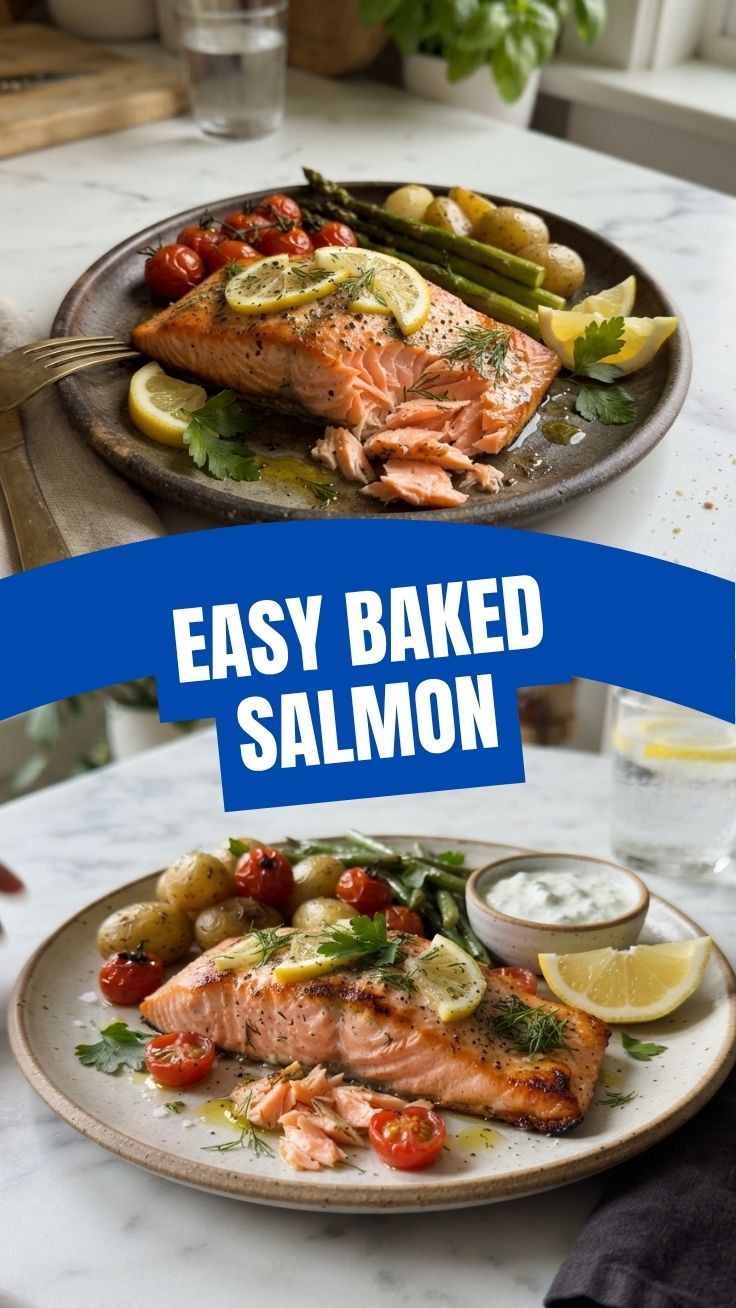
7. Serve immediately with your favorite sides (roasted asparagus, rice, or a simple salad).
—
Nutritional Benefits & Advantages
Salmon is a nutritional powerhouse:
– Omega-3 fatty acids – EPA and DHA support heart and brain health.
– High-quality protein – About 22g per 3.5 oz serving.
– Vitamin D & B12 – Essential for bone health and energy.
– Selenium – An antioxidant that protects cells.
Baking preserves these nutrients better than frying or grilling at high heat. Plus, this recipe uses minimal oil and no heavy sauces, making it a perfect option for weight management, Mediterranean diet, or gluten-free meal plans.
—
Tips, Variations & Cooking Advice
– Flavor boosters: Add a teaspoon of honey or maple syrup to the paste for a sweet glaze. Or use miso paste (1 tbsp) mixed with sake for an umami kick.
– Cedar plank variation: Soak a cedar plank in water for at least 1 hour. Place seasoned salmon on the plank and bake at 375°F. The wood infuses a subtle smoky aroma – perfect for summer evenings.
– Air fryer method: Cook at 375°F for 8–10 minutes (no need to flip).
– Portion changes: For a crowd, bake a whole side of salmon (around 2 lbs) for 20–25 minutes at 400°F.
– Dietary adaptations: This recipe is naturally gluten-free and dairy-free if you skip the butter.
—
Common Mistakes to Avoid
– Overcooking: The biggest culprit – use a thermometer! Once the internal temp hits 125°F, pull it out.
– Not resting: Skipping the rest leads to dry fish. Let it sit 3–5 minutes.
– Uneven thickness: Tuck thin tail ends under to create a uniform piece, preventing overcooked edges.
– Skipping the pat-dry step: Moisture prevents browning and leads to steamed fish.
– Wrong pan temperature: Always start with a hot oven – 400°F ensures a nice crust while keeping the inside tender.
—
Storage & Meal Prep Tips
– Refrigeration: Store leftovers in an airtight container for up to 3 days. Place a paper towel in the container to absorb moisture.
– Freezing: Wrap individually in plastic wrap then foil – lasts up to 3 months. Thaw overnight in the fridge.
– Reheating: Best in a low oven (300°F) for 5–7 minutes, or flake cold into salads. Avoid the microwave – it will dry out the fish.
– Meal prep: Bake a batch on Sunday, then portion into lunches. Flaked salmon works great in wraps, bowls, or pasta.
—
Conclusion
Perfecting salmon at home is all about mastering a few key principles – proper seasoning, accurate temperature control, and a little patience for resting. In this guide, you’ve learned how to create a restaurant-worthy baked salmon using simple ingredients and a foolproof oven method. We also explored the aromatic alternative of cedar plank salmon – a fantastic way to add complexity without extra effort. Now it’s your turn: try this recipe tonight, and don’t be shy to experiment with flavors. Share your results in the comments below, and let us know which variation became your family’s favorite!
—
FAQs
1. Can I use frozen salmon directly?
Yes, but thaw it in the fridge overnight first. Baking from frozen will result in uneven cooking and excess moisture.
2. How do I know when salmon is done without a thermometer?
The fish should be opaque all the way through and flake easily when you insert a fork. The center should still be slightly translucent for medium (125°F internal).
3. Why is my salmon always dry?
Most likely you’re overcooking it. Start checking at 10 minutes, and remember to pull it at 125°F. Resting allows carry-over cooking to finish without drying.
4. Can I use this recipe for cedar plank salmon?
Absolutely. Just soak the plank, season the salmon, and bake at 375°F for 15–20 minutes. The wood adds a delicate smokiness that pairs beautifully with maple or Dijon glazes.
5. How do I prevent the skin from sticking?
Line your baking sheet with parchment or lightly oil the foil. Also, make sure the skin is completely dry before seasoning.
Baked Salmon
Ingredients
Equipment
Method
- Preheat your oven to 400°F (200°C) and line a baking sheet with parchment paper.
- Pat the salmon fillets dry with paper towels, then place them on the prepared baking sheet. In a small bowl, whisk together olive oil, lemon juice, chopped fresh dill, garlic powder, salt, and black pepper.
- Pour the mixture evenly over each salmon fillet, ensuring they are well coated.
- Bake the salmon for 12-15 minutes, or until it flakes easily with a fork.
- Remove from oven and serve immediately with your favorite side dishes.