The Ultimate Guide to Perfect Molasses Cookies: A Chewy, Spiced Delight
Have you ever bitten into a cookie that instantly transports you back to your grandmother’s kitchen, filling the air with warm, aromatic spices? That’s the magic of Molasses Cookies—a timeless treat that combines deep, rich sweetness with a medley of warming spices. While store-bought versions can be convenient, nothing compares to the homemade experience. When you bake these at home, you control the quality of ingredients, customize the texture to your liking, and fill your home with an irresistible fragrance. This comprehensive guide will walk you through everything you need to know to create bakery-quality cookies in your own kitchen, using a trusted Molasses cookie recipe that has been perfected over generations. Whether you’re a seasoned baker or a curious beginner, you’ll discover the secrets to achieving that perfect balance of chewy center and slightly crisp edge.
Ingredients & Kitchen Tools
Essential Ingredients
– 1 cup unsalted butter (2 sticks), softened to room temperature—creates the ideal tender crumb
– 1 cup granulated sugar plus ⅓ cup for rolling—adds sweetness and creates that signature crackled top
– ¼ cup molasses (unsulphured or blackstrap), for that deep, complex sweetness
– 1 large egg at room temperature—helps bind ingredients and adds moisture
– 2 cups all-purpose flour (spooned and leveled for accuracy)
– 2 teaspoons baking soda—provides lift and spread
– 1½ teaspoons ground ginger—the star spice for warmth
– 1 teaspoon ground cinnamon—adds sweetness and depth
– ½ teaspoon ground cloves (or allspice) for complexity
– ½ teaspoon salt—balances sweetness and enhances flavors
Kitchen Tools Required
– Large mixing bowl and electric mixer (hand or stand)
– Whisk, rubber spatula, and measuring cups/spoons
– Baking sheets (preferably light-colored for even browning)
– Parchment paper or silicone baking mats
– Cooling rack for proper air circulation
Optional Substitutions
– Vegan version: Use vegan butter and a flax egg (1 tablespoon flaxseed meal + 3 tablespoons water)
– Gluten-free: Replace flour with a 1:1 gluten-free baking blend containing xanthan gum
– Sugar alternatives: Coconut sugar works, though it alters the color slightly
Prep Time & Cooking Schedule
| Phase | Duration | Key Notes |
|——-|———-|———–|
| Prep Time | 15 minutes | Soften butter, measure ingredients, preheat oven to 375°F (190°C) |
| Dough Chilling | 1 hour minimum (up to 3 days) | Crucial step—prevents overspreading and develops deeper flavor |
| Baking Time | 9-11 minutes per batch | Bake until edges are set but centers appear slightly underdone |
| Cooling | 5 minutes on sheet, then transfer to rack | Cookies continue baking from residual heat |
Planning tip: The dough can be refrigerated for up to 3 days or frozen for 3 months. This makes them perfect for holiday baking or unexpected guests. For the best texture, always chill the dough—skipping this step leads to flat, thin cookies.
Step-by-Step Instructions
1. Cream butter and sugar: In a large bowl, beat softened butter and granulated sugar until light and fluffy (about 3 minutes). Scrape the bowl halfway through to ensure even mixing.
2. Add wet ingredients: Mix in the molasses and egg until fully combined. The mixture should appear smooth and glossy. If using blackstrap molasses (which is less sweet), consider adding 2 tablespoons of brown sugar.
3. Combine dry ingredients: In a separate bowl, whisk together flour, baking soda, ginger, cinnamon, cloves, and salt. This ensures even distribution of leavening and spices.
4. Form the dough: Gradually add the dry mixture to the wet ingredients, mixing on low speed until just combined. Overmixing develops gluten, resulting in tough cookies. The dough will be thick and slightly sticky.
5. Chill thoroughly: Cover the bowl with plastic wrap and refrigerate for at least 1 hour. For the best results, chill overnight—this allows the molasses and spices to meld, creating a more complex flavor profile. This step is essential when following a Molasses cookie recipe that aims for chewy, thick results.
6. Shape and coat: Using a 1½-tablespoon cookie scoop, portion the dough and roll into balls. Roll each ball in granulated sugar until completely coated. The sugar coating creates the signature crackled top.
7. Bake with care: Place dough balls 2 inches apart on parchment-lined baking sheets. Bake for 9-11 minutes at 375°F—the centers should appear puffed and slightly underdone. Pro tip: For perfectly even baking, rotate the pan halfway through.
8. Cool properly: Let cookies rest on the baking sheet for 5 minutes before transferring to a wire rack. This allows the structure to set without breaking. The Molasses Cookies will continue to firm up as they cool.
Nutritional Benefits & Advantages
– Molasses is a nutritional powerhouse: Unlike refined sugar, molasses contains significant amounts of iron, calcium, magnesium, and potassium. Just one tablespoon provides about 15% of your daily iron needs.
– Ginger offers anti-inflammatory properties: The ginger in this recipe may help reduce muscle soreness and support digestive health.
– Portion control: These cookies are satisfyingly rich, meaning one or two can curb your sweet tooth without overindulging.
– No artificial preservatives: Homemade baking eliminates the trans fats and chemical additives found in commercial cookies.
Tips Variations & Cooking Advice
Flavor Twists
– Spiced chai version: Add 1 teaspoon cardamom and replace cinnamon with ground chai spice blend
– Chocolate dip: Drizzle cooled cookies with melted dark chocolate for extra indulgence
– Orange zest: Add 1 tablespoon fresh orange zest to the dough for a citrusy pop
Dietary Adaptations
– Gluten-free: Use a cup-for-cup gluten-free flour blend. Add ½ teaspoon xanthan gum if your blend doesn’t include it
– Dairy-free: Substitute coconut oil or vegan butter. Note that coconut oil produces a slightly different texture
– Low-sugar: Reduce sugar to ¾ cup and use a sugar substitute like erythritol for rolling
Cooking Adjustments
– Air fryer method: Bake at 325°F for 6-7 minutes in a preheated air fryer. Do not overcrowd the basket.
– Thicker cookies: Freeze dough balls for 30 minutes before baking. Add 2 minutes to baking time.
– Crispier edges: Use 1 tablespoon less flour and bake 2 minutes longer.
Common Mistakes to Avoid
1. Skipping the chill time: Warm dough spreads too much, resulting in flat, greasy cookies. Always chill for at least 1 hour.
2. Overmixing the dough: Once flour is added, mix only until you no longer see dry streaks. Overworking develops gluten, creating tough cookies.
3. Using old baking soda: Check freshness by dropping a pinch into vinegar—it should fizz vigorously. Expired leavening yields dense cookies.
4. Overbaking: Remove cookies when edges are set but centers still appear soft. They will continue to cook on the hot sheet. Overbaked molasses cookies become rock-hard.
5. Incorrect molasses measurement: For accurate measuring, spray your measuring cup with nonstick spray first—molasses slides right out.
6. Crowding the pan: Dough balls need at least 2 inches of space to spread. Bake in batches if necessary.
Storage & Meal Prep Tips
Room temperature: Store in an airtight container at room temperature for up to 1 week. Layer cookies between sheets of parchment paper to prevent sticking. Adding a slice of bread to the container helps maintain softness—replace it every 2 days.
Refrigeration: Cookies stay fresh for up to 2 weeks in the refrigerator. Allow them to come to room temperature for 15 minutes before serving for the best texture.
Freezing:
– Baked cookies: Freeze in a single layer on a baking sheet, then transfer to a freezer-safe bag for up to 3 months. Thaw at room temperature for 20 minutes.
– Cookie dough: Roll into balls, freeze on a sheet, then transfer to a bag. Bake from frozen—add 2 minutes to the baking time.
Reheating: To restore just-baked softness, microwave a cookie for 10 seconds. Alternatively, warm in a 300°F oven for 3-4 minutes.
Conclusion
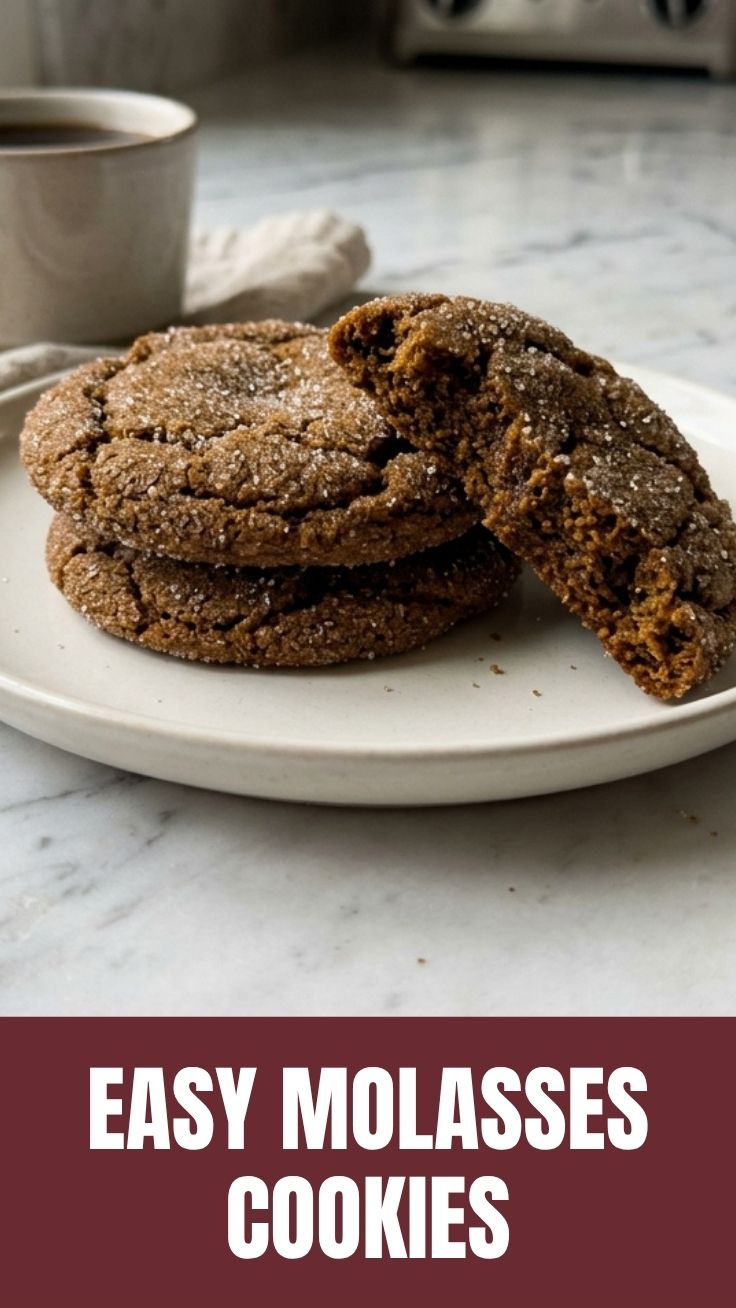
There’s something truly special about biting into a warm, spice-laden Molasses Cookie that you’ve crafted with your own hands. This Molasses cookie recipe proves that with the right techniques—chilling the dough, using fresh spices, and baking with precision—you can consistently produce cookies that rival any bakery’s offerings. The deep, earthy sweetness of molasses paired with ginger, cinnamon, and cloves creates a flavor profile that’s both nostalgic and sophisticated. Whether you’re baking for holiday cookie exchanges, afternoon coffee breaks, or simply to fill your home with warmth, these cookies never disappoint. We encourage you to try this recipe, tweak it to your preferences, and share your results. Have you tried adding crystallized ginger or a pinch of black pepper? Let us know in the comments below—we’d love to hear about your variations!
FAQs
1. Can I substitute blackstrap molasses for regular molasses?
Yes, but expect a stronger, less sweet flavor and darker color. Reduce molasses to 3 tablespoons and add 1 tablespoon brown sugar to balance bitterness.
2. Why did my cookies spread too much?
This usually happens when the dough isn’t chilled long enough or the butter was too warm. Ensure dough is refrigerated for at least 1 hour and your butter is softened but not melted.
3. How can I make these cookies gluten-free?
Use a 1:1 gluten-free flour blend containing xanthan gum. King Arthur’s Measure for Measure works particularly well. Chill the dough for 2 hours to prevent excessive spread.
4. Can I freeze the dough for later use?
Absolutely! Roll dough into balls, freeze on a baking sheet, then transfer to a freezer bag. Bake from frozen, adding 2-3 minutes to the baking time.
5. My cookies turned out dry—what went wrong?
Possible causes include overbaking, overmixing the flour, or using too much flour (always spoon and level). For dry cookies, try storing them with a slice of bread overnight to rehydrate.
Proven Way to Grow 7 Soft Molasses Cookies
Ingredients
Equipment
Method
- Preheat your oven to 375°F (190°C) and line baking sheets with parchment paper.
- In a medium bowl, whisk together the flour, baking soda, cinnamon, ginger, cloves, and salt; set aside.
- In a large bowl, cream together the softened butter and granulated sugar until light and fluffy.
- Beat in the molasses and egg until well combined.
- Gradually add the dry ingredients to the wet ingredients, mixing until just combined and a soft dough forms.
- Roll tablespoon-sized portions of dough into balls and then roll them in granulated sugar to coat.
- Place the sugared dough balls about 2 inches apart on the prepared baking sheets.
- Bake for 8-10 minutes, or until the edges are set but the centers are still soft; cool on the baking sheets for a few minutes before transferring to a wire rack.