Why Your Summer Table Needs This Crunchy, Tangy, and Nutrient-Packed Bowl
Have you ever wondered what makes a salad so memorable that you keep craving it days later? The answer lies in the perfect balance of textures, acidity, and fresh herbs—qualities that define an authentic Greek Salad. When I first tasted a homemade version, I realized how store-bought options simply cannot replicate that just-cut crunch or the way feta melts slightly under lemon dressing. Preparing this dish at home allows you to control every element, from the ripeness of the tomatoes to the saltiness of the olives. Beyond its vibrant taste, a well-executed Greek Salad offers surprising nutritional density, packing fiber, healthy fats, and antioxidants into every bite. Similarly, a Mediterranean Salad elevates this foundation with legumes for extra protein. In this guide, I’ll show you how to build both versions using fresh ingredients and science-backed techniques that guarantee consistent results every time.
—
Ingredients & Kitchen Tools
Essential Ingredients for Greek Salad (Serves 4)
– 4 large ripe tomatoes (use Roma or heirloom for sweetness) – cut into wedges, not cubes, to retain juice.
– 1 English cucumber – partially peeled for a striped look; seeds add moisture, so keep them.
– 1 red onion – thinly sliced; soak in cold water 10 minutes to mellow sharpness.
– ½ cup Kalamata olives – pitted but left whole; their brine adds umami.
– 200 g block feta cheese – never pre-crumbled; the block holds creaminess longer.
– 3 tbsp extra-virgin olive oil – single-varietal Koroneiki works best for peppery notes.
– 2 tbsp red wine vinegar – substitute with lemon juice for brighter acidity.
– 1 tsp dried oregano – rub between palms to release oils.
– Sea salt and black pepper – flaky salt finishes the dish.
For Mediterranean Salad Variation
– 1 can chickpeas (drained, rinsed) – adds protein and fiber.
– ½ cup chopped fresh parsley – flat-leaf for robust flavor.
– Optional: ¼ cup sun-dried tomatoes – oil-packed for extra richness.
Kitchen Tools Required
– Large mixing bowl (preferably wooden or ceramic) – metal can impart a subtle taste.
– Chef’s knife and cutting board – a serrated knife prevents tomato crushing.
– Measuring spoons – precision matters for dressing emulsion.
– Salad servers or tongs – wooden spoons avoid bruising vegetables.
– Small jar with lid – for shaking dressing into a stable emulsion.
—
Prep Time & Cooking Schedule
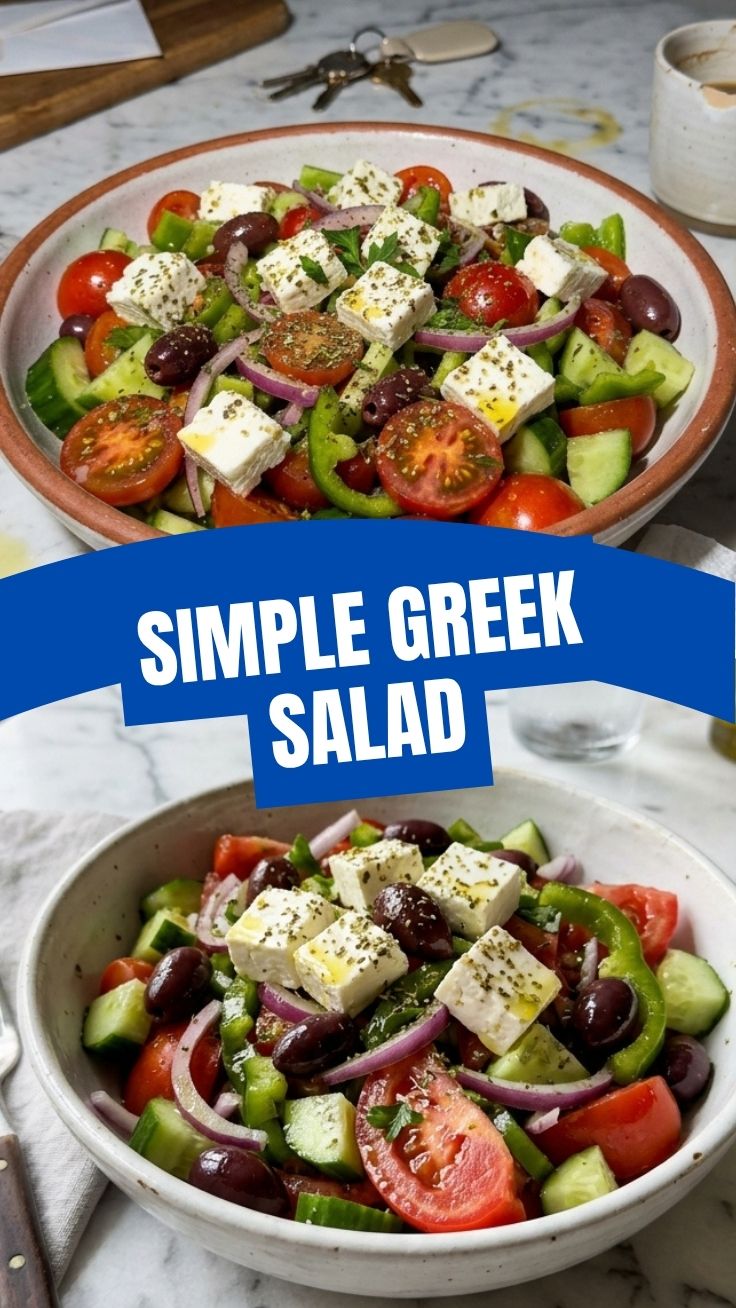
– Prep time: 15 minutes (includes chopping, soaking onion, and draining olives).
– Resting time: 10 minutes (crucial for flavors to meld; salad tastes best after a short stand).
– Total time: 25 minutes.
Planning tip: Prepare the dressing and chop vegetables up to 4 hours ahead, but combine everything just before serving. Tomatoes release water upon contact with salt, so wait until serving to season.
—
Step-by-Step Instructions
1. Prepare the onion: Slice the red onion into thin rings. Place in a small bowl with cold water and a pinch of salt. Soak for 10 minutes to remove harsh sulfur compounds, then drain and pat dry. This step transforms the onion from pungent to sweet and crisp.
2. Cut the tomatoes: Using a serrated knife, cut tomatoes into wedges—about 8 per medium tomato. Avoid pressing too firmly; you want the juice to stay inside the wedges. Transfer to a large bowl.
3. Handle the cucumber: Peel alternating strips of skin, then slice lengthwise and cut into half-moons about ½-inch thick. The striped peel adds color while the skin-on sections provide crunch. Add to the bowl.
4. Combine base ingredients: Add the drained onion slices, whole Kalamata olives, and (if making the Mediterranean variation) rinsed chickpeas. Toss gently with your hands or wooden spoons to avoid crushing the tomato wedges.
5. Make the dressing: In a small jar, combine 3 tbsp olive oil, 2 tbsp red wine vinegar, 1 tsp dried oregano, and a pinch of salt. Shake vigorously for 30 seconds until emulsified. Taste and adjust salt—olives and feta already contribute saltiness.
6. Dress and marinate: Pour the dressing over the vegetables. Toss gently using two spoons or a folding motion with your hands. Let rest for 10 minutes at room temperature. This short marination allows the vinegar to slightly soften the cucumber while the oil coats every surface. The acidity in a great Greek Salad should balance without overwhelming—if you prefer more tang, add another teaspoon of vinegar at this stage.
7. Add feta: Crumble the block feta into irregular pieces—some large (1-inch chunks) and some smaller bits. Place on top of the dressed vegetables. Do not toss after adding feta; let it sit on top to maintain its creamy texture. For the Mediterranean Salad variation, scatter the feta over the chickpeas and sun-dried tomatoes, then garnish with fresh parsley.
8. Final seasoning: Sprinkle a pinch of flaky sea salt and a few cracks of black pepper over the feta. Serve immediately with crusty bread or as a side to grilled proteins.
Temperature control note: If you refrigerate the salad before serving, pull it out 15 minutes ahead. Cold feta becomes rubbery, and tomatoes lose flavor when chilled below 55°F (13°C).
—
Nutritional Benefits & Advantages
This recipe delivers a powerhouse of nutrients per serving (approximately 1.5 cups):
– Antioxidants: Lycopene from tomatoes (4,600 mcg per 100g) and quercetin from red onions support heart health and reduce inflammation.
– Healthy fats: 15g of monounsaturated fat from olive oil improves cholesterol profiles and aids fat-soluble vitamin absorption.
– Bone health: 200mg of calcium from feta cheese supports bone density without excessive calories.
– Fiber and protein: The Mediterranean version adds 8g of fiber and 7g of plant-based protein from chickpeas, making it a complete meal.
Dietary advantages: This dish is naturally gluten-free, low-carb (under 12g net carbs per serving), and vegetarian. For a vegan adaptation, omit feta and add ¼ cup of toasted pine nuts for healthy fats and protein.
—
Tips, Variations & Cooking Advice
Flavor Variations
– Herb-forward version: Replace oregano with 2 tbsp chopped fresh dill and 1 tbsp mint leaves for a cooler, brighter taste.
– Spicy kick: Add ½ tsp crushed red pepper flakes to the dressing along with 1 minced garlic clove.
– Grilled twist: Char the cucumber halves and onion slices on a grill pan for 2 minutes per side before chopping—adds smoky depth.
Ingredient Swaps
– Tomato substitute: Use 1½ cups cherry tomatoes halved; they hold shape better and release less liquid.
– Feta alternatives: Halloumi (grilled, then cubed) or vegan cashew cheese work well for dairy-free needs.
– Vinegar option: White balsamic vinegar provides a milder acidity that pairs beautifully with chickpeas.
Portion Changes & Dietary Adaptations
– For meal prep: Keep dressing separate until serving to prevent sogginess. Store vegetables and feta in separate airtight containers for up to 3 days.
– Low-sodium version: Rinse olives under cold water and reduce added salt. Use salt-free feta if available.
– Kid-friendly: Dice all vegetables into small, uniform pieces (½-inch) and serve with mini pita triangles for dipping.
—
Common Mistakes to Avoid
1. Over-dressing or under-dressing
Problem: Too much dressing drowns the vegetables; too little leaves the salad bland.
Fix: Start with 3 tbsp dressing, toss, then taste. Add 1 tbsp at a time until every piece glistens without pooling at the bowl’s bottom.
2. Using pre-crumbled feta
Problem: Pre-crumbled feta contains cellulose to prevent clumping, resulting in a dry, grainy texture.
Fix: Always buy a block of feta—brine-packed if possible. Crumble it just before serving for creamy, tangy bites.
3. Skipping the onion soak
Problem: Raw red onion can overwhelm the dish with sharp, sulfury flavors.
Fix: Soak sliced onion in cold water for 10 minutes; this leaches out harsh compounds while retaining crunch.
4. Chopping vegetables too fine
Problem: Small pieces release more water, turning the salad soupy.
Fix: Cut tomatoes into wedges, cucumbers into thick half-moons, and onions into rings or half-rings. Larger pieces stay crisp longer.
5. Chilling the salad too long
Problem: Refrigeration for over 2 hours causes tomatoes to lose texture and feta to harden.
Fix: Serve within 30 minutes of assembly. If prepping ahead, store all components separately and combine just before serving.
—
Storage & Meal Prep Tips
– Refrigeration: Store assembled salad (without dressing) in an airtight container for up to 2 days. Dressing can be kept in a sealed jar at room temperature for 24 hours or refrigerated for 1 week.
– Freezing: Not recommended—tomatoes and cucumbers become mushy upon thawing due to high water content. If you must freeze, only freeze the dressing (olive oil and vinegar emulsion keeps well).
– Reheating: This salad is served cold or room temperature. If refrigerated, let it sit on the counter for 15 minutes before serving. Do not microwave—heat destroys the fresh texture.
– Meal prep strategy: On Sunday, wash and chop all vegetables (except tomatoes, which are best cut day-of). Store each component in separate containers. Assemble and dress immediately before eating.
—
Conclusion
Mastering a classic Greek Salad comes down to respecting the ingredients—using ripe tomatoes, quality feta, and a simple emulsion that allows the natural flavors to shine. This dish proves that minimalism in cooking often yields the most satisfying results. Whether you stick with the traditional version or explore the Mediterranean Salad variation with chickpeas and sun-dried tomatoes, you’re creating a bowl that’s both nourishing and deeply flavorful. I encourage you to try this recipe tonight: taste how the onion mellows after its soak, how the feta contrasts with the crisp cucumbers, and how the oregano ties everything together. Share your results in the comments below, and don’t forget to tag a friend who needs their summer salad game elevated!
—
FAQs
1. Can I prepare Greek salad the night before?
Yes, but store the dressing separately and do not add until just before serving. Vegetables prepped up to 24 hours ahead work fine—just keep them in an airtight container in the refrigerator.
2. How do I prevent the salad from becoming watery?
Pat cucumber dry with paper towels after slicing, avoid salting tomatoes until serving, and use a block feta rather than crumbled, which often contains added moisture.
3. What’s the best feta cheese for this recipe?
Sheep’s milk feta (often labeled “PDO feta”) has a creamy, tangy profile that melts slightly on the tongue. Avoid low-fat versions—they crumble too easily and lack richness.
4. Can I make this salad vegan?
Absolutely. Substitute the feta with marinated tofu cubes tossed in lemon juice, olive oil, and nutritional yeast. For a nut-based option, blend ½ cup cashews with 2 tbsp lemon juice, 1 tbsp water, and a pinch of salt until creamy.
5. How long does leftover salad stay fresh?
Assembled salad with dressing will keep for up to 24 hours in the refrigerator, though the cucumbers will soften. Without dressing, individual components stay fresh for 2–3 days. Discard if you notice any sliminess on the vegetables.
Greek Salad
Ingredients
Equipment
Method
- Chop the tomatoes and cucumber into bite-sized pieces, then thinly slice the red onion.
- Combine the chopped vegetables and kalamata olives in a large bowl. Crumble the feta cheese over the top.
- Whisk together the olive oil and red wine vinegar in a small bowl.
- Pour the dressing over the salad and gently toss to combine, then serve immediately.