Ingredients
Equipment
Method
Preparation
- Choose a sunny location for your garden, ensuring it receives at least 6-8 hours of direct sunlight daily.
- Prepare your soil by mixing organic potting mix with compost and perlite/vermiculite for good drainage and nutrient content.
Planting
- Sow spinach, arugula, and kale seeds directly into the prepared soil, following package instructions for depth and spacing.
- For lentils and chickpeas, either sprout them indoors first or plant seeds directly in dedicated containers.
- Plant quinoa and herb seeds, ensuring adequate space as quinoa plants can grow quite large.
Care & Maintenance
- Water your plants regularly, keeping the soil consistently moist but not waterlogged, especially during hot summer days.
- Apply organic fertilizer every few weeks to provide continuous nutrients for robust growth.
- Protect delicate plants from intense midday sun with a shade cloth if temperatures are consistently high.
- Monitor for pests and diseases, addressing any issues promptly with organic solutions.
Harvesting & Enjoying
- Harvest leafy greens like spinach, arugula, and kale by picking outer leaves, allowing the plant to continue producing.
- Harvest lentils and chickpeas when pods are mature, and quinoa when seeds are fully developed and dry.
- Continuously harvest herbs to encourage bushier growth and flavor.
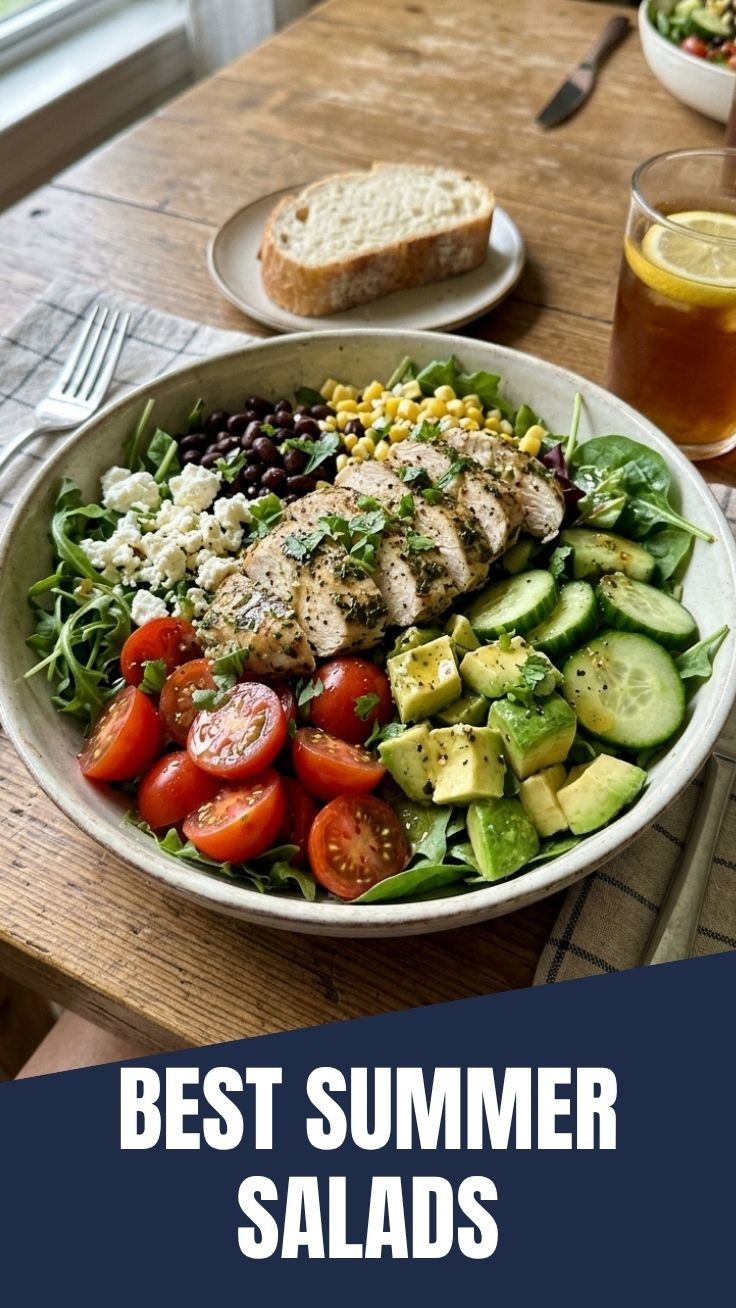
- Assemble your high-protein summer salad with freshly harvested ingredients, adding your favorite dressings and additional toppings.
Notes
Rotate your crops annually to prevent soil depletion and disease buildup. Companion planting can also deter pests naturally. Consider starting some seeds indoors 4-6 weeks before the last frost for an earlier harvest. Experiment with different varieties of greens and legumes to find what thrives best in your climate and personal taste preferences.