The Ultimate Guide to Perfecting Tomato Soup at Home
Have you ever wondered why restaurant-style Tomato Soup tastes so much richer and more complex than the canned versions you grew up with? The secret isn’t a hidden ingredient—it’s the technique and the quality of produce you choose. Preparing this beloved comfort food from scratch at home not only elevates the flavor profile but also puts you in control of the sodium, sugar, and preservatives. Whether you’re craving a classic bowl for a rainy day or a gourmet starter for a dinner party, mastering this recipe will transform your kitchen game.
Ingredients & Kitchen Tools
Required Ingredients
– 2 tablespoons unsalted butter (or olive oil for dairy-free): Adds richness and helps sauté aromatics.
– 1 medium yellow onion, diced: Provides a sweet, savory base.
– 3 garlic cloves, minced: For depth and pungency.
– 2 pounds ripe roma or vine tomatoes, roughly chopped: The star ingredient; choose in-season tomatoes for peak sweetness.
– 1 cup low-sodium vegetable broth (or chicken broth): Thins the soup while adding savory notes.
– 1 teaspoon sea salt (adjust to taste): Enhances natural tomato flavors.
– ½ teaspoon black pepper: Adds mild heat.
– 1 teaspoon sugar (optional, to balance acidity): Critical if your tomatoes are slightly tart.
– ½ cup heavy cream (or full-fat coconut milk for vegan): Creates a velvety texture.
Optional Substitutions
– For a smoky twist: Substitute ½ teaspoon smoked paprika.
– For a chunky version: Reserve ½ cup chopped cooked tomatoes and stir in at the end.
– For an herby finish: Add 2 tablespoons fresh basil or thyme leaves.
Kitchen Tools & Utensils
– Large heavy-bottomed pot or Dutch oven: Ensures even heat distribution.
– Immersion blender (or standard blender with vented lid): For pureeing safely.
– Wooden spoon or silicone spatula: For stirring without scratching non-stick surfaces.
– Measuring cups and spoons: For precision.
– Fine-mesh strainer (optional, for silkiest texture): Removes seeds and skins.
Prep Time & Cooking Schedule
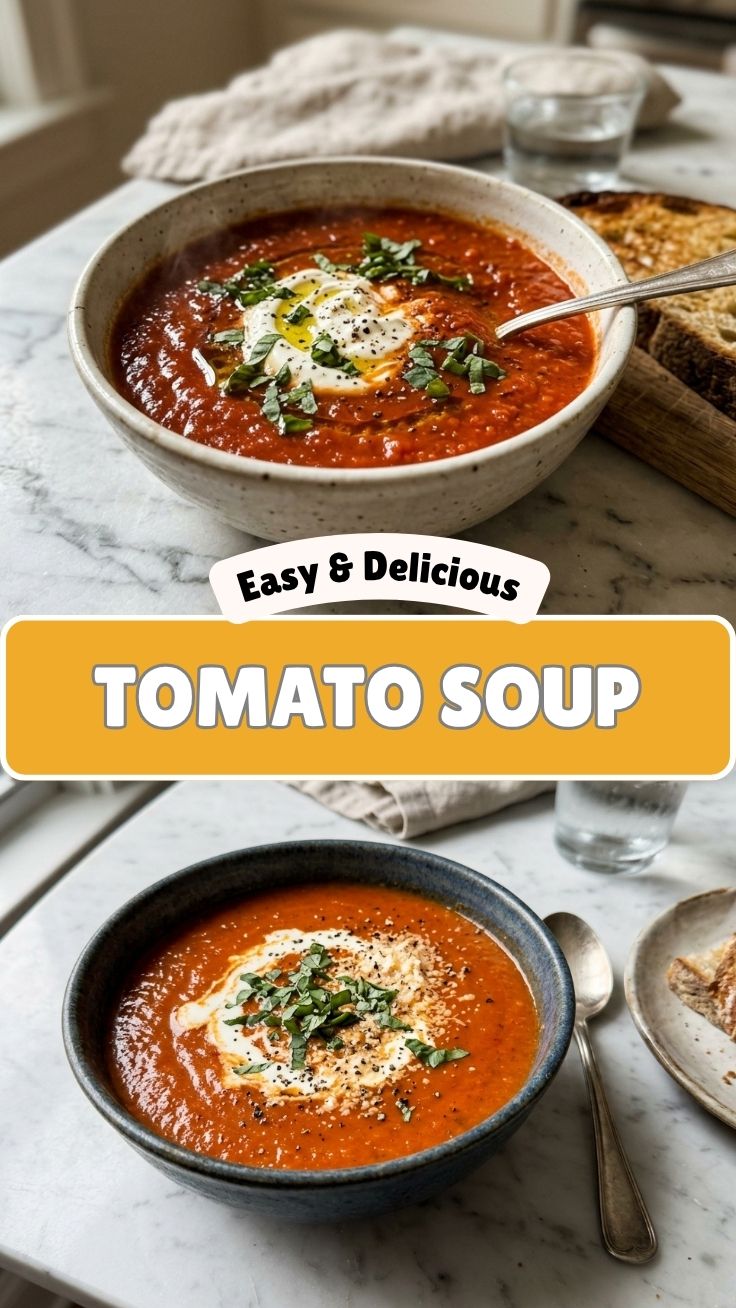
– Prep Time: 10 minutes (chopping vegetables, measuring ingredients)
– Cooking Time: 25–30 minutes (sautéing, simmering, blending)
– Resting Time: 5 minutes after blending (allows flavors to meld)
– Total Time: 40 minutes
Context for Planning: This recipe moves quickly. Have all ingredients prepped before you start heating the pot. The active cooking window is short, making it ideal for a weeknight dinner or a quick lunch prep.
Step-by-Step Instructions
1. Sauté the Aromatics: In a large pot over medium heat, melt the butter. Add the diced onion and cook, stirring occasionally, until translucent (about 5 minutes). Stir in the minced garlic and cook for 30 seconds until fragrant. Tip: Avoid browning the garlic—it can turn bitter.
2. Cook the Tomatoes: Add the chopped tomatoes, salt, pepper, and sugar (if using). Stir well to combine. Cook for 8–10 minutes, stirring occasionally, until the tomatoes break down and release their juices. The mixture should look slightly jammy. Temperature cue: The pan should bubble gently, not violently.
3. Simmer the Base: Pour in the vegetable broth and bring to a gentle boil. Reduce heat to low, cover, and simmer for 15 minutes. This allows flavors to deepen. Texture cue: The tomatoes should be completely soft and falling apart.
4. Blend Until Smooth: Remove the pot from heat. Using an immersion blender, puree the soup directly in the pot until silky. Alternatively, transfer to a countertop blender in batches—always vent the lid to release steam and avoid pressure buildup.
5. Finish the Soup: Return the pot to low heat. Stir in the heavy cream (or coconut milk) and warm through, but do not boil. Taste and adjust salt or pepper. If you prefer a perfectly silky texture, strain through a fine-mesh sieve.
6. Serve Immediately: Ladle into bowls and garnish with fresh basil, croutons, or a drizzle of olive oil. For an elevated touch, try serving it alongside a Tomato Soup grilled cheese pairing.
Note: The intense sweetness of vine-ripened tomatoes makes this a stellar Heirloom Tomato Soup base—simply swap standard tomatoes for heirloom varieties for a more complex, acidic-sweet balance.
Nutritional Benefits & Advantages
Tomato Soup is more than just a comfort food—it’s a nutritional powerhouse. One cup of homemade tomato soup contains approximately:
– 45% of your daily Vitamin C: Supports immune health.
– 20% of Vitamin A: Essential for vision and skin.
– Rich in Lycopene: A powerful antioxidant linked to reduced risk of heart disease and certain cancers. Cooking tomatoes actually increases lycopene bioavailability.
– Low in Calories (about 120–150 per serving with heavy cream): Makes it a light yet satisfying meal.
– High in Potassium: Supports healthy blood pressure levels.
Tips Variations & Cooking Advice
– Flavor Variations: Add 1 teaspoon of balsamic vinegar at the simmer stage for acidity depth. Or stir in ¼ cup roasted red peppers for a smoky-sweet twist.
– Ingredient Swaps: Use canned fire-roasted tomatoes (28-ounce can) if fresh tomatoes are out of season—no need to chop.
– Cooking Methods: For a roasted version, halve tomatoes and bake at 400°F (200°C) with olive oil and garlic for 30 minutes before blending.
– Dietary Adaptations: For a gluten-free meal, serve with gluten-free croutons. For vegan, replace heavy cream with full-fat canned coconut milk or cashew cream.
– Portion Changes: Double the batch and freeze individual portions for up to 3 months.
Common Mistakes to Avoid
– Overcooking the garlic: It becomes bitter and harsh. Add garlic toward the end of sautéing the onions.
– Using unripe or overly watery tomatoes: They produce bland soup. Choose deep-red, heavy tomatoes for your Tomato Soup base.
– Boiling after adding cream: This can cause the cream to curdle. Always warm on lowest heat.
– Skipping the sugar adjustment: Even perfect tomatoes can be slightly acidic. A pinch of sugar rounds out the flavor without making it sweet.
– Pureeing while hot in a sealed blender: A sealed hot blender can explode from pressure buildup. Always vent or let cool slightly.
Storage & Meal Prep Tips
– Refrigeration: Store in an airtight container for up to 5 days. Cool completely before sealing to prevent condensation.
– Freezing: Pour cooled soup into freezer-safe bags or containers, leaving ½ inch headspace. Freeze flat for up to 3 months.
– Reheating: Thaw overnight in the fridge. Reheat gently on the stovetop over low heat, stirring occasionally. Add a splash of broth or water if too thick. Avoid microwaving, which can make the soup taste flat.
– Texture Maintenance: If the soup separates after thawing, whisk vigorously or re-blend briefly with an immersion blender.
Conclusion
This Tomato Soup recipe proves that a dish can be both humble and extraordinary. By starting with high-quality tomatoes and layering simple ingredients, you create a soup that rivals any restaurant version. Whether you serve it with a classic grilled cheese or drizzle it with pesto, each bowl is a celebration of garden-fresh flavor. I encourage you to experiment with heirloom varieties, like this Heirloom Tomato Soup twist, and share your results with friends and family. Remember, the best meals are the ones you make with intention—and this recipe rewards every minute you spend at the stove.
FAQs
Q1: Can I use canned tomatoes instead of fresh?
Yes. Use one 28-ounce can of whole peeled tomatoes (preferably San Marzano) for best results. Drain and reserve the liquid; you may not need the full cup of broth.
Q2: Why is my tomato soup too thin?
Simmer uncovered for 5–10 extra minutes to reduce excess water. Avoid adding all the broth at once—start with ¾ cup and adjust.
Q3: Can I make this without dairy?
Absolutely. Substitute the butter with olive oil and the heavy cream with full-fat coconut milk or unsweetened oat cream. The coconut milk adds a slight tropical note.
Q4: How do I fix an overly acidic tomato soup?
Add a pinch of baking soda (1/8 teaspoon) while stirring gently—it neutralizes acidity without affecting flavor. Alternatively, add a teaspoon of maple syrup or honey.
Q5: Can I add protein to this soup?
Yes. Stir in ½ cup cooked white beans, shredded rotisserie chicken, or cubed firm tofu (sautéed first) after blending for added protein and texture.
Quick way to grow Tomato Soup plants in 5 days
Ingredients
Equipment
Method
- Fill small pots with seed starting mix, leaving about an inch from the top.
- Plant 2-3 tomato seeds per pot, approximately 1/4 inch deep, then lightly cover them with soil.
- Gently water the soil to ensure it is moist, but avoid over-saturating it.
- Place pots under a grow light or in a sunny window for 12-16 hours daily to encourage germination.
- Keep the soil consistently moist by watering lightly as needed.
- Maintain a warm environment, ideally between 70-80°F (21-27°C).
- Once seedlings emerge, thin them to the strongest single plant per pot by gently snipping weaker ones at the soil line.
- Continue providing ample light and consistent moisture, ensuring the soil doesn't dry out.
- If desired, you can apply a very diluted liquid plant fertilizer once the first true leaves appear.