The Ultimate Guide to Perfect Roast Turkey: Juicy, Golden, and Foolproof Every Time
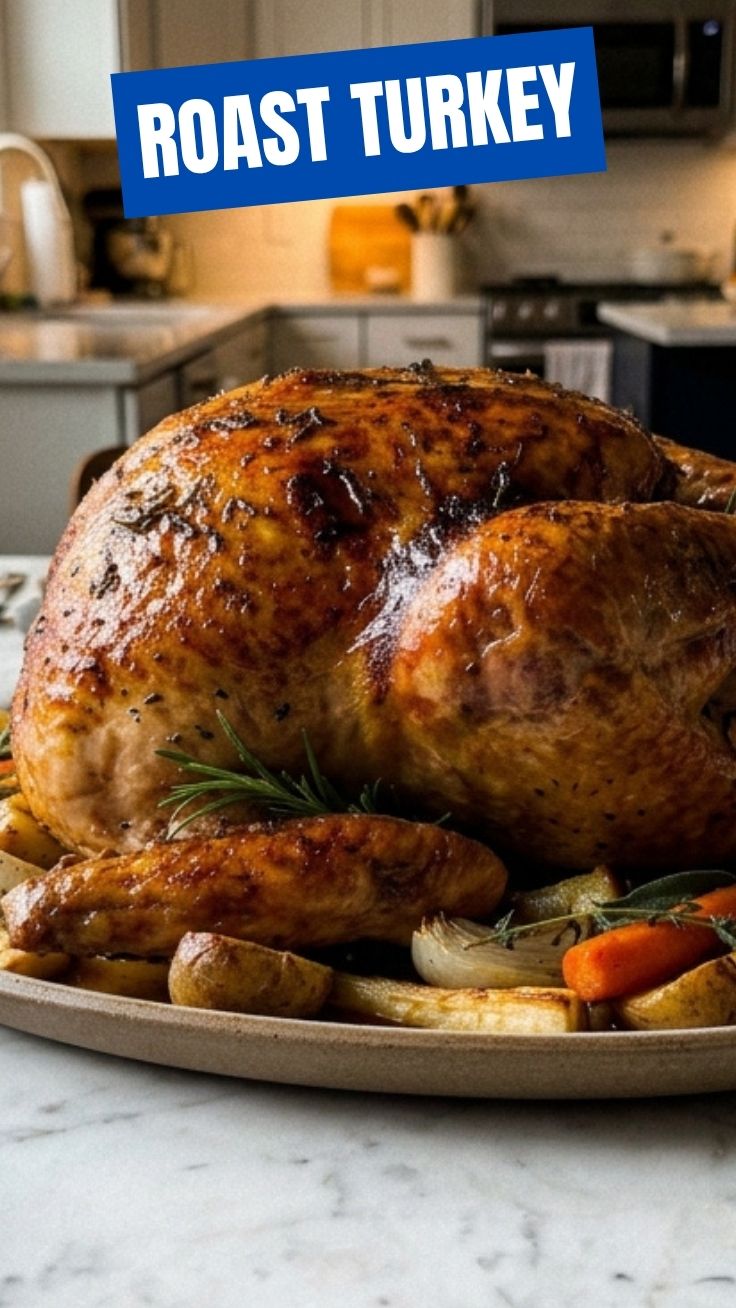
Have you ever wondered why some turkeys turn out dry and bland while others are so moist and flavorful that they become the centerpiece of every holiday memory? The secret isn’t luck—it’s technique. Mastering Roast Turkey at home not only saves you money and stress but also lets you control every ingredient, from the brine to the seasoning. Whether you’re planning a festive dinner or a casual Sunday meal, learning the art of roasting a turkey elevates your cooking game and impresses every guest. And if you’re looking for more inspiration, exploring Thanksgiving Turkey Recipes can open up creative ways to use leftovers. This guide will walk you through every step, from selection to carving, ensuring your turkey is the star of the table.
Ingredients & Kitchen Tools
For the Turkey
– 1 whole turkey (12–14 lbs) – Fresh or fully thawed frozen. Allow 1–1.5 lbs per person.
– Kosher salt (1 cup) – For dry brining; enhances moisture and flavor.
– Brown sugar (¼ cup) – Balances saltiness and aids browning.
– Black pepper, garlic powder, onion powder (2 tsp each) – Classic seasoning blend.
– Fresh herbs (rosemary, thyme, sage, 4 sprigs each) – Aromatic boost.
– Unsalted butter (½ cup, softened) – For under-skin and over-skin coating.
– 1 large onion, 2 carrots, 2 celery stalks – For the roasting pan (adds flavor to drippings).
– Chicken or turkey broth (2 cups) – For basting and deglazing.
Kitchen Tools
– Roasting pan with rack – Elevates turkey for even heat circulation.
– Meat thermometer – Essential for doneness (165°F in breast, 175°F in thigh).
– Kitchen twine – For trussing (optional but helps even cooking).
– Basting brush or spoon – For applying butter and juices.
– Aluminum foil – To tent the breast if browning too quickly.
Optional Substitutions
– Gluten-free – Ensure broth is GF; all other ingredients are naturally GF.
– Dairy-free – Replace butter with olive oil or vegan butter.
– Low-sodium – Reduce salt in brine or use unsalted seasoning.
Prep Time & Cooking Schedule
– Prep Time: 20 minutes (after thawing and brining)
– Dry Brine Time: 24–48 hours (refrigerated, uncovered)
– Resting Time: 30 minutes before carving
– Cooking Time: ~3 hours for a 12–14 lb turkey at 325°F (adjust 15–20 min per lb)
Plan ahead: Start dry brining 2 days before serving. Remove turkey from fridge 1 hour before roasting to bring it to room temperature.
Step-by-Step Instructions
1. Dry Brine the Turkey – Pat the turkey dry with paper towels. Mix salt, brown sugar, and spices. Rub the mixture all over the skin and inside the cavity. Place on a rack in a baking sheet, uncovered, and refrigerate 24–48 hours. This ensures a crispy skin and juicy meat.
2. Preheat Oven – Set oven to 325°F. Remove turkey from fridge and let it sit for 1 hour.
3. Prepare the Turkey – Rinse off excess brine (optional) and pat dry again. Loosen the skin over the breast and thighs, then slide butter and chopped herbs underneath. Rub the remaining butter all over the skin. Season with pepper. Stuff the cavity with onion, carrot, celery, and herb sprigs. Truss legs with twine.
4. Roast the Turkey – Place turkey on a rack in the roasting pan. Pour 1 cup broth into the pan. Roast for 1 hour, then baste with pan juices. Continue roasting until breast reaches 150°F, then tent with foil if browning too fast. Total roast time about 3 hours.
5. Check Temperature – Insert thermometer into thickest part of breast (not touching bone) – 165°F. Thigh should reach 175°F. Remove from oven.
6. Rest and Carve – Transfer turkey to a cutting board, tent loosely with foil, and rest for 30 minutes. This allows juices to redistribute. Carve and serve.
During this process, the key to a perfect Roast Turkey lies in temperature control and patience. For alternative approaches, explore Thanksgiving Turkey Recipes that use dry rubs or herb butter variations.
Nutritional Benefits & Advantages
Turkey is a lean protein powerhouse. A 3-ounce serving of roasted skinless breast provides about 25g of protein, only 2g of fat, and is rich in B vitamins (B6, B12), selenium, and zinc. These nutrients support immune function, metabolism, and muscle repair. The skin adds flavor but also saturated fat, so moderate portions are wise. Dry brining reduces the need for added sodium later, and using herbs instead of heavy sauces keeps the dish heart-healthy. Compared to fried or processed meats, a home-roasted turkey is a whole-food option that fits most dietary patterns, including Mediterranean and low-carb lifestyles.
Tips, Variations & Cooking Advice
– Flavor Variations: Add orange zest, smoked paprika, or cumin to the butter for a Southwest twist. Use a wet brine (salt, sugar, water, spices) for 12–24 hours if you prefer a milder saltiness.
– Alternative Cooking Methods: Spatchcock the turkey (remove backbone, flatten) for faster roasting (45–60 min less). Use a convection oven to speed browning.
– Portion Changes: For a small gathering, roast a turkey breast instead of a whole bird. Adjust cooking time to 1.5–2 hours.
– Dietary Adaptations: Gluten-free as written. For dairy-free, use coconut oil or olive oil in place of butter. Low-carb? Skip the brown sugar in the brine.
Common Mistakes to Avoid
– Skipping the Brine – Dry brining is non-negotiable for moisture. Without it, the turkey can be dry.
– Overcooking the Breast – Use a thermometer; remove when breast hits 160°F (carryover cooking will bring it to 165°F). Overcooking leads to sawdust texture.
– Not Resting the Bird – Carving immediately causes juices to spill out, leaving dry meat. Rest at least 30 minutes.
– Opening the Oven Too Often – Each time you open the door, heat escapes, extending cooking time and drying out the bird. Baste only twice.
– Roasting Without a Rack – The turkey sits in its own juices, steaming the bottom skin instead of crisping it.
Storage & Meal Prep Tips
– Refrigeration: Store leftover turkey in an airtight container for up to 4 days. Remove bones and slice meat for easier reheating.
– Freezing: Wrap tightly in plastic wrap and foil, or vacuum-seal, for up to 3 months. Thaw overnight in the fridge before use.
– Reheating: To maintain texture, reheat in a 300°F oven with a splash of broth, covered, for 15–20 minutes. Avoid microwaving (makes it rubbery). Use leftover meat in soups, salads, and sandwiches.
– Make-Ahead: Dry brine 2 days in advance. Prepare butter-herb mixture and store in fridge. The day of, just assemble and roast.
Conclusion
Achieving a flawless Roast Turkey at home is entirely within your reach when you follow these science-backed steps: dry brining, proper resting, and accurate temperature monitoring. This method guarantees a moist, flavorful bird that will be the highlight of any holiday feast. And don’t stop here—try Thanksgiving Turkey Recipes for creative ways to repurpose leftovers, like turkey tacos or a hearty stir-fry. We encourage you to share your results in the comments or tag us on social media. Happy roasting!
FAQs
1. How long does it take to roast a 14-pound turkey?
At 325°F, a 14-pound unstuffed turkey takes about 3–3.5 hours. Use a meat thermometer for accuracy; the breast should reach 165°F and the thigh 175°F.
2. Can I use a frozen turkey without thawing?
No, roasting a frozen turkey is unsafe and leads to uneven cooking. Thaw in the refrigerator for 24 hours per 4–5 pounds (about 3 days for a 14-lb bird).
3. What if the turkey skin is browning too fast?
Tent the breast loosely with aluminum foil. This prevents burning while allowing the rest of the bird to cook through.
4. How do I keep the turkey moist without brining?
If you skip brining, inject the breast with a mixture of melted butter, broth, and herbs. Also, baste every 30 minutes and use a rack to avoid steaming.
5. Can I stuff the turkey with dressing?
It’s not recommended for food safety—stuffing requires 165°F internal temperature, which often overcooks the bird. Bake stuffing separately in a casserole dish.
Best way to grow a Perfect Roast Turkey in 4 Hours
Ingredients
Equipment
Method
- Preheat your oven to 450°F (230°C) and remove the turkey from its packaging, patting it dry with paper towels.
- In a small bowl, combine the melted butter, chopped fresh herbs, salt, and black pepper.
- Place the quartered onion, chopped carrots, and celery stalks in the bottom of a large roasting pan.
- Rub the butter and herb mixture all over the turkey, ensuring an even coating.
- Place the seasoned turkey on top of the vegetables in the roasting pan and pour the broth into the bottom of the pan.
- Roast the turkey at 450°F (230°C) for 30 minutes to brown the skin.
- Reduce the oven temperature to 350°F (175°C) and continue roasting for another 3.5 hours, or until a meat thermometer inserted into the thickest part of the thigh reads 165°F (74°C).
- Baste the turkey every 30-45 minutes with the pan drippings to keep it moist.
- If the skin begins to brown too quickly, loosely tent the turkey with aluminum foil.
- Once cooked, remove the turkey from the oven and transfer it to a clean cutting board.
- Tent the turkey loosely with foil and let it rest for at least 20-30 minutes before carving; this allows the juices to redistribute, resulting in a more tender and flavorful bird.