Easy Lemon Ricotta Pasta: A Bright, Creamy Weeknight Dinner
Have you ever craved a creamy pasta that doesn’t weigh you down? This Lemon Ricotta Pasta is exactly that—a bright, luscious dish that comes together in minutes, offering a refreshing twist on traditional comfort food. If you love exploring cheese pasta recipes, this one will become a staple in your kitchen because it’s both quick to prepare and surprisingly nutritious. Making it at home means you control the quality of ingredients, adjust the tanginess to your liking, and enjoy a restaurant-quality meal without leaving your kitchen.
In this post, I’ll walk you through every step, share pro tips for perfect texture, and explain why this dish deserves a regular spot in your weekly rotation.
—
Ingredients & Kitchen Tools
Before you start, gather these essentials:
Ingredients
– 8 oz (225 g) dried pasta – Use long shapes like spaghetti or fettuccine; short ones like penne also work.
– 1 cup (250 g) whole-milk ricotta – Fresh ricotta yields the creamiest sauce; low-fat ricotta may need a splash of pasta water.
– 1 lemon – Zest and juice. For best flavor, use organic unwaxed lemons.
– 2 cloves garlic – Finely minced. Substitute with ½ tsp garlic powder if necessary.
– 3 tbsp extra-virgin olive oil – A good-quality oil adds brightness.
– ½ cup (30 g) freshly grated Parmesan – Optional, but adds depth.
– Salt and black pepper – To taste.
– Fresh basil or parsley – For garnish.
– Pasta water – Reserve at least ½ cup before draining.
Kitchen Tools
– Large pot for boiling pasta
– Colander
– Citrus zester or microplane
– Chef’s knife and cutting board
– Large skillet or sauté pan
– Wooden spoon or tongs
Optional Substitutions
– Gluten-free pasta – Use rice or chickpea-based varieties; cook as per package directions.
– Dairy-free ricotta – Blended silken tofu with lemon juice works well.
– Herbs – Swap basil for chives or oregano.
—
Prep Time & Cooking Schedule
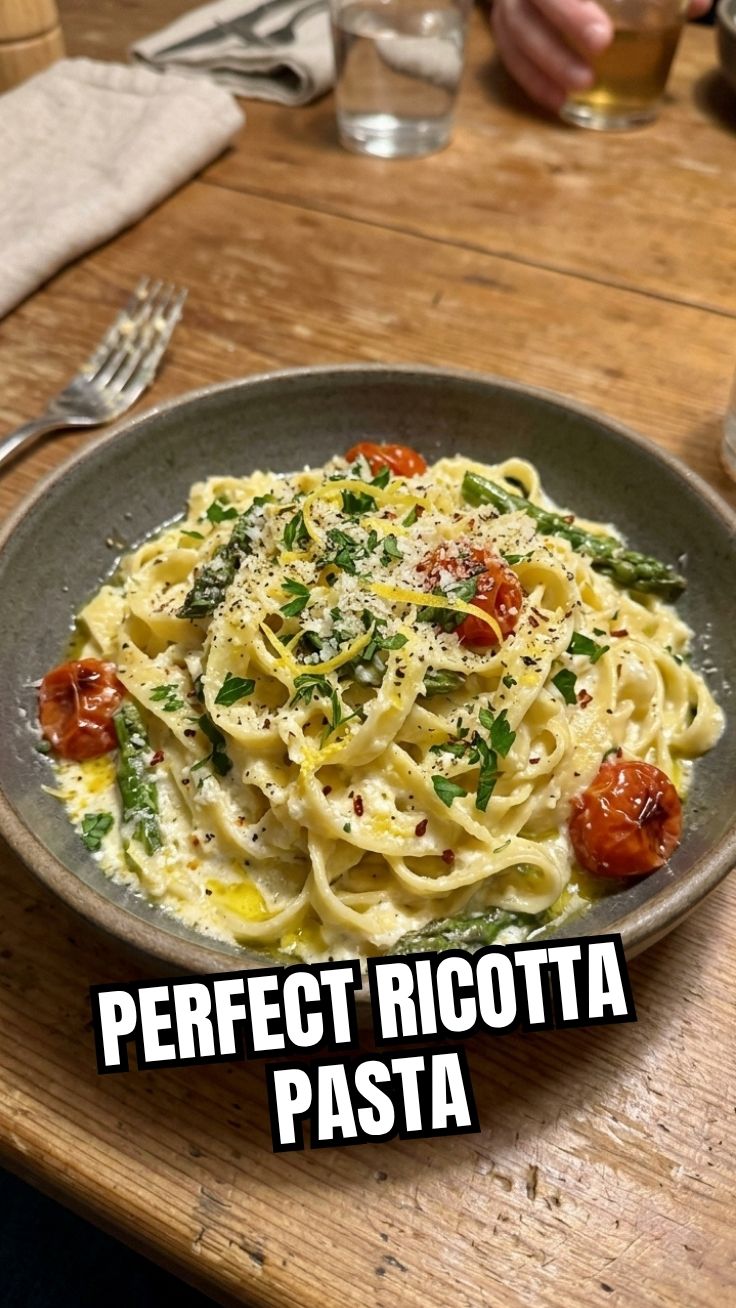
This dish comes together in under 30 minutes, perfect for busy evenings.
– Prep time: 5 minutes (zest lemon, mince garlic, measure ingredients)
– Cook time: 12–15 minutes (pasta cooking + sauce assembly)
– Resting time: None – serve immediately for best creaminess
Planning tip: Start heating the salted pasta water before you prep ingredients. While the pasta boils, you can prepare the ricotta mixture and have everything ready for a quick finish.
—
Step-by-Step Instructions
1. Cook the pasta – Bring a large pot of generously salted water to a rolling boil. Add pasta and cook until al dente, about 1 minute less than package instructions. Reserve 1 cup of starchy pasta water before draining.
2. Prepare the ricotta base – In a small bowl, combine ricotta, lemon zest, lemon juice (start with juice of half a lemon, then adjust), and a pinch of salt. Stir until smooth.
3. Sauté garlic – While pasta cooks, heat olive oil in a large skillet over medium-low heat. Add minced garlic and cook for 30 seconds until fragrant – do not brown it.
4. Combine – Reduce heat to low. Add the cooked pasta directly into the skillet, then dollop the ricotta mixture over the pasta. Immediately toss with tongs, adding pasta water ¼ cup at a time, until the sauce becomes smooth and coats each strand.
5. Season and finish – Taste and adjust with more lemon juice, salt, or pepper. Fold in grated Parmesan if using.
6. Serve – Plate immediately, garnish with fresh basil, and add extra lemon zest on top.
Pro tips:
– For the creamiest result, use room-temperature ricotta.
– If the sauce thickens too much, stir in another splash of pasta water.
– The sauce should be silky, not sticky – that’s the sign of a well-emulsified Lemon Ricotta Pasta.
If you’re a fan of cheese pasta recipes, you’ll love how the ricotta provides a light, tangy creaminess without heavy cream.
—
Nutritional Benefits & Advantages
This dish offers surprising nutritional value compared to cream-based pastas:
– Ricotta is lower in fat than heavy cream yet rich in protein and calcium. A ½-cup serving provides about 14 g of protein.
– Lemon juice and zest add vitamin C and antioxidants, which support immune health.
– Olive oil supplies heart-healthy monounsaturated fats.
– Garlic has anti‑inflammatory properties.
Because the sauce relies on ricotta rather than heavy dairy, this recipe is also lighter in calories (roughly 350–400 per serving depending on pasta), making it a great choice for those watching their intake.
—
Tips, Variations & Cooking Advice
– Flavor upgrade – Add a pinch of red pepper flakes with the garlic for a gentle heat.
– Herb swap – Try fresh dill or tarragon instead of basil for a different aromatic profile.
– Extra protein – Toss in cooked shredded chicken or sautéed shrimp after step 4.
– Vegetable boost – Sautéed asparagus or peas can be added when tossing the pasta.
– Dietary adaptations – For a dairy-free version, use cashew-based ricotta and omit Parmesan.
– Serving suggestion – Pair with a simple side salad dressed with lemon vinaigrette.
—
Common Mistakes to Avoid
| Mistake | Solution |
|———|———-|
| Overcooking pasta | Cook 1 minute less than package time; it will finish cooking in the sauce. |
| Curdling ricotta | Keep heat low when combining – high heat causes ricotta to separate. |
| Sauce too thick | Add pasta water gradually until you reach a consistency that flows like heavy cream. |
| Lemon bitterness | Use only the yellow zest; white pith is bitter. Start with half the juice and adjust. |
| Bland result | Salt your pasta water generously (it should taste like the sea) and don’t skip the Parmesan if using. |
—
Storage & Meal Prep Tips
– Refrigeration: Store leftovers in an airtight container for up to 3 days. The sauce may thicken upon cooling.
– Reheating: Place in a skillet over low heat, adding 1–2 tablespoons of water or milk to loosen the sauce. Avoid microwave reheating, which can make the ricotta grainy.
– Freezing: Not recommended – ricotta-based sauces can become watery after thawing. Instead, make fresh when you want it.
– Meal prep: Cook pasta and prepare ricotta mixture separately. Combine and sauce when reheating. Store components separately in the fridge for up to 2 days.
—
Conclusion
This Lemon Ricotta Pasta proves that a quick, satisfying dinner can be both creamy and light. By using high-quality ricotta and fresh lemon, you create a sauce that feels indulgent yet remains weeknight-friendly. If you’re always searching for new cheese pasta recipes, this one is a must-try – it’s versatile, forgiving, and endlessly adaptable. I encourage you to make it this week, tweak it to your taste, and share your results! For more delicious ideas, explore related content on the blog.
—
FAQs
1. Can I use low-fat ricotta?
Yes, but the sauce will be less creamy. Add an extra tablespoon of olive oil or a splash of milk to improve texture.
2. My pasta water is salty enough; how do I adjust?
Taste the finished dish before adding extra salt. If it’s too salty, add a squeeze of lemon to balance.
3. Can I make this gluten-free?
Absolutely – use your favorite gluten-free pasta. Be sure to reserve extra pasta water as gluten-free varieties often release more starch.
4. Why did my ricotta sauce turn lumpy?
Lumps usually form if the heat was too high or if cold ricotta hit hot pasta. Use room-temperature ricotta and keep the pan on low heat.
5. How do I store leftover lemon ricotta pasta?
Refrigerate in an airtight container for up to 3 days. Reheat gently on the stovetop with a little water to restore creaminess.
Best way to grow Lemon Ricotta Pasta in 5 mins
Ingredients
Equipment
Method
- Cook the pasta according to package directions until al dente, then reserve about half a cup of the pasta water before draining.
- In a large bowl, combine the ricotta, lemon zest, lemon juice, grated Parmesan cheese, salt, and pepper.
- Add the drained hot pasta to the ricotta mixture and toss to combine, gradually adding the reserved pasta water until a creamy sauce forms.
- Serve immediately, garnished with extra Parmesan and fresh black pepper if desired.