Introduction
Have you ever craved a meal that’s both vibrant and hearty, with a burst of fresh herbs complementing juicy, perfectly seared beef? That’s exactly what you get with this Chimichurri Steak, a dish that transforms a simple dinner into a restaurant-quality experience. Preparing it at home not only saves money—up to 60% compared to dining out—but also allows you to control the quality of ingredients, ensuring a healthier and more flavorful result. Whether you’re a seasoned cook or a beginner, mastering this recipe is easier than you think. Plus, once you try a homemade Chimichurri sauce recipe, you’ll never go back to store-bought versions. With a perfect balance of herbaceous brightness and savory umami, this dish is a must-try for any steak lover.
Ingredients & Kitchen Tools
For the Steak
– 1 lb ribeye or sirloin steak (1-inch thick): Look for marbling for tenderness and flavor. Substitute with flank or skirt steak for a leaner option.
– Salt and black pepper: Use kosher salt for even seasoning; fresh-cracked pepper enhances aroma.
– 1 tbsp olive oil: Helps create a golden crust.
For the Chimichurri
– 1 cup fresh parsley, finely chopped: Flat-leaf is preferred; curly parsley works but is less robust.
– ½ cup fresh cilantro, finely chopped: Adds a citrusy note; omit for a traditional argentine version.
– 4 garlic cloves, minced: Use a press or finely chop for even distribution.
– 2 tbsp red wine vinegar: Provides tang; substitute with white wine vinegar or lemon juice.
– ½ cup extra-virgin olive oil: Use high-quality oil for best flavor.
– 1 tsp red pepper flakes: Adjust to taste; omit for mild chimichurri.
– 1 tsp dried oregano: Alternatively, use fresh oregano (1 tbsp).
– ½ tsp salt: Sea salt or kosher.
Kitchen Tools
– Cast-iron skillet or grill: Ensures high heat for a perfect sear.
– Tongs: For flipping steak without piercing.
– Meat thermometer: Essential for precise doneness (130°F for medium-rare).
– Cutting board and sharp knife: For slicing against the grain.
– Food processor or mortar: For efficient herb chopping; hand-chopping works too.
– Mixing bowl and measuring spoons.
Prep Time & Cooking Schedule
– Prep time: 15 minutes (chop herbs, mince garlic, season steak).
– Resting time (steak): 30 minutes at room temperature before cooking; 5–10 minutes after cooking.
– Cook time: 8–10 minutes for 1-inch ribeye to medium-rare (adjust for thickness and doneness).
– Chimichurri marinating (optional): 30 minutes for deeper flavor; skip if short on time.
– Total active time: 25–30 minutes. Pro tip: Set a timer for steak resting; this step is crucial for juiciness.
Plan this dish after work or for a weekend meal—it’s quick enough for weeknights yet impressive enough for guests. The chimichurri can be made earlier in the day and stored in the fridge.
Step-by-Step Instructions
1. Bring steak to room temperature: Remove from fridge 30 minutes before cooking. This ensures even cooking and prevents a cold center.
2. Pat dry and season: Use paper towels to remove excess moisture—this is key for a crust. Season generously with salt and pepper on both sides.
3. Preheat skillet: Heat a cast-iron skillet over high heat until smoking hot (450°F–500°F). Add 1 tbsp olive oil, swirling to coat.
4. Sear steak: Place steak in skillet, pressing gently with tongs. Do not move it for 3–4 minutes to develop a deep brown crust. Flip and cook another 3–4 minutes for medium-rare. Use a meat thermometer: 130°F for medium-rare, 140°F for medium.
5. Prepare chimichurri: While steak cooks, combine parsley, cilantro, garlic, vinegar, olive oil, red pepper flakes, oregano, and salt. This homemade Chimichurri sauce recipe can be finely chopped by hand or pulsed in a food processor—avoid overprocessing to keep texture.
6. Rest steak: Transfer steak to a cutting board, tent loosely with foil, and rest for 5–10 minutes. This allows juices to redistribute.
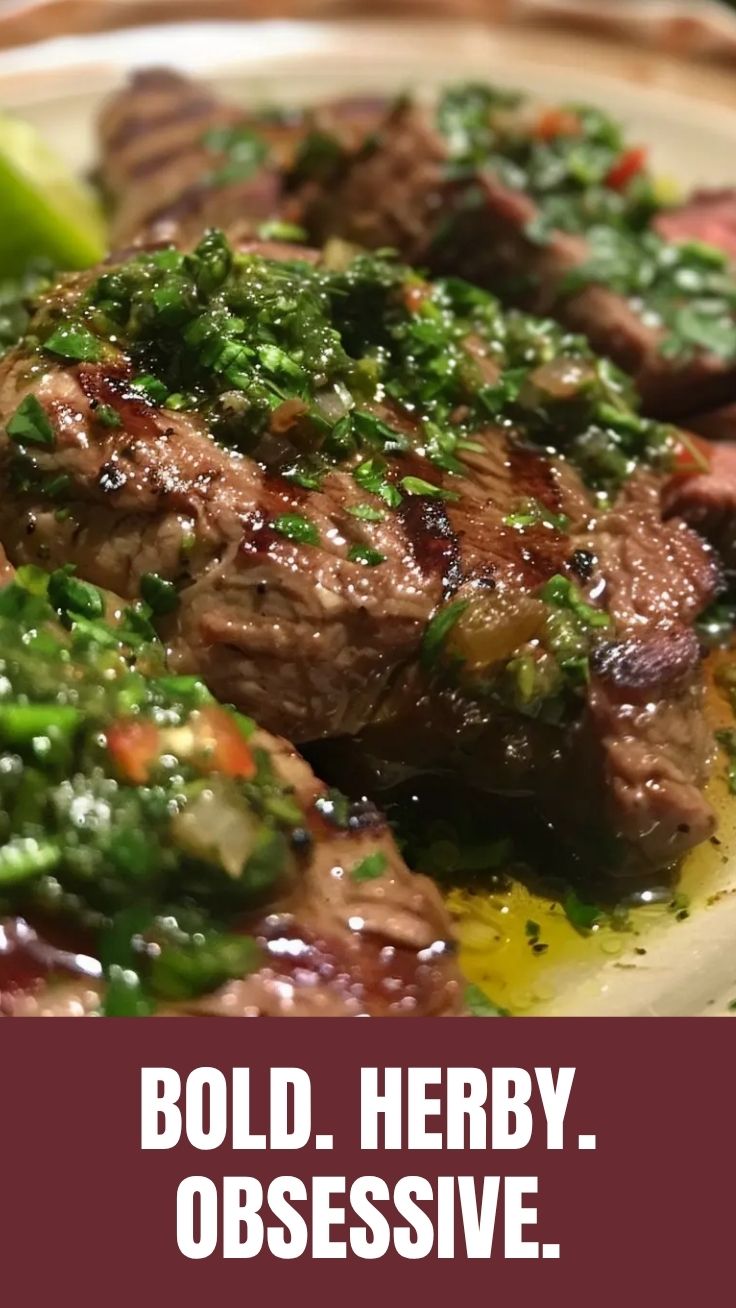
7. Slice and serve: Slice steak against the grain into ½-inch strips. Spoon chimichurri generously over the top. This simple presentation is what makes the Chimichurri Steak truly shine—the herbaceous sauce cuts through the beef richness perfectly.
Temperature control tip: If the steak browns too quickly but isn’t cooked through, reduce heat to medium. For a thicker cut, finish in a 400°F oven after searing.
Nutritional Benefits & Advantages
Chimichurri Steak is a nutrient-dense powerhouse. A 3-ounce serving (with 2 tbsp chimichurri) provides approximately:
– 25g protein: Supports muscle repair and satiety.
– 15g healthy fats: From olive oil and steak, aiding vitamin absorption.
– Vitamin C (15% DV): From parsley and cilantro, boosting immunity.
– Iron (12% DV): From beef, reducing fatigue risk.
– Low-carb: Under 5g net carbs per serving, ideal for keto and paleo diets.
The fresh herbs in chimichurri also contain antioxidants like flavonoids, which combat inflammation. By preparing this dish at home, you avoid added preservatives found in store-bought sauces, making it a cleaner, whole-food choice. Additionally, using grass-fed beef increases omega-3 content.
Tips Variations & Cooking Advice
– Flavor variations: Add 1 tbsp fresh mint or basil to chimichurri for a twist. Substitute cilantro with parsley only for a more traditional Argentine version.
– Cooking methods: Grill over high heat for 4–5 minutes per side, or use a broiler (6 inches from element, 5 minutes per side). For pan-searing, use a heavy-bottomed skillet—non-stick works but won’t achieve the same crust.
– Portion changes: For larger servings, increase steak to 1.5 lbs and double the chimichurri. Serve with roasted vegetables or a simple arugula salad.
– Dietary adaptations: Gluten-free (all ingredients are naturally GF—ensure no cross-contamination). Dairy-free (this recipe is already dairy-free). For low-sodium, use less salt in chimichurri and season steak lightly.
Common Mistakes to Avoid
1. Skipping the rest period: Cutting steak immediately releases juices, leading to a dry result. Always rest for 5–10 minutes.
2. Overcooking: Without a thermometer, doneness is guesswork. Invest in a reliable instant-read thermometer. For reference: 125°F (rare), 130°F (medium-rare), 140°F (medium).
3. Overseasoning chimichurri: Start with ¼ tsp salt; you can always add more. Remember, the vinegar provides acidity—balance it with oil.
4. Using dried herbs exclusively: Dried parsley and cilantro lack the vibrancy of fresh. If only dried available, use half the amount and add a squeeze of lime for brightness.
5. Not drying the steak: Wet surface creates steam, preventing a crust. Pat dry thoroughly before seasoning.
Storage & Meal Prep Tips
– Refrigeration: Store leftover steak and chimichurri separately in airtight containers. Steak keeps 3–4 days; chimichurri lasts up to 1 week (color may darken but flavor remains).
– Freezing: Wrap steak tightly in plastic wrap and foil, then freeze for up to 3 months. Thaw overnight in the fridge. Chimichurri freezes poorly—make fresh for best results.
– Reheating: For steak, slice and reheat in a hot skillet with 1 tsp oil for 1–2 minutes per side. Avoid the microwave—it toughens the meat. Chimichurri should be brought to room temperature before serving.
– Meal prep: Make a double batch of chimichurri to use on roasted chicken, fish, or vegetables throughout the week. Season and sear steak ahead of time, then slice before serving.
Conclusion
This Chimichurri Steak is a crowd-pleaser that brings bold Argentine flavors to your kitchen with minimal effort. By pairing it with a homemade Chimichurri sauce recipe, you elevate every bite—whether for a weeknight dinner or a special occasion. The key takeaways are simple: rest your steak, use fresh herbs, and balance seasoning. Try this recipe tonight; it’s a guaranteed hit that will have you rethinking takeout. Share your results in the comments, and explore our other steak-inspired dishes for more culinary inspiration.
FAQs
Q: Can I use a different cut of steak for this recipe?
A: Absolutely. Sirloin, flank, or skirt steak work well. Adjust cook time based on thickness—flank steak cooks faster (2–3 minutes per side), while thicker cuts may need a few extra minutes. Always use a thermometer for accuracy.
Q: How do I make chimichurri less spicy?
A: Reduce or omit the red pepper flakes entirely. For a milder version, use only ¼ tsp or substitute with smoked paprika for a subtle heat without spice.
Q: Can I make chimichurri ahead of time?
A: Yes, but add the olive oil just before serving for the freshest flavor. Prepare the herb-vinegar base up to 2 days in advance, then stir in oil when ready.
Q: What if I don’t have a cast-iron skillet?
A: No problem—use a heavy stainless steel or non-stick skillet. Cast-iron retains heat best for a crust, but any pan that withstands high heat will work. Avoid using non-stick spray; opt for oil.
Q: How do I store leftover chimichurri?
A: Store in an airtight glass jar in the refrigerator for up to 1 week. Bring to room temperature and stir before using. If the olive oil solidifies, run the jar under warm water briefly.
Best way to grow tender Chimichurri Steak
Ingredients
Equipment
Method
- Pat the steak dry with paper towels, then season generously with salt and pepper on both sides to enhance flavor and create a good crust.
- In a bowl, combine the finely chopped parsley, oregano, minced garlic, red wine vinegar, olive oil, red pepper flakes, and salt for the chimichurri. Whisk well to combine and set aside.
- Preheat a grill or a heavy-bottomed skillet over medium-high heat, ensuring it is hot to achieve a good sear on the steak.
- Sear the steak for 4-6 minutes per side for medium-rare, or adjust timing based on your desired doneness, ensuring a nice crust forms.
- Remove the steak from the heat and let it rest on a cutting board for at least 5 minutes; this allows the juices to redistribute, resulting in a more tender and flavorful steak.
- Slice the steak against the grain into thin strips; cutting against the grain shortens the muscle fibers, making the meat more tender.
- Drizzle a generous amount of the prepared chimichurri over the sliced steak just before serving to infuse it with fresh, vibrant flavors.