Why This Recipe Is a Game-Changer
Have you ever tasted a truly authentic Greek Salad outside of Greece? The vibrant crunch of fresh cucumbers, the briny punch of feta, and the sun-ripened sweetness of tomatoes all come together in a dish that defines simplicity. Preparing this iconic recipe at home not only saves you a trip to a taverna but lets you control the quality of every ingredient. When you make a proper Greek Salad, you’re embracing a cornerstone of Mediterranean eating—a lifestyle celebrated for its bold flavors and health benefits. This simple yet perfect dish is proof that the whole is greater than the sum of its parts. In just 15 minutes, you’ll have a bowl of vibrant, diet-friendly goodness that beats any restaurant version.
—
Ingredients & Kitchen Tools
Core Ingredients (serves 2–4)
– 2 large ripe tomatoes – use Roma or vine-ripened; avoid watery supermarket varieties.
– 1 English cucumber – fewer seeds and less bitterness than garden cucumbers.
– ½ red onion – thinly sliced; soak in cold water for 5 minutes to mellow the bite.
– 1 green bell pepper – seeded and cut into rings or strips.
– ½ cup Kalamata olives – pitted, for that briny pop.
– 5 oz block feta cheese – never pre-crumbled; block feta offers creamy texture.
– 3 tbsp extra virgin olive oil – cold-pressed for maximum polyphenols.
– 1½ tbsp red wine vinegar – or substitute with lemon juice.
– 1 tsp dried oregano – Greek oregano is best; crumble between your fingers.
– Sea salt & black pepper – to taste.
Kitchen Tools
– Large mixing bowl
– Sharp chef’s knife
– Cutting board
– Measuring spoons
– Salad servers or tongs
Optional Substitutions
– Swap Kalamata olives for Castelvetrano (milder, fruity).
– Use crumbled goat cheese instead of feta for a tangy twist.
– Replace red wine vinegar with balsamic for a sweeter dressing.
—
Prep Time & Cooking Schedule
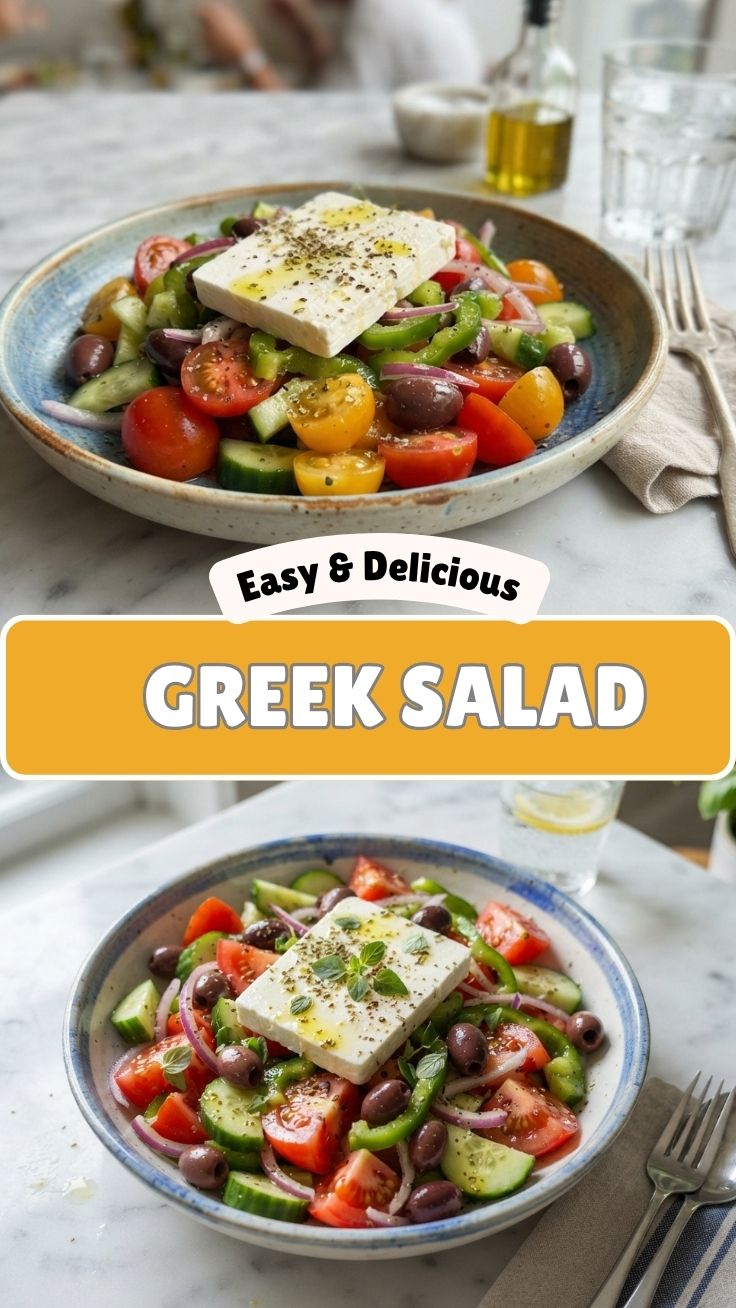
| Task | Time |
|——|——|
| Prep vegetables | 12 minutes |
| Make dressing | 1 minute |
| Assemble & rest | 5 minutes |
| Total | 18 minutes |
This is a no-cook, no-wait recipe. The only “active” time is chopping. Let the salad rest for 5 minutes after dressing so the flavors marry—this step turns good ingredients into a great Greek Salad.
—
Step-by-Step Instructions
1. Wash and dice all vegetables. Cut tomatoes into wedges (not tiny cubes), cucumber into half-moons, and bell pepper into rings. Place in the large bowl.
2. Soak the red onion. Thinly slice half an onion and submerge in cold water for 3–5 minutes. Drain and add to the bowl. This reduces harsh sulfur notes while keeping crunch.
3. Add olives and feta. Toss Kalamata olives into the bowl. Cut the block feta into thick slabs (about ½-inch) and place them on top of the salad—do not crumble them yet. The beauty of a classic Greek Salad is that the feta stays in large chunks, letting you taste its creamy saltiness. The hallmark of Mediterranean cooking is using quality olive oil, so choose a fragrant extra-virgin variety.
4. Make the dressing. In a small bowl, whisk together olive oil, red wine vinegar, dried oregano, a pinch of salt, and a few cracks of pepper. Taste and adjust acidity or salt.
5. Dress and rest. Drizzle the dressing over the salad, but don’t drown it—you want a light coating. Use your hands or two spoons to gently toss. Let rest for 5 minutes at room temperature. Serve immediately for peak crunch.
Pro Tip: If you’re meal-prepping, keep the dressing separate and add feta just before serving to prevent the vegetables from getting soggy.
—
Nutritional Benefits & Advantages
This recipe is a powerhouse of vitamins and healthy fats. One serving (¼ of the batch) provides:
– Vitamin C – from bell peppers and tomatoes (supports immunity).
– Vitamin K – from cucumbers and leafy ingredients (bone health).
– Calcium & Protein – from feta (34% of your daily calcium per serving).
– Monounsaturated fats – from olive oil and olives (heart-healthy, reduces inflammation).
– Low carb & high fiber – only 8–10 net carbs per serving, ideal for low-carb lifestyles.
A 2023 study in Nutrients found that eating a traditional Mediterranean-style salad daily can lower LDL cholesterol by up to 7%. The combination of raw vegetables and extra-virgin olive oil is a key driver of these benefits.
—
Tips, Variations & Cooking Advice
– Flavor Variations
Add ½ cup of chickpeas or grilled chicken for extra protein. Swap oregano with fresh mint or basil for a different twist.
– Dietary Adaptations
– Dairy-free: Omit feta or use a tangy almond-based “feta”.
– Gluten-free: Naturally gluten-free—just double-check your vinegar.
– Vegan: Replace feta with marinated tofu cubes or a plant-based alternative.
– Portion Changes
For a larger crowd, double the ingredients but keep the dressing ratio the same. Serve as a side with grilled fish or lamb.
– Cooking Method Adjustment
While no cooking is required, you can lightly char the bell pepper on a grill for 2 minutes for a smoky note that still respects the Mediterranean flavor profile.
—
Common Mistakes to Avoid
– Using pre-crumbled feta – It’s coated in anti-caking agents and lacks the creamy interior that makes this salad shine. Always buy a block.
– Over-dressing – A soggy salad loses its texture. Start with half the dressing; you can always add more.
– Under-seasoning tomatoes – Tomatoes need salt! Season them directly with a pinch of salt before dressing to release their juices.
– Skipping the resting time – Flavors need 5 minutes to meld. Serve immediately only if you want a flat-tasting salad.
– Using bland or out-of-season tomatoes – In winter, use cherry tomatoes for more sweetness.
—
Storage & Meal Prep Tips
– Refrigerating: Store undressed salad (without feta) in an airtight container for up to 2 days. Keep dressing and feta separate.
– Freezing: Not recommended – vegetables will turn mushy upon thawing.
– Reheating: Serve cold or at room temperature. If you must warm it, microwave on low for 15 seconds (only if you’ve added cooked protein).
– Texture maintenance: If dressing is already mixed, consume within 4 hours. Refresh leftovers with a splash of lemon juice or extra oregano.
—
Conclusion
A homemade Greek Salad delivers exactly what you crave: fresh, honest flavors with zero fuss. By using high-quality olive oil, ripe tomatoes, and block feta, you transform simple ingredients into a dish that ranks among the healthiest in the Mediterranean diet. It’s versatile enough for a quick lunch or a dinner party side. Try it this week, and I’d love to hear how yours turns out in the comments. Share your variations or tag me on Instagram with a photo!
—
Frequently Asked Questions
1. Can I use a different type of cheese?
Yes. Feta is traditional, but halloumi (grilled) or fresh mozzarella work well. For a dairy-free option, try marinated tofu.
2. What can I use instead of red wine vinegar?
Lemon juice is the classic swap. White balsamic or apple cider vinegar also work—adjust the amount to taste.
3. How long will Greek Salad keep in the fridge?
If undressed, up to 2 days. Once dressed, enjoy within 4 hours for best crunch. The feta may soften slightly, but it’s still safe.
4. Can I add protein to make it a full meal?
Absolutely. Grilled chicken, lamb, shrimp, or chickpeas are excellent additions. Toss them in just before serving.
5. Is this salad keto-friendly?
Yes. With about 8 net carbs per serving, it’s ideal for keto. Just watch the tomatoes if you’re strict—use fewer and add extra cucumber.
Proven way to grow the perfect Greek Salad
Ingredients
Equipment
Method
- In a large bowl, combine the halved cherry tomatoes, sliced cucumber, thinly sliced red onion, and pitted Kalamata olives.
- Crumble the feta cheese over the vegetables in the bowl.
- In a small bowl, whisk together the extra virgin olive oil, red wine vinegar, dried oregano, salt, and black pepper until well combined.
- Pour the dressing over the salad ingredients and gently toss to ensure everything is evenly coated.
- Serve immediately as a refreshing side dish or a light main course.