The Ultimate Guide to Perfect Egg Fried Rice: Better Than Chinese Takeout
Have you ever stared at a half-empty container of leftover rice and wondered if it could become something truly magical? That single question has led countless home cooks to discover the secret to making restaurant-quality Egg Fried Rice right in their own kitchen. The beauty of preparing this dish at home isn’t just about saving money—it’s about controlling every grain, every speck of seasoning, and every burst of flavor. While ordering from your favorite Chinese Takeout spot feels convenient, nothing compares to the satisfaction of wok-frying your own fragrant, fluffy rice with perfectly scrambled eggs, all customized to your taste. This recipe transforms humble ingredients into a weeknight masterpiece that rivals any delivery order, and the best part? You’ll have it on the table in under 15 minutes.
Ingredients & Kitchen Tools
Ingredients
– 3 cups cooked jasmine or long-grain rice (preferably day-old, cold, and slightly dry—fresh rice turns mushy)
– 3 large eggs (room temperature for even scrambling)
– 2 tablespoons vegetable oil or peanut oil (high smoke point essential for wok hei flavor)
– 1 cup mixed vegetables (frozen peas, diced carrots, and corn—thawed and patted dry)
– 3 green onions, thinly sliced (white parts for cooking, green parts for garnish)
– 2 cloves garlic, minced (adds aromatic depth)
– 1 tablespoon soy sauce (or tamari for gluten-free version)
– 1 teaspoon sesame oil (toasted, for finishing)
– ½ teaspoon white pepper (more floral than black pepper, authentic in Chinese cuisine)
– ¼ teaspoon salt (adjust to taste)
Kitchen Tools
– Wok or large non-stick skillet (carbon steel wok is ideal, but non-stick works well)
– Wooden spatula or wok chahn (heat-resistant, won’t scratch non-stick coating)
– Small mixing bowl (for beating eggs)
– Measuring spoons and cups
– Sharp knife and cutting board
– Fine-mesh strainer (if using frozen vegetables to remove excess moisture)
Optional Substitutions
– Brown rice or cauliflower rice for lower-carb option
– Avocado oil as neutral oil alternative
– Liquid aminos instead of soy sauce for reduced sodium
– Any leftover vegetables from the fridge work perfectly
Prep Time & Cooking Schedule
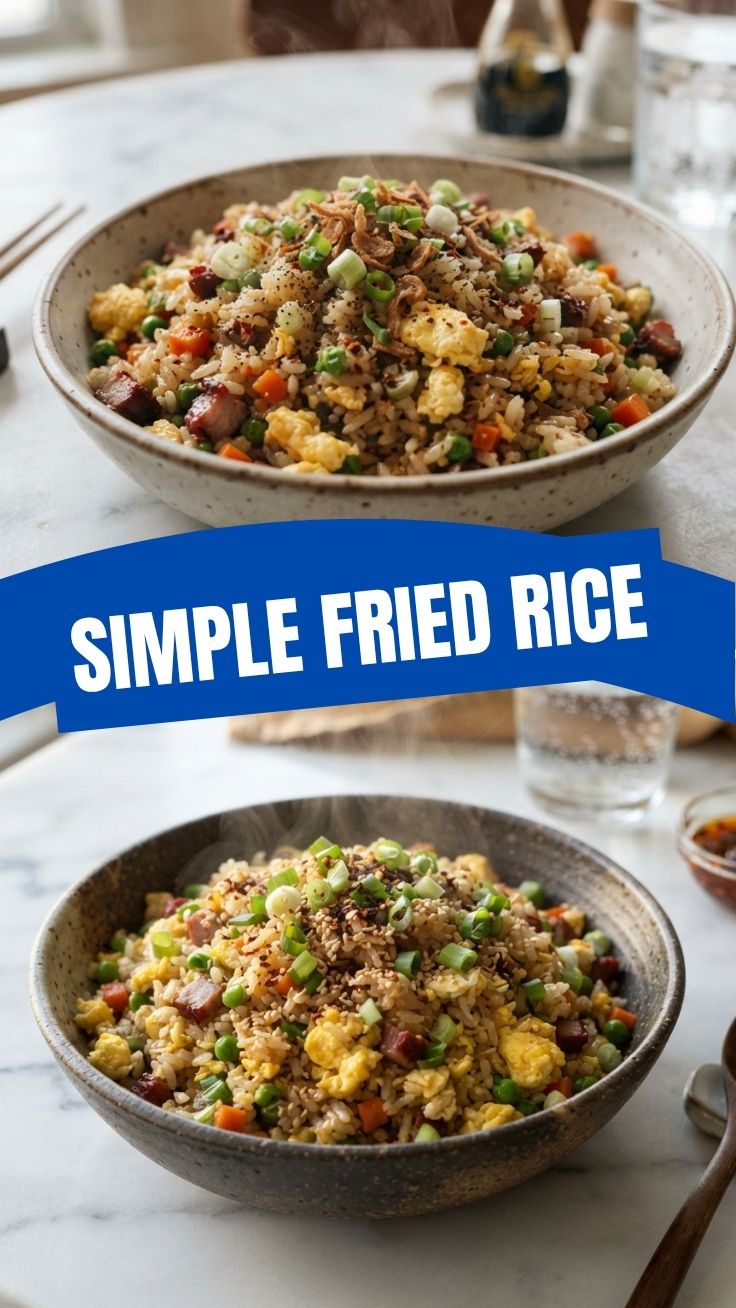
– Prep time: 10 minutes (chop vegetables, beat eggs, measure sauces)
– Cook time: 6 to 8 minutes (high heat, fast action)
– Total time: 16 to 18 minutes
– Resting time: None needed—serve immediately for best texture
Plan your timing wisely: Because this dish cooks at lightning speed, having all ingredients measured, chopped, and within arm’s reach is non-negotiable. This “mise en place” approach ensures you never pause mid-cook, which keeps the wok screaming hot and the rice from steaming instead of frying. The entire cooking window is incredibly narrow, so clear your stovetop area and keep your spatula ready.
Step-by-Step Instructions
Step 1: Prepare the Rice
If using freshly cooked rice, spread it on a baking sheet and refrigerate uncovered for 20 minutes to release steam. Cold, day-old rice has less moisture, which prevents clumping. Break apart any large clumps with your fingers before cooking.
Step 2: Beat the Eggs
In a small bowl, crack the eggs and whisk vigorously with a fork until the yolks and whites are completely combined and slightly frothy. Add a pinch of salt and white pepper. This simple step ensures fluffy, evenly distributed egg ribbons throughout the dish.
Step 3: Heat the Wok
Place your wok or skillet over high heat and add 1 tablespoon of oil. Swirl to coat the surface. Wait until the oil shimmers and just begins to smoke—this is the moment when authentic Chinese Takeout kitchens develop that signature smoky wok hei. Do not use lower heat; the rice will steam, not fry.
Step 4: Scramble the Eggs
Pour the beaten eggs into the hot oil. They should sizzle immediately. Using your spatula, push the cooked edges toward the center, creating soft, fluffy curds. When the eggs are about 80% set (still slightly glossy on top), transfer them to a clean plate. Do not overcook—they will finish cooking when returned to the wok later.
Step 5: Stir-Fry the Aromatics and Vegetables
Add the remaining 1 tablespoon of oil to the wok. Toss in the garlic and white parts of the green onions. Stir-fry for about 15 seconds until fragrant. Add the mixed vegetables and cook for 1 minute, stirring constantly, until they are heated through and slightly charred at the edges.
Step 6: Add the Rice
Add the cold rice to the wok, spreading it into an even layer. Let it sit undisturbed for 30 seconds to develop a slight crust. Then begin to stir-fry aggressively, breaking up any clumps with the edge of your spatula. The key to perfect Egg Fried Rice is constant motion combined with brief moments of contact with the hot surface.
Step 7: Season and Combine
Drizzle the soy sauce around the perimeter of the wok (not directly on the rice—this allows the sauce to sizzle and caramelize). Toss the rice to coat evenly. Return the scrambled eggs to the wok and break them into smaller pieces with your spatula. Add the sesame oil and white pepper. Toss everything together for another 30 seconds until the eggs are fully incorporated and the rice is piping hot.
Step 8: Finish and Serve
Remove from heat. Sprinkle the green onion tops over the rice and toss gently. Taste and adjust salt or soy sauce if needed. Serve immediately in warm bowls. The rice should be individually grained, slightly glossy, and fragrant with toasted sesame.
Nutritional Benefits & Advantages
This homemade Egg Fried Rice offers substantial nutritional advantages over typical Chinese Takeout versions. A standard serving (about 1½ cups) provides approximately 350–400 calories, 12 grams of protein, 45 grams of carbohydrates, and 14 grams of fat, depending on oil usage and vegetable additions.
– Protein from eggs: Each egg delivers 6 grams of complete protein with all nine essential amino acids, supporting muscle repair and satiety.
– Complex carbohydrates from rice: Provides steady energy release, especially when using brown rice.
– Vegetable variety: Peas contribute vitamin K and fiber; carrots offer beta-carotene for eye health; corn provides B vitamins.
– Lower sodium than takeout: By controlling soy sauce quantities, you reduce sodium by 40–60% compared to restaurant versions.
– No MSG or preservatives: Homemade means clean ingredients without hidden additives.
Tips Variations & Cooking Advice
Flavor Variations
– Spicy Szechuan style: Add 1 teaspoon chili crisp or ½ teaspoon red pepper flakes with the garlic.
– Kimchi fried rice: Fold in ½ cup chopped kimchi and a splash of kimchi juice after cooking the vegetables.
– Curry egg fried rice: Stir in 1 teaspoon curry powder with the vegetables for warm, aromatic notes.
Ingredient Swaps
– Protein boost: Add diced ham, cooked shrimp, or shredded rotisserie chicken after scrambling the eggs.
– Low-carb version: Substitute cauliflower rice (pre-roasted to remove moisture) and increase eggs to 4.
– Gluten-free: Use tamari or coconut aminos instead of soy sauce.
– Dairy-free: This recipe is naturally dairy-free, but double-check your soy sauce.
Cooking Advice
– Wok hei hack: If using a home stove, tilt the wok to create a flame flare by adding a splash of oil near the edge. This replicates high-heat restaurant cooking.
– Rice texture secret: Rinse raw rice thoroughly before cooking to remove excess starch, then refrigerate for at least 2 hours before frying.
– Seasoning balance: Always taste before serving—add a pinch of sugar if the soy sauce tastes too salty, or a squeeze of lime for brightness.
Common Mistakes to Avoid
– Using freshly cooked rice: The number one reason for mushy fried rice. Fresh rice contains too much moisture, causing clumping and a gummy texture. Always use cold, day-old rice or freshly cooked rice that has been spread out and chilled.
– Overcrowding the wok: Cooking more than 3 cups of rice at once lowers the temperature, steaming the ingredients instead of frying them. Work in batches if needed.
– Underseasoning: Egg Fried Rice requires assertive seasoning because rice absorbs flavors aggressively. Don’t be shy with soy sauce, white pepper, and sesame oil.
– Scrambling eggs too early: Adding eggs to the wok at the same time as the rice creates a mushy, egg-coated mess. Cook eggs separately and add them back at the end.
– Using low heat: A screaming-hot wok is non-negotiable. Low heat produces steamed, soggy rice with no wok hei.
– Skipping the resting step: Even 10 minutes of refrigeration for freshly cooked rice makes a dramatic difference in texture.
Storage & Meal Prep Tips
– Refrigeration: Store leftovers in an airtight container for up to 4 days. The rice may harden slightly but will revive with proper reheating.
– Freezing: Portion cooled fried rice into freezer-safe bags or containers. Squeeze out excess air and freeze for up to 3 months. Thaw overnight in the refrigerator before reheating.
– Reheating: For best results, reheat in a wok or skillet over high heat with a teaspoon of water or oil. Toss constantly until steaming hot. Alternatively, microwave in 30-second bursts with a damp paper towel covering the bowl to add moisture.
– Meal prep tip: Double the recipe and freeze individual portions for busy weeknights. Add a fried egg on top when serving for freshness.
– Texture revival tip: If the rice seems dry after refrigeration, sprinkle 1 tablespoon of water over it and toss before reheating. The steam will restore fluffiness.
Conclusion
Mastering Egg Fried Rice at home is one of the most rewarding kitchen skills you can develop—it turns leftover rice into a crave-worthy meal that rivals any Chinese Takeout order. The magic lies in the technique: cold rice, screaming-hot wok, separated egg cooking, and confident seasoning. Once you experience the satisfaction of creating that smoky, fluffy, perfectly seasoned rice from your own stovetop, you’ll never look at takeout menus the same way again. This recipe is endlessly adaptable, forgiving with substitutions, and ready in less time than it takes for delivery to arrive. Try it tonight, experiment with your favorite vegetables and proteins, and share your creation in the comments below. Have a question about a specific variation? Drop it in the FAQs section—we’re here to help you make every grain perfect.
FAQs
Can I use freshly cooked rice instead of day-old rice?
Yes, but you must spread it on a baking sheet and refrigerate uncovered for at least 20 minutes to release steam. Freshly cooked rice straight from the pot contains too much moisture and will result in clumpy, mushy fried rice.
What’s the best oil for fried rice?
Vegetable oil, peanut oil, or avocado oil work best due to their high smoke points. Avoid olive oil or butter, which burn at high temperatures and impart unwanted flavors.
How do I prevent the rice from sticking to the wok?
Ensure your wok is thoroughly heated before adding oil, and use enough oil to coat the surface. Also, make sure your rice is cold and dry—moisture is the primary cause of sticking.
Can I make this vegetarian or vegan?
Absolutely. For a vegan version, replace eggs with ½ block of crumbled extra-firm tofu (pressed and dry-fried first) or use chickpea flour batter cooked into small pieces. Use tamari instead of soy sauce for gluten-free and vegan needs.
Why does my fried rice taste bland even though I added soy sauce?
You likely need more seasoning or a flavor booster. Try adding ½ teaspoon of white pepper, a splash of sesame oil, a pinch of sugar, or a teaspoon of oyster sauce (or mushroom sauce for vegetarian). Also, ensure your heat is high enough—low heat prevents caramelization, which adds depth.
Quick way to grow perfect Egg Fried Rice
Ingredients
Equipment
Method
- Heat vegetable oil in a large skillet or wok over medium-high heat.
- Add beaten eggs and scramble them until cooked through, then remove them from the skillet and set aside.
- Add a bit more oil if needed, then add the cooked rice, breaking up any clumps.
- Stir in the frozen peas and carrots, cooking until heated through, about 2-3 minutes.
- Return the scrambled eggs to the skillet and mix well with the rice and vegetables.
- Pour in the soy sauce and sesame oil, stirring constantly to coat everything evenly.
- Stir in the chopped green onions and cook for another minute.
- Serve hot and enjoy your quick and perfect egg fried rice!