Perfectly Roasted Asparagus: The Foolproof Method for Crisp-Tender Spears Every Time
Have you ever wondered why restaurant asparagus always tastes so perfectly crisp-tender while yours often turns out limp or woody? The secret isn’t a fancy technique—it’s mastering the art of high-heat roasting with the right timing and preparation. This simple yet transformative method for Roasted Asparagus will elevate your weeknight dinners and holiday tables alike. By preparing this dish at home, you’ll save money, control the quality of ingredients, and unlock a vibrant side that pairs beautifully with everything from grilled salmon to roast chicken. Whether you’re a seasoned cook or a kitchen novice, this foolproof approach guarantees consistently delicious results with minimal effort.
—
Ingredients & Kitchen Tools
Essential Ingredients
– 1 bunch fresh asparagus (about 1 pound) – Look for spears with tight, firm tips and bright green color
– 2 tablespoons extra virgin olive oil – Provides flavor and helps caramelization
– ½ teaspoon sea salt – Enhances natural flavors; Diamond Crystal recommended for even distribution
– ¼ teaspoon freshly ground black pepper – Adds subtle warmth
– Optional: 1 tablespoon lemon juice (freshly squeezed) – Brightens the final dish
– Optional garnish: shaved Parmesan or toasted almonds
Kitchen Tools
– Baking sheet (rimmed, 13×18 inches) – Ensures even heat distribution
– Parchment paper or aluminum foil (optional, for easy cleanup)
– Chef’s knife – For trimming woody ends
– Kitchen tongs – For turning asparagus during roasting
– Measuring spoons – For precise seasoning
Substitutions
– Avocado oil works well at high heat (smoke point 520°F)
– Garlic powder (½ teaspoon) as an alternative to fresh garlic if using
– Nutritional yeast (1 tablespoon) for a dairy-free, cheesy flavor boost
—
Prep Time & Cooking Schedule
| Stage | Time | Notes |
|——-|——|——-|
| Prep time | 5 minutes | Washing and trimming asparagus |
| Preheating | 10 minutes | Oven reaches 425°F (218°C) |
| Roasting | 10–14 minutes | Depends on spear thickness |
| Resting | 2 minutes | Before serving or garnishing |
Total time: Approximately 25–30 minutes, including oven preheating. Plan accordingly by setting your oven to preheat immediately after you wash the asparagus. This recipe fits perfectly into a busy weeknight schedule—you can prep other components while the oven heats and the asparagus roasts.
—
Step-by-Step Instructions
Step 1: Prepare the Asparagus
Rinse the asparagus under cold running water and pat dry completely with a clean kitchen towel. Moisture prevents proper browning. Bend one spear near the base until it snaps naturally—this indicates where the woody end begins. Use that as a guide to trim the remaining spears. Alternatively, cut off about 1–2 inches from the bottom of each spear.
Step 2: Season Thoroughly
Place trimmed asparagus on a rimmed baking sheet. Drizzle with olive oil, then sprinkle with salt and pepper. Use your hands or tongs to toss gently until each spear is evenly coated. Pro tip: Arrange spears in a single layer, not overlapping—crowding leads to steaming instead of roasting.
Step 3: Roast at High Heat
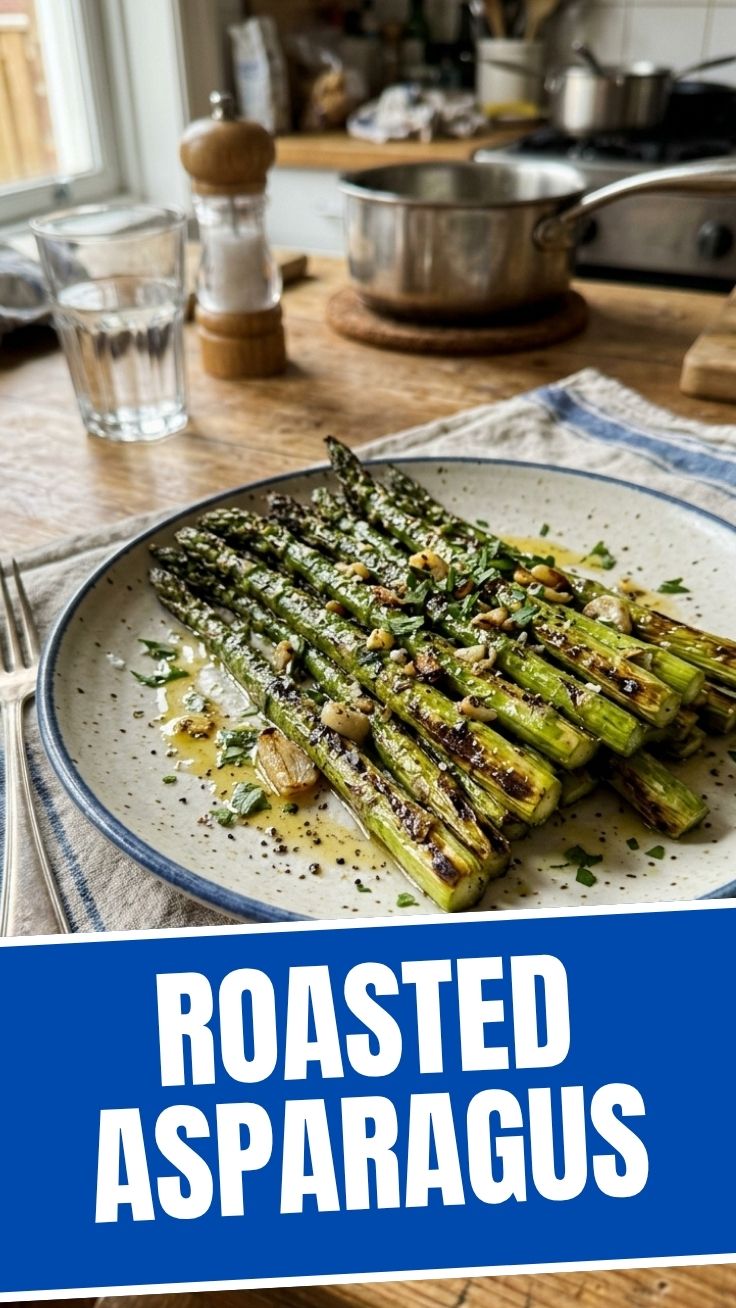
Transfer the baking sheet to the preheated 425°F oven. Roast for 8 minutes, then remove the sheet and carefully turn each spear with tongs for even cooking. Return to the oven for another 3–6 minutes, depending on thickness. Texture cue: Spears are ready when they’re bright green with golden-brown spots and can be pierced with a fork but still offer slight resistance. Remember, perfect Roasted Asparagus requires watching closely—thin spears may need only 7–8 minutes total. For creative variations, explore other Asparagus recipes that incorporate different seasoning profiles or cooking methods.
Step 4: Finish and Serve
Remove from the oven and let rest for 2 minutes. If using, squeeze fresh lemon juice over the top or sprinkle with Parmesan. Serve immediately while hot and crisp.
—
Nutritional Benefits & Advantages
Asparagus is a powerhouse of nutrients packed into low-calorie spears. Each serving (about 5–6 spears) provides:
– Fiber: 2.8g (10% DV) – Supports digestive health
– Vitamin K: 57% DV – Essential for blood clotting and bone health
– Folate: 34% DV – Important for cell growth and DNA synthesis
– Vitamin A: 18% DV – Supports eye health and immune function
– Antioxidants: Glutathione and rutin help combat oxidative stress
Roasting with olive oil enhances absorption of fat-soluble vitamins while preserving more nutrients compared to boiling. This method also requires no added butter or cream, making it naturally low in calories (approximately 50–60 calories per serving) and suitable for ketogenic, paleo, and weight-management diets.
—
Tips, Variations & Cooking Advice
Flavor Variations
– Garlic Herb: Add 2 minced garlic cloves and 1 teaspoon dried thyme 3 minutes before roasting ends
– Balsamic Glaze: Drizzle with balsamic reduction after roasting for sweet-tangy depth
– Spicy Option: Sprinkle with red pepper flakes before roasting
– Umami Boost: Toss with 1 tablespoon toasted sesame oil and soy sauce before roasting
Alternative Cooking Methods
– Air Fryer: Cook at 380°F for 6–8 minutes, shaking halfway
– Grill: Direct heat over medium-high flame for 5–7 minutes, turning once
– Broiler: Place 4 inches from heat source for 4–6 minutes (watch carefully)
Dietary Adaptations
– Gluten-free: Naturally compliant; just verify seasoning blends
– Dairy-free: Skip Parmesan or use nutritional yeast
– Low-sodium: Reduce salt or use potassium-based salt substitute
—
Common Mistakes to Avoid
| Mistake | Solution |
|———|———-|
| Overcooking until mushy | Roast at high heat (425°F+) and check at minimum time; residual heat continues cooking |
| Soggy texture | Dry asparagus thoroughly before seasoning; avoid overcrowding the pan |
| Woody, tough ends | Always trim the bottom 1–2 inches; the snap test is foolproof |
| Burned tips | Cover tips loosely with foil during last 3 minutes if they brown too quickly |
| Uneven cooking | Spread spears in single layer; use same-thickness spears or separate thick and thin ones |
—
Storage & Meal Prep Tips
Refrigeration: Store leftover roasted asparagus in an airtight container for up to 3 days. Place a paper towel in the container to absorb excess moisture.
Freezing: While possible, texture changes upon thawing. If freezing, blanch fresh asparagus for 2 minutes first, then roast after thawing.
Reheating: For best texture, reheat in a 400°F oven for 5–7 minutes or in an air fryer at 375°F for 3–4 minutes. Microwaving will make spears limp.
Meal prep: Roast a double batch and refrigerate for quick salads, pasta additions, or breakfast omelets. Cold roasted asparagus adds wonderful texture to grain bowls.
—
Conclusion
Mastering Roasted Asparagus at home transforms a simple vegetable into a restaurant-quality side dish that’s ready in under 30 minutes. The key takeaways: choose fresh, uniform spears; season generously with quality oil; roast at high heat; and watch for golden-brown spots as your doneness cue. This method works reliably every time, whether you’re serving it alongside grilled steak or tossing it into a spring salad. If you’re looking to expand your culinary repertoire, consider trying different Asparagus recipes that explore diverse flavor profiles. Give this technique a try tonight—you’ll never settle for steamed asparagus again. Share your results in the comments below, and don’t forget to pin this post for later!
—
FAQs
1. Can I use thick or thin asparagus for roasting?
Yes, but adjust cooking time. Thin spears (pencil-thin) need 6–8 minutes, while thick spears (1/2 inch diameter) require 12–15 minutes. Check for fork-tenderness.
2. My asparagus turned out rubbery—what went wrong?
Rubbery texture typically means undercooking or insufficient heat. Ensure oven reaches 425°F and avoid overcrowding. If using thick spears, allow extra time.
3. Is it necessary to peel asparagus?
Only for very thick spears (diameter > 1/2 inch). For standard market asparagus, peeling isn’t required—just trim woody ends.
4. Can I prepare asparagus ahead of time?
Yes, you can trim and wash asparagus up to 2 days ahead. Store upright in a glass with 1 inch of water, covered loosely with a plastic bag, in the refrigerator.
5. Why does my roasted asparagus taste bitter?
Bitterness may come from overseasoning with pepper or using low-quality oil. Also, older asparagus can develop bitterness—look for fresh spears with bright green color and tight tips.
Quick way to grow: 4-Star Roasted AsparagusRoasted Asparagus
Ingredients
Equipment
Method
- Preheat your oven to 400°F (200°C) and prepare a baking sheet by lining it with parchment paper for easy cleanup.
- Wash the asparagus thoroughly and snap off the tough, woody ends; pat them dry with a clean paper towel.
- In a medium bowl, drizzle the trimmed asparagus with olive oil, then sprinkle with garlic powder, salt, and black pepper, tossing until evenly coated.
- Spread the seasoned asparagus in a single layer on the prepared baking sheet, ensuring no pieces are overlapping for even cooking.
- Roast for 10-15 minutes, or until the asparagus is tender-crisp and slightly browned.
- Carefully remove the roasted asparagus from the oven and serve immediately as a delicious side dish.