Why This Chilled Tomato Soup Will Transform Your Summer Meals
Have you ever wondered why restaurant-quality Gazpacho (Classic) tastes so refreshingly vibrant, yet your homemade versions often fall flat? The secret lies not in complexity, but in understanding the delicate balance of ripe produce, proper seasoning, and the right technique. Preparing this iconic Spanish recipe at home is invaluable because it gives you full control over ingredients—ensuring a preservative-free, nutrient-dense dish that costs a fraction of what you’d pay at a tapas bar. Once you master this simple method, you’ll never buy store-bought soup again.
Ingredients & Kitchen Tools
Core Ingredients
– 6 large ripe tomatoes (Roma or vine-ripened for sweetness and low water content)
– 1 cucumber (English or Persian, peeled to avoid bitterness)
– 1 red bell pepper (seeded and roughly chopped)
– 1/2 small red onion (finely diced; soak in cold water 5 minutes to mellow harshness)
– 2 garlic cloves (minced or crushed)
– 3 tablespoons extra-virgin olive oil (strongly flavored, for emulsification)
– 2 tablespoons sherry vinegar (or red wine vinegar for milder taste)
– 1 teaspoon salt (preferably sea salt or kosher)
– 1/2 teaspoon cumin (optional, for earthiness)
– 1 cup stale bread (crust removed, cubed; gluten-free option: use 1/2 avocado)
Optional Substitutions
– Replace bread with 1/2 avocado for creaminess (vegan and gluten-free).
– Swap red onion with shallot for a milder bite.
– Use white wine vinegar instead of sherry vinegar if unavailable.
Kitchen Tools
– High-speed blender (immersion blender works but yields less smooth texture)
– Large mixing bowl
– Fine-mesh strainer (optional for ultra-smooth finish)
– Sharp chef’s knife and cutting board
– Measuring spoons and cup
– Airtight container for refrigerating
Prep Time & Cooking Schedule
– Active prep time: 20 minutes
– Chilling time: Minimum 2 hours (ideally 4+ hours or overnight)
– Total time: 2 hours 20 minutes to 24 hours
Plan ahead: Make gazpacho in the morning for dinner, or the night before for next-day lunch. This resting period allows flavors to meld and intensifies the tomato’s natural sweetness. Chilling also thickens the texture as the bread absorbs liquid.
Step-by-Step Instructions
Step 1: Prep the Vegetables
Core the tomatoes, peel the cucumber, and remove seeds from the bell pepper. Roughly chop all vegetables into 1-inch chunks. For a smoother final texture, ensure pieces are uniform.
Step 2: Soak the Bread
Place the stale bread cubes in a small bowl and cover with 1/4 cup cold water. Let sit for 5 minutes until softened. Squeeze out excess water (but don’t discard—squeeze it into the blender later). This step is critical for thickening without making the soup gluey.
Step 3: Blend the Base
In a high-speed blender, combine tomatoes, cucumber, bell pepper, red onion, garlic, and soaked bread. Blend on high for 45–60 seconds until smooth. If your blender has a tamper, use it to push ingredients down. Important: Do not over-blend—stopping when no large chunks remain ensures a silky but not watery consistency.
Step 4: Season and Emulsify
Add olive oil, sherry vinegar, salt, and cumin. Pulse 4–5 times just to combine—this prevents the oil from breaking. Taste and adjust: If the soup tastes flat (typical with out-of-season tomatoes), add 1/2 teaspoon more vinegar or a pinch of sugar. The classic Gazpacho (Classic) should have a balanced tangy-sweet profile.
Step 5: Strain (Optional)
For an ultra-refined texture reminiscent of fine-dining versions of this Spanish recipe, push the blended mixture through a fine-mesh strainer using a spatula. This removes tomato skins and seeds. Expect about 1/4 cup residue from 6 tomatoes—discard it.
Step 6: Chill and Rest
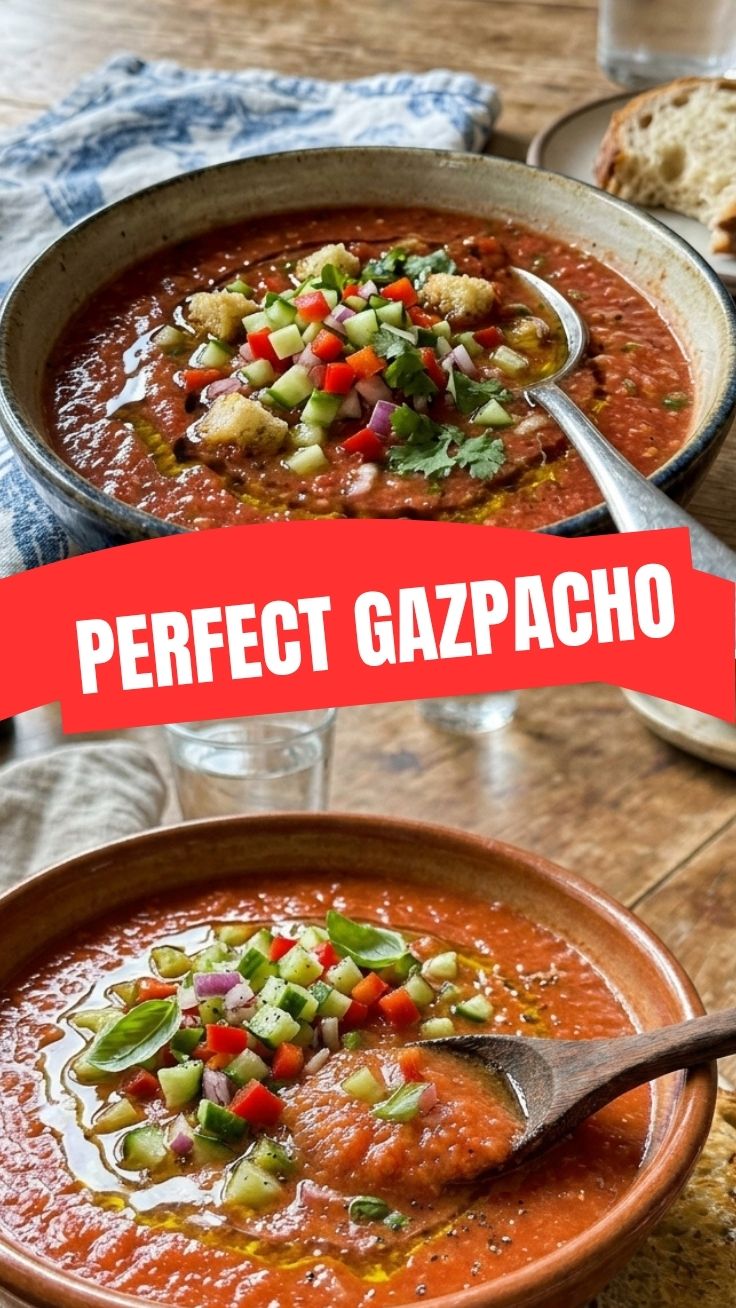
Transfer the gazpacho to an airtight container and refrigerate for at least 2 hours. The soup thickens significantly as it cools. If it’s too thick after chilling, thin with 1–2 tablespoons cold water or ice cubes. Serve in chilled bowls with garnishes: diced cucumber, croutons, or a drizzle of olive oil.
Tip: For temperature control, place serving bowls in the freezer 10 minutes before plating—this keeps the soup cold without watering it down.
Nutritional Benefits & Advantages
This gazpacho is a powerhouse of vitamins A, C, and E from tomatoes and bell peppers, while olive oil provides heart-healthy monounsaturated fats. The cucumber adds hydration (96% water content) and potassium, helping regulate blood pressure. Per 1-cup serving: approximately 120 calories, 8g fat (mostly healthy), 3g fiber, and 4g protein. It’s naturally gluten-free (using avocado substitute), vegan, dairy-free, and low in sodium when using salt sparingly. The absence of cooking preserves heat-sensitive nutrients like lycopene’s antioxidant activity—making it superior to cooked tomato soups for cancer-fighting properties.
Tips Variations & Cooking Advice
– Flavor twist: Add 1/2 ripe avocado for creamy texture (omit bread for keto-friendly version).
– Spicy kick: Blend in 1/4 jalapeño (seeded) or 1 teaspoon smoked paprika.
– Herb infusion: Stir in 1/4 cup fresh basil or cilantro after blending for brightness.
– Watermelon variation: Replace half the tomatoes with cubed watermelon for a fruit-forward summer soup.
– Texture preference: For chunkier gazpacho, reserve 1/4 cup diced vegetables and stir them in after blending.
– Dietary adaptation: To make it nut-free (already is), skip any optional nut-based garnishes.
Common Mistakes to Avoid
1. Using under-ripe tomatoes: Causes watery, bland soup. Always choose deep-red, heavy tomatoes that yield slightly to pressure.
2. Over-blending: Turns olive oil bitter. Stop when the mixture is smooth but not frothy.
3. Skipping the chill time: Warm gazpacho tastes one-dimensional. Minimum 2 hours is non-negotiable.
4. Too much garlic: Raw garlic intensifies overnight—start with 1 clove and add more to taste.
5. Not salting enough: Salt is crucial for flavor. Taste after chilling (cold dulls perception) and adjust accordingly.
Storage & Meal Prep Tips
– Refrigeration: Store in an airtight container for up to 4 days. The flavor actually improves after 24 hours.
– Freezing: Pour into freezer-safe bags (remove air) and freeze up to 3 months. Thaw overnight in fridge—texture may be slightly grainier; re-blend with 1 teaspoon vinegar to refresh.
– Reheating: Gazpacho is served cold. If you prefer it at room temperature, let it sit 15–20 minutes on the counter—never microwave it, as heat destroys the fresh taste.
– Meal prep: Double the recipe and portion into individual mason jars for grab-and-go lunches. Keep garnishes separate to avoid sogginess.
Conclusion
To summarize, mastering this Gazpacho (Classic) hinges on three non-negotiable steps: using ripe, high-quality produce, allowing sufficient chilling time, and balancing acidity with salt. Whether you’re seeking a refreshing appetizer for a summer barbecue or a light meal packed with nutrients, this Spanish recipe delivers consistently. The payoff—a velvety, silky, deeply flavorful soup that tastes like summer in a bowl—is well worth the minimal effort. I encourage you to experiment with the variations above and share your results; your version might just become a family tradition. For more cold soup inspiration, explore our guide to chilled cucumber dill soup or roasted red pepper gazpacho.
FAQs
1. Can I use canned tomatoes instead of fresh?
Yes, in a pinch. Use fire-roasted diced tomatoes (drained) and reduce salt by half. However, fresh tomatoes yield superior flavor—look for in-season San Marzano or Amish Paste varieties.
2. How do I fix a gazpacho that’s too watery?
Blend in 1/2 cup more soaked bread (or avocado) and chill again. Alternatively, cook 1/4 cup tomato paste in a pan for 2 minutes, cool completely, then stir in.
3. Why is my gazpacho bitter?
Likely from over-blended olive oil or using garlic that’s green in the center. The solution: stir in 1 tablespoon honey or 1/4 teaspoon sugar to mask bitterness, then re-blend gently.
4. Can I make this without a blender?
Yes. Finely chop all ingredients by hand (at least 3mm cubes) and whisk in a bowl. The texture will be rustic but authentic—that’s how Andalusian grandmothers made it.
5. How long can I keep leftover gazpacho at room temperature?
No more than 2 hours due to raw vegetables’ bacteria risk. If serving outdoors, nestle the bowl in ice. After that, refrigerate immediately.
Gazpacho (Classic)
Ingredients
Equipment
Method
- Roughly chop the tomatoes, cucumber, bell pepper, and red onion. Combine all chopped vegetables with the minced garlic, olive oil, vinegar, and the optional stale bread in a large bowl. Season with salt and pepper.
- Using an immersion blender or a regular blender, blend the mixture until smooth. For a smoother gazpacho, pass the mixture through a fine-mesh sieve to remove any skins or seeds.
- Cover the gazpacho and refrigerate for at least 2 hours, or preferably overnight, to allow the flavors to meld. Serve chilled, garnished with a drizzle of olive oil and croutons if desired.