The Ultimate Beef Bulgogi Bowl Recipe: A Taste of Korea in Your Kitchen
Have you ever craved the smoky, sweet, and savory flavors of Beef Bulgogi but thought it was too complicated to make at home? Think again. This iconic Korean dish, a cornerstone of Korean BBQ culture, is surprisingly simple to recreate in your own kitchen. With thinly sliced beef marinated in a symphony of soy sauce, sesame oil, garlic, and pear, you can achieve that restaurant-quality taste without the grill. This post will guide you through every step, from selecting the perfect cut of beef to achieving that caramelized, charred exterior that makes this dish unforgettable. Get ready to transform your weeknight dinner with this Beef Bulgogi recipe, a true gem of Korean BBQ that is both accessible and deeply satisfying.
Ingredients & Kitchen Tools
Here is everything you need to prepare this mouthwatering Korean feast. Each item is chosen for its role in building authentic flavor and achieving the perfect texture.
Essential Ingredients
– 1.5 lbs Beef Sirloin or Ribeye: Thinly sliced against the grain (ask your butcher or partially freeze for easy slicing). The marbling in ribeye adds richness, while sirloin is a leaner, yet tender, option.
– 1/2 Asian Pear (or Bosc Pear): Grated. This is a key tenderizer and natural sweetener in the traditional marinade.
– 1/2 cup Soy Sauce: Use low-sodium to control saltiness.
– 3 tbsp Brown Sugar: Or honey, for sweetness and caramelization.
– 2 tbsp Sesame Oil: For that nutty, toasty flavor.
– 4 cloves Garlic (minced): Fresh is non-negotiable for peak aroma.
– 1 tbsp Ginger (grated): Adds warmth and complexity.
– 2 Green Onions (chopped): For garnish and flavor.
– 1 tbsp Toasted Sesame Seeds: For finishing.
– 1 tbsp Gochujang (Korean chili paste, optional): Adds a subtle spicy kick.
Kitchen Tools
– Large Bowl: For mixing the marinade.
– Sharp Knife or Mandoline: For ultra-thin slicing.
– Grill Pan, Cast Iron Skillet, or Wok: High heat is critical for searing.
– Tongs: For flipping the beef.
– Cutting Board
Optional Substitutions
– For a Fruit-Free Marinade: Substitute the pear with 2 tbsp of apple juice or a dash of mirin.
– For a Gluten-Free Version: Use tamari or coconut aminos instead of soy sauce.
– For a Vegetarian Option: Replace beef with 2 cups of thickly sliced king oyster mushrooms or extra-firm tofu.
Prep Time & Cooking Schedule
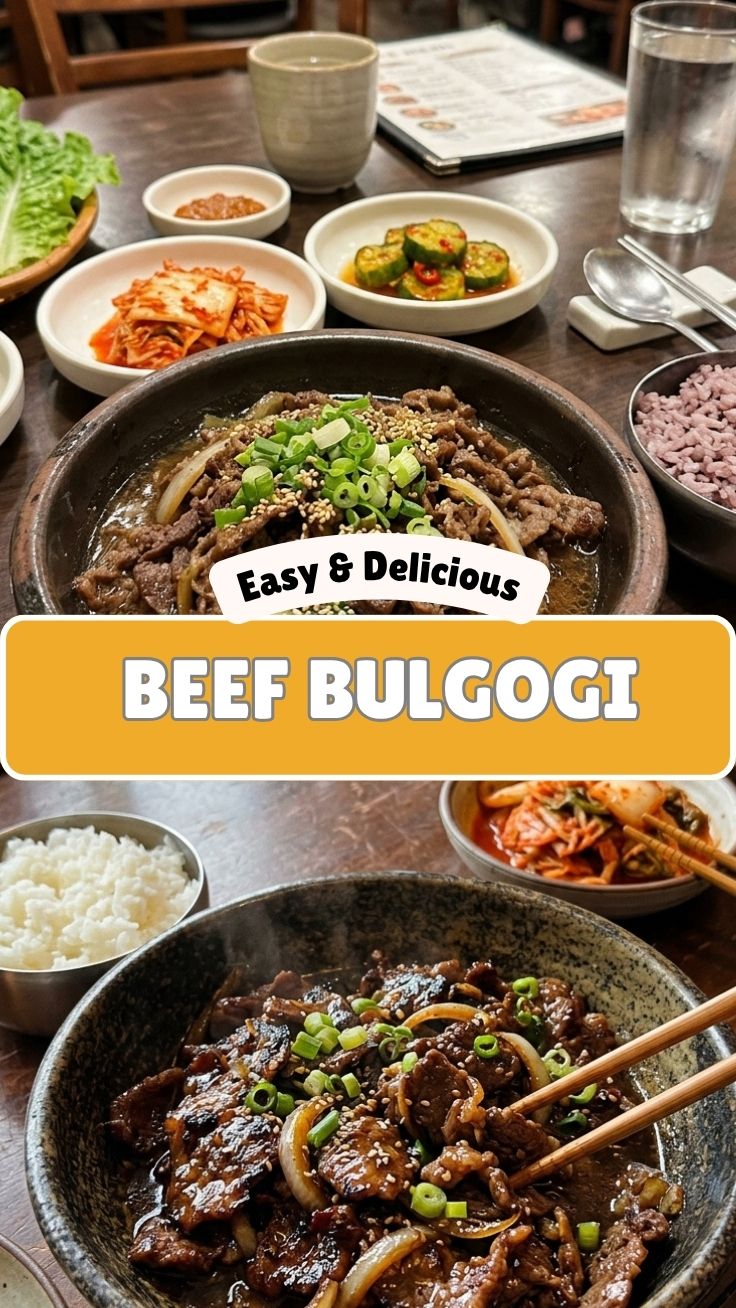
This recipe requires a little forward planning to allow the beef to soak up the incredible flavors. Here is your timing breakdown:
– Marinating Time: 30 minutes (minimum) to 4 hours (ideal). Do not exceed 12 hours, as the pear enzyme can make the meat mushy.
– Prep Time: 15 minutes (slicing, grating, mixing).
– Cooking Time: 5-7 minutes over high heat.
– Total Active Time: 20 minutes.
– Best To Start: Begin marinating in the morning for a quick dinner, or just before you prep your rice.
Step-by-Step Instructions
Follow these steps to achieve perfectly caramelized, juicy Beef Bulgogi that rivals your favorite Korean BBQ restaurant.
Step 1: Prepare the Marinade
In a large bowl, combine the grated pear, soy sauce, brown sugar, sesame oil, minced garlic, grated ginger, and gochujang (if using). Whisk until the sugar dissolves. The pear acts as a natural tenderizer, breaking down the beef’s proteins for an incredibly soft texture.
Step 2: Marinate the Beef
Add the thinly sliced beef to the bowl. Use your hands (wear gloves if preferred) to massage the marinade into every slice, ensuring even coating. Cover and refrigerate for at least 30 minutes, ideally 1-2 hours. Pro Tip: Do not drain the marinade; the beef will release its own juices during cooking.
Step 3: Sear the Beef
Heat your grill pan or cast iron skillet over high heat until it’s smoking hot. Add a thin layer of vegetable oil. Working in batches (do not overcrowd the pan), lay the beef slices flat in a single layer. Let them cook undisturbed for 1-2 minutes until the edges start to caramelize and char. Flip and cook for another 30-60 seconds. The goal is a deep, brown sear, not a steamed texture.
Step 4: Toss and Finish
Once all the beef is cooked, return it all to the pan with the remaining marinade juices. Toss for 30 seconds over high heat until the sauce glazes the meat and thickens slightly. Remove from heat immediately to prevent drying out.
Nutritional Benefits & Advantages
This Beef Bulgogi bowl is not just delicious; it’s also packed with nutritional advantages. Beef is an excellent source of high-quality protein, iron, zinc, and B vitamins, which are crucial for energy production and immune function. The marinade contributes to its health profile: garlic and ginger are potent anti-inflammatory and antioxidant powerhouses. The use of a fruit-based tenderizer (pear) allows for less added sugar compared to many Western marinades. When served over a bed of brown rice or cauliflower rice with fresh vegetables, it becomes a balanced, macro-friendly meal.
Tips Variations & Cooking Advice
– Spicy Variation: Double the gochujang and add a teaspoon of gochugaru (Korean chili flakes) for a fiery kick.
– Weeknight Shortcut: Use pre-marinated beef bulgogi from a Korean market. Just sear it as directed.
– Low-Sodium: Use coconut aminos and skip the added salt.
– Dairy-Free/Keto: This recipe is naturally dairy-free! For keto, replace brown sugar with monk fruit sweetener and serve over cauliflower rice.
– Method: For a deeper, smoky flavor, cook the beef on a charcoal or gas grill. Use a perforated grill pan to prevent slices from falling through.
Common Mistakes to Avoid
1. Overcrowding the Pan: This is the #1 mistake. It traps steam and prevents the beef from browning. Cook in small batches for that perfect char.
2. Skipping the Marination: Even 30 minutes makes a difference. The pear is essential for tenderizing.
3. Overcooking the Beef: Bulgogi slices are thin. They cook in 2-3 minutes total. Overcooking makes them tough.
4. Using the Wrong Cut: Avoid tough cuts like chuck or round. Sirloin, ribeye, or even flank steak work best.
5. Not Using High Heat: Low heat will result in a gray, soggy mess. The high heat is what creates the signature caramelization.
Storage & Meal Prep Tips
– Refrigeration: Store leftover cooked bulgogi in an airtight container for up to 4 days.
– Freezing: You can freeze the cooked beef for up to 2 months. Let it cool completely, then place in a freezer-safe bag. The flavors may intensify slightly upon reheating.
– Reheating: The best method is in a hot skillet with a splash of water to rehydrate. Microwave in 30-second bursts, but note it can make the texture softer. To maintain that slightly chewy texture, reheat in a non-stick pan over medium-high heat.
– Meal Prep: Marinate the beef raw and vacuum-seal it for the fridge. It stays fresh for 2-3 days. You can also cook a large batch and portion it out for bowls throughout the week.
Conclusion
Mastering Beef Bulgogi at home is more than just a recipe; it’s an entry point into the vibrant world of Korean BBQ. You now have the knowledge to create a dish that is simultaneously elegant and effortless, perfect for a quick weeknight dinner or a show-stopping weekend meal. The balance of sweet, savory, and umami flavors, combined with the tender texture of the beef, guarantees a dish that will impress. We encourage you to try this recipe, customize it with your favorite vegetables, and share your results. For more Korean-inspired culinary adventures, explore our other recipes for kimchi jjigae or japchae.
FAQs
1. Can I use chicken or pork instead of beef?
Absolutely. This marinade works beautifully with chicken thighs or thinly sliced pork shoulder. Adjust cooking time as needed—chicken requires 4-5 minutes per side, while pork cooks similarly to beef.
2. My beef turned out tough. What went wrong?
This usually happens from overcooking or slicing the meat too thick. Ensure your pan is smoking hot and that you are cooking very thin slices (1/8 inch or less). Also, avoid boiling the meat in its juices; sear it quickly.
3. Can I make this without a grill pan?
Yes. A heavy-bottomed cast iron skillet or a non-stick pan works perfectly. The key is high heat. If using a non-stick, be careful not to overheat it.
4. How long can I marinate the beef?
For best texture, marinate for 30 minutes to 4 hours. Beyond that, the pear enzymes can break down the meat too much, resulting in a mushy texture.
5. What can I serve with this Beef Bulgogi bowl?
Top steamed white rice or quinoa with the beef, kimchi, sliced cucumber, shredded carrots, pickled radish, and a drizzle of ssamjang (Korean dipping sauce). A fried egg on top is a fantastic addition.
Proven way to grow 5 Star Beef BulgogiBeef Bulgogi
Ingredients
Equipment
Method
- Prepare the beef by slicing it thinly against the grain; you can partially freeze it first for easier slicing.
- In a bowl, combine soy sauce, brown sugar, sesame oil, minced garlic, grated ginger, black pepper, and grated pear or apple if using.
- Add the sliced beef to the marinade, ensuring it's fully coated, then cover and refrigerate for at least 30 minutes, or preferably 2-4 hours for maximum flavor.
- Heat vegetable oil in a large skillet or wok over medium-high heat.
- Cook the marinated beef in batches to avoid overcrowding, stirring frequently to ensure even cooking.
- Cook each batch for 2-3 minutes until the beef is browned and cooked through, then remove and set aside, repeating with remaining beef.
- Garnish the cooked bulgogi with sesame seeds and sliced green onions.
- Serve immediately with steamed rice, lettuce wraps, kimchi, or a side of gochujang.