The Ultimate Guide to the Heartiest Beef Stew You’ll Ever Make
Have you ever craved a meal that wraps you in warmth like a favorite blanket on a cold winter night? That’s exactly what a perfectly cooked beef stew delivers—tender chunks of beef, carrots softened to buttery sweetness, and a broth so rich it clings to every spoonful. Preparing this dish at home isn’t just about feeding your family; it’s about controlling quality, saving money, and infusing your kitchen with an aroma that says “comfort.” Whether you’re a seasoned cook or a beginner, this guide will walk you through the science and soul behind a flawless stew. And if you’re short on time, the slow cooker beef stew method offers the same deep flavor with minimal effort.
—
Ingredients & Kitchen Tools
Ingredients
– Beef chuck (2 lbs) – Cut into 1½-inch cubes; chuck’s marbling melts into tenderness.
– All-purpose flour (¼ cup) – For dredging; creates a silky sauce base.
– Olive oil (2 tbsp) – For browning; use avocado oil if preferred.
– Yellow onion (1 large, diced) – Sweetens as it cooks.
– Garlic (4 cloves, minced) – Fresh is best; jarred minced works in a pinch.
– Carrots (3, peeled and chunked) – Add natural sweetness.
– Celery (2 stalks, sliced) – Earthy flavor and texture.
– Potatoes (1 lb, Yukon Gold or Russet) – Cubed; Yukon hold shape better.
– Beef broth (4 cups, low-sodium) – Controls saltiness; homemade is ideal.
– Tomato paste (2 tbsp) – Deepens umami and color.
– Worcestershire sauce (1 tbsp) – Adds tangy complexity.
– Bay leaves (2) – Aromatic, remove before serving.
– Fresh thyme (2 sprigs) – Or ½ tsp dried.
– Salt and black pepper (to taste) – Season in layers.
– Frozen peas (1 cup, optional) – Stir in at the end for a pop of green.
Kitchen Tools
– Dutch oven or heavy-bottomed pot (5–6 qt) – Retains heat evenly.
– Sharp chef’s knife and cutting board.
– Wooden spoon or spatula.
– Measuring cups and spoons.
– Colander (if rinsing potatoes).
– Ladle (for serving).
Optional Substitutions
– Gluten-free: Use cornstarch or arrowroot powder instead of flour.
– Dairy-free: Skip butter if added; the stew is naturally dairy-free.
– Low-carb: Replace potatoes with turnips or cauliflower.
—
Prep Time & Cooking Schedule
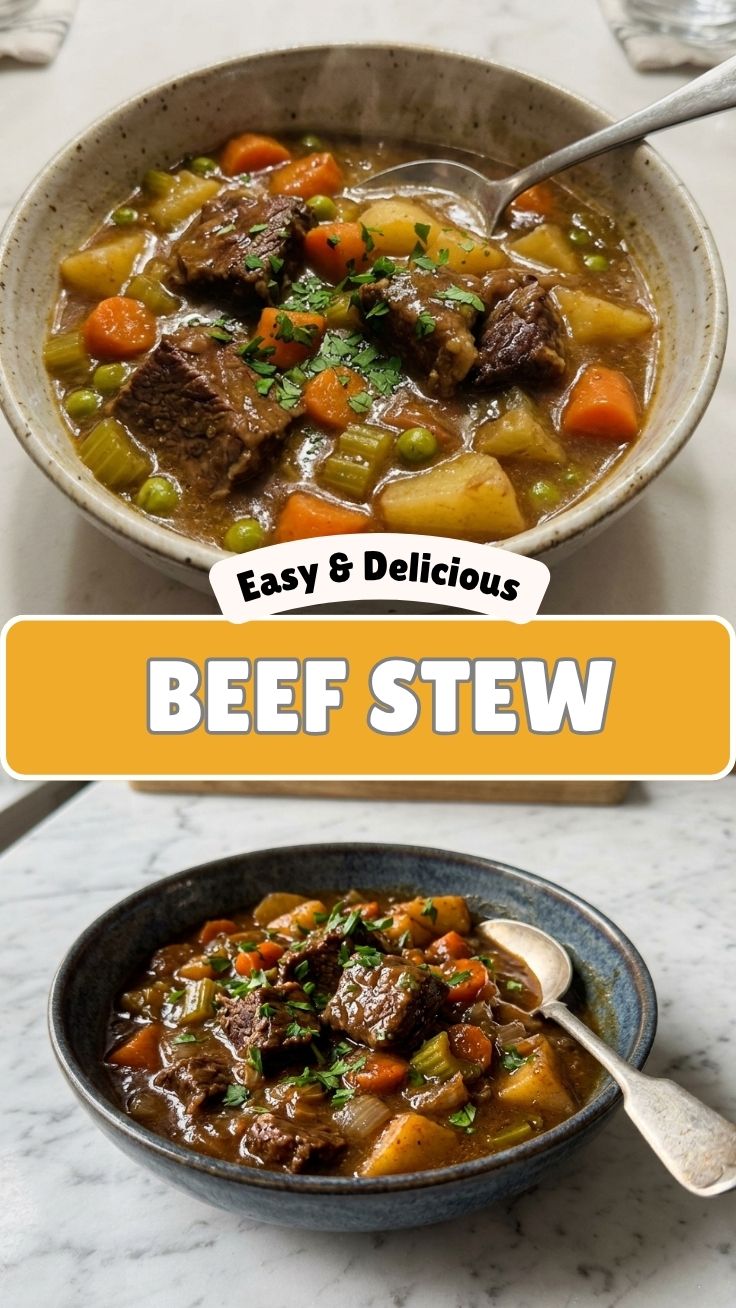
– Prep time: 20 minutes (chopping, measuring, trimming beef).
– Cooking time: 2 to 2.5 hours on the stovetop, or 6–8 hours on low in a slow cooker.
– Resting time: 10 minutes before serving (allows flavors to settle).
Context: Plan this stew for a lazy Sunday or a busy weeknight if using a slow cooker. The stovetop version requires occasional stirring, while the Crock-Pot lets you set it and forget it. The longer it simmers, the more tender the beef becomes.
—
Step-by-Step Instructions
1. Prep the beef – Pat the chuck cubes dry with paper towels. This step is crucial for browning. Season generously with salt and pepper, then dredge in flour, shaking off excess.
2. Brown in batches – Heat oil in your Dutch oven over medium-high heat. Add beef in a single layer (don’t crowd). Cook until deep brown on all sides, about 3–4 minutes per batch. Transfer to a plate.
3. Sauté aromatics – Reduce heat to medium. Add onions and cook 4 minutes until translucent. Stir in garlic, tomato paste, and Worcestershire sauce; cook 1 minute until fragrant.
4. Deglaze the pot – Pour in ½ cup of broth and scrape up browned bits from the bottom. This releases flavor.
5. Combine everything – Return beef to the pot. Add remaining broth, carrots, celery, potatoes, bay leaves, and thyme. Bring to a gentle boil.
6. Simmer low and slow – Reduce heat to low, cover, and let it simmer for 1.5–2 hours, stirring occasionally. The liquid should barely bubble. For a slow cooker beef stew, transfer everything to a Crock-Pot after step 4 and cook on low for 6–8 hours or high for 3–4 hours.
7. Finish and serve – Remove bay leaves and thyme stems. Stir in peas (if using) and let them warm through for 2 minutes. Taste and adjust salt and pepper. Serve hot with crusty bread.
Temperature tip: A steady low simmer ensures the collagen in the beef breaks down without toughening the meat. If the liquid reduces too much, add a splash of broth.
—
Nutritional Benefits & Advantages
This beef stew is a powerhouse of nutrition. A single serving (about 1½ cups) provides roughly:
– Protein: 30–35g from beef, supporting muscle repair.
– Vitamin A: 120% of daily needs from carrots and potatoes.
– Iron: 25% of daily value – beef’s heme iron is highly absorbable.
– Fiber: 4–5g from vegetables and potatoes.
The slow cooking method retains water-soluble vitamins better than high-heat roasting. Additionally, the broth-based stew is naturally low in added sugars and can be made sodium-controlled with low-sodium broth. For those watching carbs, skipping the potatoes reduces the count significantly.
—
Tips, Variations & Cooking Advice
– Flavor variations: Add a splash of red wine (½ cup) after deglazing, or stir in a tablespoon of balsamic vinegar for acidity. Smoked paprika or chipotle powder gives a smoky kick.
– Ingredient swaps: Replace beef with lamb or venison for a gamey twist. Use sweet potatoes instead of regular potatoes for extra fiber.
– Cooking method: The stovetop yields a slightly thicker sauce due to evaporation. For an even thicker result, mash a few potato chunks against the pot side.
– Dietary adaptations: To make it gluten-free, use a 1:1 gluten-free flour blend or skip the flour and thicken with a cornstarch slurry (2 tbsp cornstarch + 2 tbsp cold water) stirred in during the last 10 minutes.
– Portion changes: This recipe serves 6–8. Halve it for a smaller household, but be careful not to reduce the simmering time too much.
—
Common Mistakes to Avoid
– Skipping the browning step – Without browning, the stew lacks depth and color. The Maillard reaction is non-negotiable.
– Overcrowding the pot – Meat steams instead of browns. Brown in batches.
– Boiling too vigorously – High heat toughens beef and makes it stringy. Keep it at a gentle simmer.
– Underseasoning early – Salt draws out moisture and helps flour distribute. Season beef before dredging, then adjust at the end.
– Skipping the resting time – Serving immediately while boiling hot can overwhelm the palate. Resting allows flavors to meld.
—
Storage & Meal Prep Tips
– Refrigeration: Cool stew completely (within 2 hours) and store in an airtight container for up to 4 days. The flavor actually improves overnight.
– Freezing: Portion into freezer-safe bags or containers, leaving 1 inch headspace. Freeze for up to 3 months. Thaw in the refrigerator overnight.
– Reheating: Reheat gently on the stovetop over low heat, stirring occasionally. Add a splash of broth if it’s too thick. Avoid microwaving on high, which can make potatoes mushy.
– Meal prep: Chop vegetables and cut beef up to 2 days in advance. Store separately in the fridge. Brown the beef and cook the stew the day you plan to serve for best texture.
—
Conclusion
A truly satisfying beef stew is about more than just ingredients; it’s about patience, layering flavors, and understanding how heat transforms tough meat into velvet. Whether you choose the stovetop method or the hands-off slow cooker beef stew, this recipe delivers consistent, heartwarming results every time. The key is to brown deeply, simmer gently, and taste as you go. I encourage you to make this dish your own—add a twist, share a bowl with loved ones, and let that rich aroma fill your home. Once you’ve tried it, come back and tell me how it turned out. Your kitchen is about to smell incredible.
—
FAQs
1. Can I use a different cut of beef?
Yes. Chuck is ideal for its fat content, but bottom round or brisket also work. Avoid lean cuts like sirloin, which dry out.
2. How can I make my stew thicker without flour?
Mash a few cooked potato chunks against the side of the pot, or stir in a cornstarch slurry (1 tbsp cornstarch + 1 tbsp cold water) and simmer for 2 minutes.
3. My beef is still tough after 2 hours. What went wrong?
Either the stew wasn’t simmering low enough (temperature too high) or the beef was cut too large. Continue simmering for another 30–60 minutes; it will eventually tenderize.
4. Can I add wine if I’m avoiding alcohol?
Yes, replace the wine with additional beef broth plus 1 tablespoon of red wine vinegar for acidity.
5. How long can I leave the stew in the slow cooker on warm?
On the “warm” setting, stew can safely stay 2–3 hours. After that, the texture may degrade. Refrigerate leftovers promptly.
Proven way to grow a perfect Beef Stew
Ingredients
Equipment
Method
- In a bowl, combine flour, salt, and pepper, then toss the beef cubes to coat them evenly.
- Heat olive oil in a large Dutch oven over medium-high heat, then brown the beef in batches and set it aside.
- Add chopped onion to the Dutch oven and cook until softened, then stir in minced garlic, sliced carrots, and celery, cooking for another 5 minutes.
- Return the beef to the pot, then pour in beef broth and add tomato paste, Worcestershire sauce, thyme, and bay leaves.
- Bring the mixture to a simmer, then reduce heat to low, cover, and cook for 1.5 to 2 hours, or until the beef is tender.
- Stir in the cubed potatoes and continue to simmer for another 30-40 minutes, or until the potatoes are tender.
- Remove the bay leaves, then taste and adjust seasoning as needed.
- Garnish with fresh parsley before serving hot.