The Ultimate Guide to Making Fresh Restaurant-Style Salsa at Home
Have you ever wondered why restaurant Salsa tastes so vibrant and addictive, yet when you try to replicate it at home, something falls flat? The secret isn’t a hidden ingredient—it’s the perfect balance of fresh produce, proper seasoning, and technique. Preparing homemade salsa from scratch transforms your cooking routine, delivering bold flavors without preservatives or artificial additives. Whether you’re hosting a taco night or simply craving a healthy snack, mastering this recipe elevates your kitchen game. Ready to ditch the jarred versions and dive into a world of freshness? Let’s explore how to create a mouthwatering batch that rivals your favorite cantina—and along the way, we’ll even touch on how the rhythm of cooking mirrors the energy of Salsa dance.
—
Ingredients & Kitchen Tools
Ingredients:
– 6 medium Roma tomatoes – Firmer flesh yields less watery salsa; can substitute with vine-ripened tomatoes.
– 1 medium white onion – Diced finely; red onion adds mild sweetness as an alternative.
– 2 fresh jalapeño peppers – Seeds and membranes control heat; serrano peppers work for more spice.
– ½ cup fresh cilantro – Leaves and tender stems only; parsley if cilantro is disliked.
– 3 cloves garlic – Minced; ½ teaspoon garlic powder in a pinch.
– 1 lime – Juiced (about 2 tablespoons); bottled juice loses brightness.
– 1 teaspoon salt – Sea salt or kosher preferred; adjust to taste.
– ½ teaspoon cumin – Adds earthy warmth; optional but recommended.
– Optional: 1 tablespoon olive oil for richer flavor or ¼ teaspoon sugar to balance acidity.
Kitchen Tools:
– Cutting board and chef’s knife
– Mixing bowl (large enough for tossing)
– Food processor or blender (preferred for smoother texture)
– Measuring spoons and cups
– Strainer or colander (if deseeding tomatoes)
– Citrus juicer or reamer
—
Prep Time & Cooking Schedule
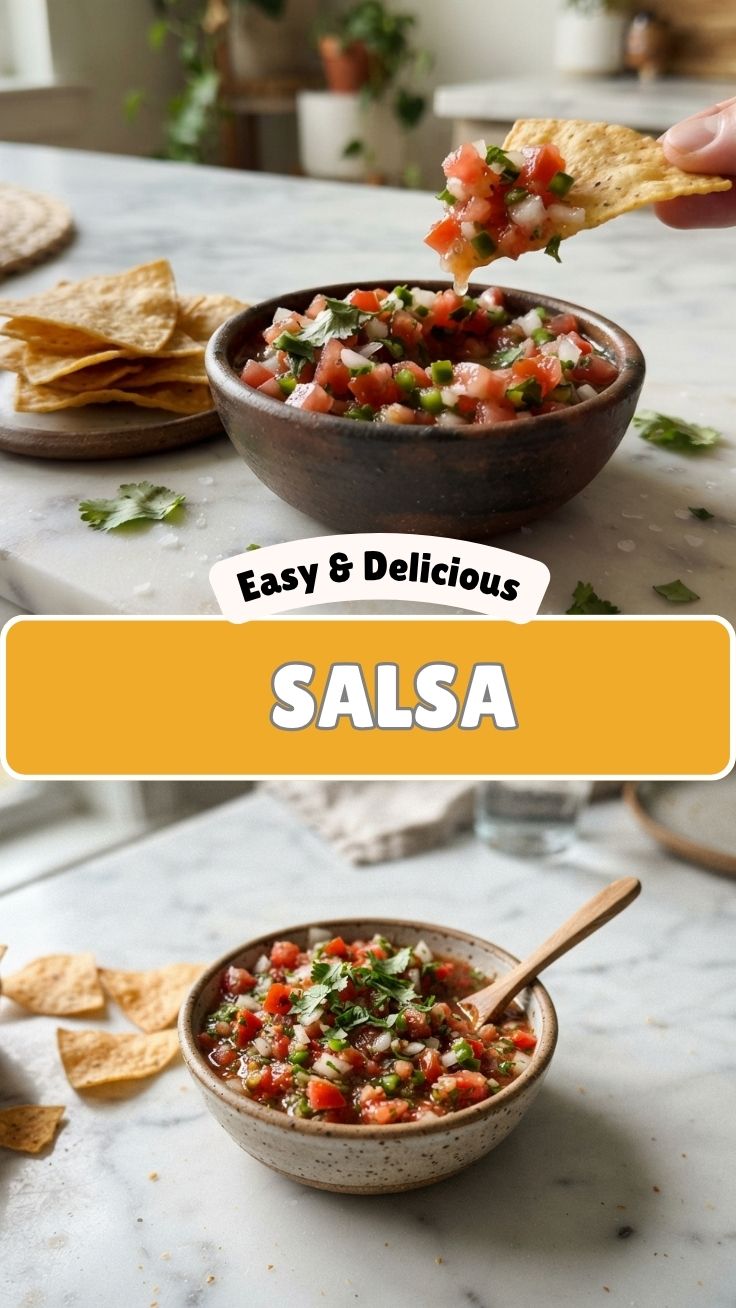
Total Time: 20 minutes (no cooking required)
– Prep Time: 15 minutes (washing, chopping, deseeding)
– Resting Time: 5 minutes (allows flavors to marry)
– No marinating required, but resting overnight in the refrigerator deepens complexity.
This fresh Salsa is uncooked, making it ideal for hot summer days or quick meal prep. Unlike slow-cooked versions, this recipe retains maximum crunch and brightness. Plan to serve immediately or chill for up to 3 days.
—
Step-by-Step Instructions
1. Prepare the tomatoes: Cut Roma tomatoes in half and scoop out seeds with a small spoon (this prevents watery salsa). Dice into ¼-inch pieces and place in a mixing bowl.
2. Chop aromatics: Finely dice white onion, mince jalapeño (remove seeds for milder heat), and chop cilantro leaves. Add to tomatoes.
3. Crush the garlic: Press or mince garlic cloves into the mixture. Toss gently to combine.
4. Season and acidify: Squeeze lime juice over everything, add salt and cumin. Stir thoroughly. Tip: Taste and adjust salt or lime—this is where the magic happens.
5. Blend (if desired): For smoother texture, transfer half the mixture to a food processor and pulse 3–4 times. Return to bowl and stir. Leaving it chunky creates a rustic feel, similar to how a Salsa dance balances structured steps with improvisation.
6. Rest: Let sit for 5 minutes at room temperature, then serve. For best flavor, refrigerate 30 minutes.
Temperature control tip: Keep salsa cold if not serving immediately—warmth dilutes acidity and texture.
—
Nutritional Benefits & Advantages
This homemade salsa is a nutritional powerhouse:
– Low in calories – Approximately 20 calories per half-cup serving.
– Rich in vitamins – Tomatoes provide vitamin C and lycopene (antioxidant); cilantro offers vitamin K and immune support.
– Hydrating – High water content supports digestion and skin health.
– Dietary benefits – Gluten-free, vegan, dairy-free, and Whole30-friendly.
– Metabolism aid – Capsaicin from jalapeños may boost metabolic rate slightly.
Compared to store-bought versions, you control sodium (often 75% less) and avoid added sugars or stabilizers.
—
Tips Variations & Cooking Advice
Flavor Twists:
– Smoky salsa: Roast tomatoes, onion, and jalapeño under broiler for 5 minutes before chopping.
– Fruity salsa: Add 1 cup diced mango or pineapple for sweetness.
– Herb swap: Use mint or basil instead of cilantro for a fresh twist.
Dietary Adaptations:
– Low-FODMAP: Use scallions instead of onion and omit garlic.
– Keto-friendly: Serve with cucumber slices instead of chips.
Alternative Methods:
– Hand-chopped salsa – For chunky texture, skip the processor and dice everything uniformly.
– Grilled salsa – Char ingredients on grill for deeper caramelization.
Portion Changes: This recipe yields ~2 cups. Double easily for parties.
—
Common Mistakes to Avoid
1. Soggy salsa from watery tomatoes – Always seed tomatoes; chilling releases excess moisture.
2. Over-blending into soup – Pulse carefully; aim for small chunks, not puree.
3. Skimping on salt – Salt amplifies other flavors; start with 1 teaspoon and add slowly.
4. Using bottled lime juice – Fresh juice provides necessary acidity; bottled juice tastes flat.
5. Not letting it rest – Immediate serving results in raw flavors; 5–30 minutes of rest melds ingredients.
—
Storage & Meal Prep Tips
– Refrigeration: Store salsa in an airtight glass container in the fridge for up to 4 days. Plastic containers may absorb odors.
– Freezing: Not recommended—texture becomes mushy upon thawing due to high water content.
– Reheating: Since this is fresh salsa, do not heat. If using as a cooked sauce, simmer gently for 5 minutes.
– Meal prep hack: Prep ingredients (chopped tomatoes, onion, jalapeño) separately and combine only before serving for maximum freshness.
Pro tip: Spoon leftover salsa over scrambled eggs or use as a marinade base for chicken.
—
Conclusion
Making your own fresh salsa at home isn’t just about saving money—it’s about reclaiming control over flavor and nutrition. By focusing on ripe ingredients, balanced seasoning, and technique adjusted to your taste, you create a condiment that elevates any meal. Just as a skilled Salsa dance relies on rhythm and confidence, this recipe thrives on practice and personalization. Whether you add a smoky twist or keep it classic, the reward is a bowl of vibrant goodness. Try this homemade Salsa tonight and share your results in the comments—your perfect batch is just a chop away!
—
FAQs
1. Can I use canned tomatoes instead of fresh?
Yes, but the texture will be softer. Use fire-roasted canned tomatoes for smoky depth; drain well and reduce salt since canned varieties often contain added sodium.
2. How can I make salsa less spicy without losing flavor?
Remove all seeds and membranes from jalapeños. If still too hot, add 1 tablespoon of diced cucumber or bell pepper to dilute heat without changing flavor profile.
3. Why is my salsa watery after refrigerating overnight?
Tomatoes release moisture as they sit. To fix, drain excess liquid before serving, or stir in 1 teaspoon of masa harina (corn flour) to absorb moisture.
4. Can I make this salsa ahead for a party?
Absolutely! Prepare up to 24 hours in advance. However, add cilantro and lime juice only 1–2 hours before serving to retain freshness and vibrant color.
5. My salsa tastes bitter—what went wrong?
Bitter flavors often come from overblending cilantro stems or using overripe limes. Remove stems before adding cilantro and always taste lime juice before squeezing.
Best way to grow Salsa with 8 secret tipsSalsa
Ingredients
Equipment
Method
- Choose a sunny spot in your garden and prepare the soil by mixing in compost to enrich it.
- Plant tomato and pepper seeds indoors 6-8 weeks before the last frost date, ensuring they receive adequate light.
- Once the danger of frost has passed, transplant your tomato and pepper seedlings outdoors, spacing them according to package directions.
- Plant onion sets and cilantro seeds directly into the garden, following recommended spacing and depth.
- Provide stakes or cages for tomato plants to support their growth as they mature.
- Water all plants regularly, especially during dry spells, and fertilize as needed according to product instructions.
- Harvest tomatoes, peppers, onions, and cilantro when they are ripe and ready for use in your homemade salsa.