The Ultimate Guide to a Perfectly Juicy Roast Turkey
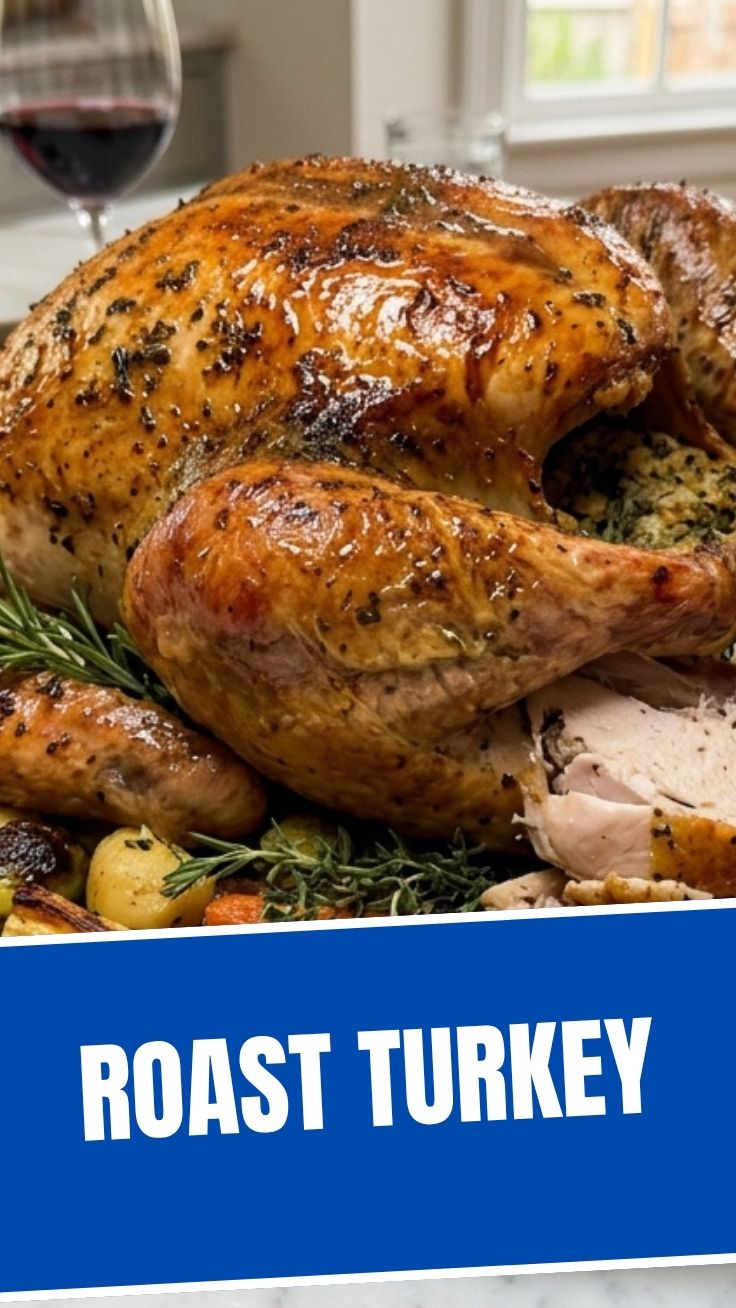
Have you ever wondered why some home cooks produce a turkey that’s golden, tender, and bursting with flavor, while others end up dry and bland? The secret lies not in luck, but in technique. Mastering a classic Roast Turkey at home is not only deeply satisfying—it saves money, fills your kitchen with incredible aromas, and lets you control every ingredient. A well-crafted roast turkey recipe can become your holiday centerpiece or a Sunday dinner triumph. Whether you’re a beginner or an experienced cook, this data-driven guide will help you achieve consistently excellent results.
—
Ingredients & Kitchen Tools
For the Turkey (12–14 lb / 5.5–6.5 kg):
– 1 whole turkey (thawed if frozen) – allow 1 lb per person.
– 4 tbsp unsalted butter (softened) – for richness and browning.
– 2 tbsp olive oil – helps crisp the skin.
– Salt & black pepper – kosher salt preferred for even seasoning.
– 1 tbsp fresh thyme leaves (or 1 tsp dried) – aromatic herbal note.
– 1 tbsp chopped fresh rosemary (or 1 tsp dried) – adds warmth.
– 1 lemon (halved) – for stuffing the cavity, keeps meat moist.
– 4 garlic cloves (smashed) – infuses flavor.
– 1 onion (quartered) – base for drippings and roasting pan.
Optional Substitutions:
– Butter → ghee or vegan butter for dairy-free.
– Fresh herbs → 2 tsp poultry seasoning.
– Lemon → orange for a sweeter twist.
Kitchen Tools:
– Large roasting pan with rack – lifts turkey for even heat.
– Meat thermometer – essential for doneness.
– Basting brush or silicone brush.
– Chef’s knife and cutting board.
– Kitchen twine – to truss legs.
– Aluminum foil – to tent if browning too fast.
– Carving knife and serving platter.
—
Prep Time & Cooking Schedule
– Prep Time: 20 minutes (plus at least 30 minutes for the turkey to come to room temperature).
– Cook Time: 2 hours 45 minutes to 3 hours 15 minutes (for a 12–14 lb turkey at 350°F/175°C).
– Resting Time: 30–45 minutes – crucial for redistributing juices.
– Total Time: About 4 hours.
Tip: Remove the turkey from the fridge 1 hour before roasting to allow even cooking. Use this time to prep your vegetables and season the bird inside and out.
—
Step-by-Step Instructions
1. Preheat & Prepare – Set oven to 350°F (175°C). Remove giblets and neck from the turkey cavity. Pat the skin completely dry with paper towels (dry skin = crispy skin). Season generously inside and out with salt and pepper.
2. Flavor the Cavity – Stuff the cavity with lemon halves, smashed garlic, quartered onion, and a few sprigs of fresh thyme and rosemary. This aromatic steam keeps the meat tender.
3. Butter and Truss – Mix softened butter with chopped thyme and rosemary. Rub this herbed butter under the breast skin (gently loosen the skin with your fingers) and all over the outside. Drizzle with olive oil. Tie the legs together with kitchen twine and tuck the wing tips under the bird.
4. Roast – Place turkey breast-side up on the rack in the roasting pan. Roast at 350°F. Baste every 30–40 minutes with pan juices. If the breast is browning too fast, tent loosely with foil after the first hour.
5. Check Temperature – Insert a meat thermometer into the thickest part of the thigh (avoid hitting bone). The turkey is done at 165°F (74°C). The breast should reach about 160°F before resting. A perfect Roast Turkey relies on precise temperature control. For the best roast turkey recipe, always verify with a thermometer rather than relying solely on timing.
6. Rest & Carve – Once out of the oven, transfer the turkey to a carving board, tent loosely with foil, and let rest for at least 30 minutes. This step locks in moisture and makes slicing easier. Carve against the grain for tender slices.
—
Nutritional Benefits & Advantages
Turkey is a lean protein powerhouse. A 3-ounce serving of skinless roasted breast provides about 25 g of protein with only 2 g of fat. It’s rich in B vitamins (B6, B12), niacin, selenium, and zinc—nutrients that support metabolism, immune function, and thyroid health. By roasting at home, you control sodium and avoid preservatives often found in pre-brined birds. The vegetables and herbs add antioxidants and fiber. This makes a home‑roasted turkey a heart‑healthy centerpiece for any meal.
—
Tips Variations & Cooking Advice
– Flavor Swaps: Replace thyme and rosemary with sage and marjoram for an earthy profile. Add a splash of white wine to the pan for deeper drippings.
– Dietary Adaptations: Use olive oil instead of butter for a dairy‑free version. The skin will still crisp beautifully.
– Cooking Methods: Try spatchcocking (flattening the bird) to reduce cooking time by 30–40%. Or use a roasting bag for extra moisture.
– Portion Changes: For a smaller bird (8–10 lb), reduce cooking time by 20–30 minutes. For larger (16–18 lb), increase by 45–60 minutes, always checking temperature.
– Gravy Bonus: After roasting, deglaze the pan with ¼ cup of broth and whisk in 2 tbsp of flour for a silky gravy.
—
Common Mistakes to Avoid
– Skipping the Dry‑Brine or Seasoning: Under‑seasoning leads to bland meat. Salt the turkey at least 24 hours ahead or rub butter generously just before roasting.
– Not Letting the Bird Rest: Cutting too early forces juices to run out, resulting in dry meat. Always rest 30+ minutes.
– Overcooking: The single biggest cause of dry turkey. Use a thermometer and pull it at 165°F (the temperature will rise a few degrees while resting).
– Opening the Oven Too Often: Every time you open the door, the oven temperature drops, increasing cooking time. Baste efficiently and quickly.
– Roasting Without a Rack: A rack lifts the turkey away from the pan, allowing hot air to circulate and crisp the bottom skin.
—
Storage & Meal Prep Tips
– Refrigeration: Let leftovers cool completely. Wrap tightly in foil or place in an airtight container. Store in the fridge for up to 4 days.
– Freezing: Slice or shred the meat, pack in freezer‑safe bags, remove air, and freeze for up to 3 months. Label with the date.
– Reheating: To avoid drying, reheat slices in a covered dish with a splash of broth at 300°F (150°C) for 10–15 minutes. For crispy skin, reheat in a lightly oiled skillet over medium heat.
– Meal Prep: Use leftover roasted turkey in sandwiches, salads, soups, or casseroles. The meat can be pre‑shredded and frozen in portion sizes.
—
Conclusion
A perfectly cooked Roast Turkey is a celebration of technique and patience. By controlling your heat, seasoning boldly, and respecting resting time, you can produce a show‑stopping bird every time. Whether you follow this exact roast turkey recipe or adapt it to your taste, the principles remain the same. I encourage you to try this method, share your results with friends, or explore more turkey‑inspired dishes on our site. Happy roasting!
—
FAQs
1. Should I brine my turkey?
Brining (wet or dry) is optional but recommended for extra moisture. Dry‑brining with salt for 24 hours works beautifully. If you skip brining, the herb‑butter method in this recipe will still produce juicy meat.
2. How do I prevent the turkey from drying out?
Use a meat thermometer, baste every 30–40 minutes, and never cook above 350°F. Resting after roasting is non‑negotiable—it allows juices to redistribute.
3. Can I use this recipe for a turkey breast only?
Yes. Reduce cooking time to about 15–18 minutes per pound. Follow the same seasoning and butter technique. Check internal temperature at the thickest part.
4. What if the skin gets too dark before the meat is cooked?
Tent the turkey loosely with aluminum foil. This slows browning while allowing the interior to continue cooking.
5. How can I make gravy without drippings?
Deglaze the roasting pan with broth or wine after removing the turkey, then whisk in a flour or cornstarch slurry. You can also use store‑bought broth enhanced with the turkey’s resting juices.
Quick way to grow the perfect Roast Turkey
Ingredients
Equipment
Method
- Preheat your oven to 375°F (190°C) and remove the turkey from its packaging, patting it dry with paper towels.
- In a small bowl, combine the softened butter, chopped rosemary, chopped thyme, minced garlic, salt, and black pepper to create an herb butter.
- Loosen the turkey skin over the breast and thighs, then spread about two-thirds of the herb butter evenly under the skin, and rub the remaining butter over the outside of the turkey.
- Place the quartered onions, chopped carrots, and chopped celery inside the turkey cavity and scatter any remaining vegetables around the bottom of a large roasting pan.
- Pour the chicken broth into the roasting pan and place the turkey on a roasting rack set inside the pan.
- Roast for 15 minutes, then reduce the oven temperature to 325°F (160°C) and continue roasting for 2.5 to 3 hours, or until a meat thermometer inserted into the thickest part of the thigh reads 165°F (74°C).
- Baste the turkey with pan juices every 30-45 minutes to keep it moist and golden brown.
- Once cooked, remove the turkey from the oven, tent it loosely with foil, and let it rest for at least 20-30 minutes before carving.
- Carve the turkey and serve immediately with your favorite side dishes.