The Ultimate Guide to Perfectly Tender Pot Roast: A Home Cook’s Best Friend
Have you ever pulled a fork-tender piece of meat from your kitchen appliance after hours of anticipation, only to find it disappointingly dry or tough? That moment of letdown is all too familiar for many home cooks. But here’s the truth: a flawlessly cooked Pot Roast isn’t reserved for professional chefs—it’s a skill you can master with the right technique and a trusted kitchen companion. Preparing this iconic comfort dish at home isn’t just about filling your kitchen with mouthwatering aromas; it’s about creating a budget-friendly, nutrient-rich meal that brings your family together. Whether you’re a busy parent or a weekend cooking enthusiast, this guide will transform your approach to one-pot cooking.
Ingredients & Kitchen Tools
Ingredients:
– 3–4 lbs chuck roast: The ideal cut for this dish; it has enough marbling to stay moist during long, low-temperature cooking.
– 2 tbsp olive oil: For searing; use avocado oil for a higher smoke point.
– 1 large onion, sliced: Adds sweetness as it caramelizes.
– 4 garlic cloves, minced: Fresh is best; avoid pre-minced for fuller flavor.
– 4 large carrots, cut into chunks: Hold their texture well; substitute with parsnips for a sweeter twist.
– 3 celery stalks, sliced: Provides aromatic depth.
– 2 cups beef broth: Low-sodium recommended to control salt levels.
– 1 cup dry red wine (optional): Enhances richness; substitute with additional broth.
– 2 tbsp tomato paste: Adds umami depth.
– 2 sprigs fresh rosemary and 3 sprigs fresh thyme: Dried herbs work, but use 1 tsp each.
– 2 bay leaves: Remove before serving.
– Salt and black pepper to taste
Kitchen Tools & Utensils:
– Heavy-bottomed skillet or Dutch oven: Essential for proper searing.
– Sharp chef’s knife for even vegetable cuts.
– Tongs for handling the roast safely.
– Liquid measuring cup for precise broth measurements.
– Meat thermometer (optional but recommended for perfect doneness).
– Large cutting board for resting the meat.
Prep Time & Cooking Schedule
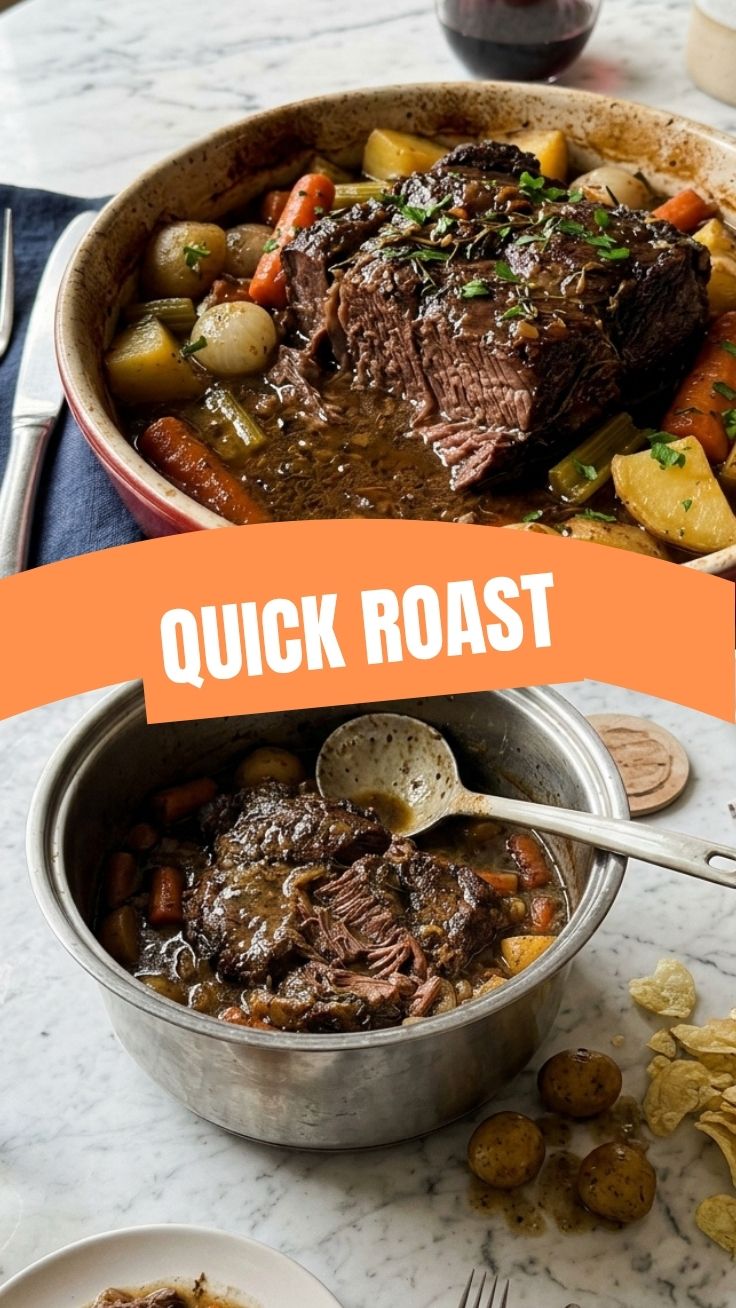
Prep Time: 20–25 minutes
Cook Time: 6–8 hours on low (or 4–5 hours on high)
Resting Time: 10–15 minutes before slicing
Planning Tip: Start cooking by mid-morning if serving for dinner. For example, if you begin prep at 10:00 AM and use the low setting, your dish will be ready by 6:00 PM. This timeline gives you the flexibility to run errands or prepare side dishes while your Slow Cooker works its magic.
Step-by-Step Instructions
1. Pat the chuck roast completely dry with paper towels. Moisture is the enemy of a good sear—this step is non-negotiable. Season generously with salt and pepper on all sides.
2. Heat olive oil in a heavy skillet over medium-high heat until it shimmers. Sear the roast for 3–4 minutes per side until a deep brown crust forms. Don’t rush this; the Maillard reaction creates layers of flavor that simmering alone cannot achieve.
3. Transfer the seared roast to your kitchen appliance (like a Slow Cooker or Dutch oven). In the same skillet, sauté onions and garlic for 2 minutes, scraping up the brown bits (fond) with a wooden spoon.
4. Add tomato paste and cook for 1 minute, then pour in beef broth and wine (if using). Bring to a simmer, then pour the liquid over the roast. Add carrots, celery, rosemary, thyme, and bay leaves.
5. Cover and cook on low for 6–8 hours (or high for 4–5 hours). Avoid lifting the lid frequently—each time releases heat and extends cooking time. The meat is ready when it shreds easily with a fork. After searing, the Pot Roast will become meltingly tender as the connective tissue breaks down slowly.
6. Remove the roast and let it rest tented with foil for 10–15 minutes. Meanwhile, strain the cooking liquid and skim off excess fat. You can thicken it with a cornstarch slurry (1 tbsp cornstarch + 2 tbsp cold water stirred in) if you prefer a thicker gravy.
Nutritional Benefits & Advantages
This dish is a hidden gem when it comes to nutrition. Chuck roast is an excellent source of high-quality protein (about 40g per serving) and essential minerals like iron and zinc, which support immune function and oxygen transport. The slow cooking process breaks down collagen into gelatin, which is beneficial for joint health and skin elasticity. Additionally, the carrots and celery provide vitamins A, C, and fiber, making this a balanced one-pot meal. Compared to fried or processed dishes, this recipe is naturally low in added sugars and free from preservatives when made from scratch.
Tips, Variations & Cooking Advice
Flavor Variations:
– Italian style: Swap rosemary for oregano and add a parmesan rind to the broth.
– Spicy kick: Add 1–2 chipotle peppers in adobo sauce to the liquid.
– Asian twist: Use soy sauce, ginger, and star anise instead of wine and herbs.
Alternative Cooking Methods:
– Dutch oven: Follow the same steps but cook in a 325°F oven for 3–4 hours.
– Instant Pot: Use the “meat/stew” setting for 60 minutes with natural pressure release.
Dietary Adaptations:
– Gluten-free: Use cornstarch or arrowroot instead of flour for thickening.
– Dairy-free: This recipe is naturally dairy-free; no adjustments needed.
Common Mistakes to Avoid
– Skipping the sear: Many home cooks skip browning to save time, but this robs the dish of deep, savory flavor. The fond (browned bits) is liquid gold.
– Adding too much liquid: The meat releases its own juices during cooking. Start with just enough broth to cover the bottom third of the roast.
– Cutting the meat too soon: Resting is crucial—cutting immediately causes juices to run out, leaving dry meat.
– Using lean cuts: Avoid rounds or sirloin; they lack the fat and collagen needed for tenderness.
– Overcrowding the pan during searing: Work in batches if needed; crowding steams instead of sears.
Storage & Meal Prep Tips
Refrigeration: Store leftover meat and vegetables in an airtight container with some cooking liquid for up to 4 days. The flavor often improves overnight.
Freezing: The dish freezes beautifully for up to 3 months. Cool completely, then transfer to freezer-safe bags or containers. Squeeze out excess air to prevent freezer burn.
Reheating: For best texture, reheat slowly in a covered skillet or oven at 325°F with a splash of broth. Avoid the microwave, which can make the meat rubbery. Alternatively, use the “low” setting on your Slow Cooker to gently warm leftovers.
Meal Prep: Double the recipe and freeze half in portion-sized containers for quick weeknight dinners.
Conclusion
Mastering this classic comfort dish is about patience, proper technique, and trusting your equipment. By searing the meat faithfully, respecting the low-and-slow cooking method, and allowing adequate resting time, you’ll consistently achieve tender, flavorful results. Remember, Pot Roast is more than just dinner—it’s a celebration of simple ingredients transformed through mindful cooking. Pair it with creamy mashed potatoes or crusty bread to soak up every drop of gravy. We’d love to hear how yours turns out! Share your creations and tag us in your culinary adventures. Don’t forget—your Slow Cooker is the unsung hero that makes this magic happen with minimal hands-on effort.
FAQs
1. Can I use a different cut of meat?
Yes. While chuck roast is ideal, brisket or bottom round work well. Brisket has more fat and may be slightly richer, while bottom round is leaner and requires careful monitoring to avoid dryness.
2. Why is my pot roast tough?
This usually means it hasn’t cooked long enough. The collagen needs time to break down—typically 6–8 hours on low. If you’re short on time, cut the roast into smaller pieces to accelerate cooking.
3. Can I skip the wine?
Absolutely. Replace it with an equal amount of beef broth or add a splash of balsamic vinegar for acidity. The dish will still be deeply flavorful.
4. How do I fix a bland pot roast?
Season early and taste the broth before cooking. If it tastes flat after cooking, stir in a teaspoon of Worcestershire sauce, a splash of soy sauce, or a pinch of smoked paprika to boost umami.
5. Can I add potatoes to the slow cooker?
Yes, but add them during the last 2 hours of cooking. Potatoes can become mushy if cooked the full 8 hours. Choose waxy varieties like Yukon Gold for better texture.
Pot Roast
Ingredients
Equipment
Method
- Season the beef chuck roast generously with salt, black pepper, garlic powder, and onion powder.
- Sear the seasoned roast in a large pot or Dutch oven over medium-high heat until browned on all sides, then remove it and set aside.
- Add the chopped onions and carrots to the pot and sauté until softened, typically for 5-7 minutes. Once softened, return the seared roast to the pot.
- Pour in the beef broth, ensuring the liquid comes about halfway up the sides of the roast. Bring the broth to a simmer, then reduce heat to low, cover the pot, and cook for 2 hours.
- Add the quartered potatoes to the pot with the roast and continue to cook for another 1 hour, or until the beef and vegetables are fork-tender.
- Carefully remove the pot roast and vegetables from the pot and transfer them to a large serving platter. Skim any excess fat from the remaining liquid in the pot, then ladle the flavorful broth over the meat and vegetables.