Why This Homemade Falafel Recipe Will Change Your Lunch Game Forever
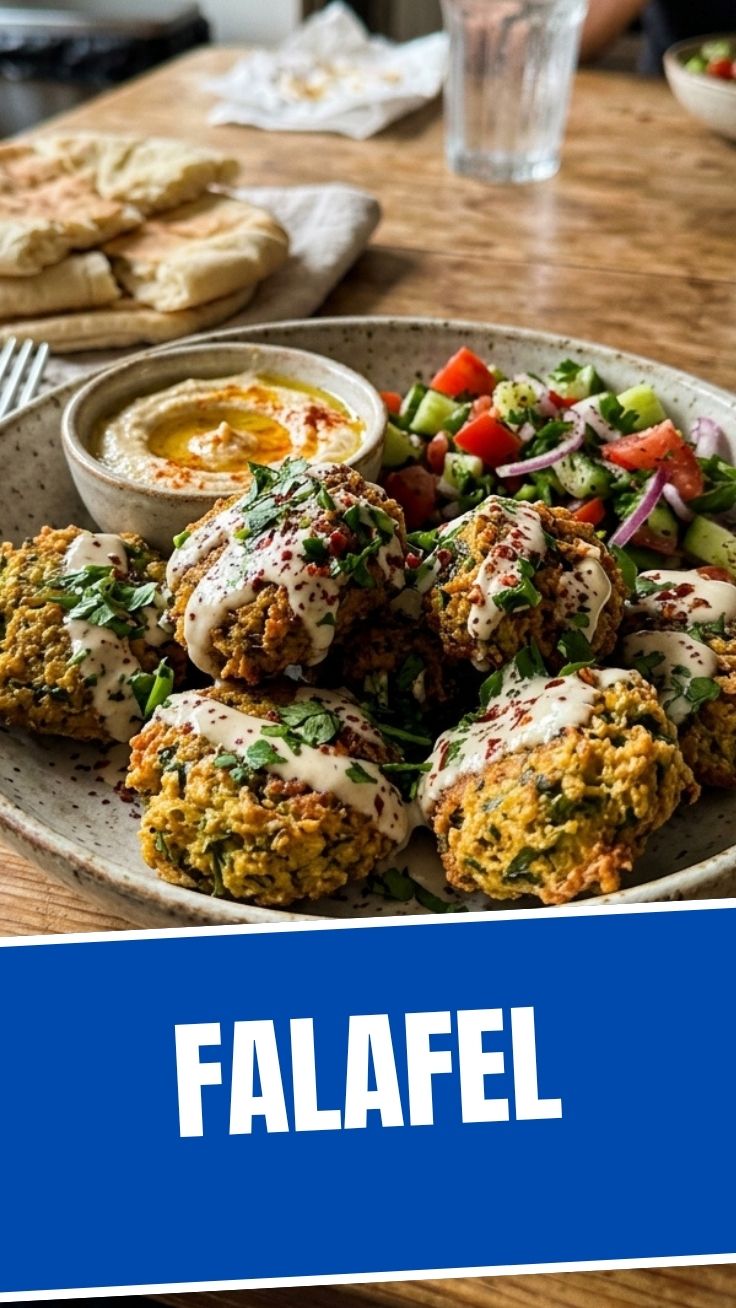
Have you ever bitten into a dry, crumbly falafel that crumbles apart before you can even dip it in tahini? If so, you know the disappointment of store-bought or poorly made versions. The truth is, crafting the perfect Falafel (Homemade) isn’t just about mixing ingredients—it’s about understanding the science behind the sphere. When you make it from scratch, you control the texture, the flavor, and the freshness. Plus, it’s surprisingly simple once you know the secrets. This guide will walk you through creating restaurant-quality falafel right in your kitchen, using the humble Chickpea as your star ingredient.
—
Ingredients & Kitchen Tools
For the Falafel
– Dried Chickpeas (1 cup) – Do not use canned! Dried chickpeas are essential for the right texture; canned will make your falafel mushy.
– Fresh Parsley (½ cup, packed) – Adds color and a bright, herbaceous note.
– Fresh Cilantro (¼ cup, packed) – Optional but recommended for depth.
– Yellow Onion (½ medium) – Finely chopped; gives moisture without making the mixture wet.
– Garlic Cloves (3–4) – For that pungent, savory kick.
– Cumin (1 tsp) – The warm, earthy backbone of falafel.
– Coriander (1 tsp) – Adds a citrusy, floral undertone.
– Salt (1 tsp) & Black Pepper (½ tsp) – Balance and enhance.
– Baking Powder (1 tsp) – The secret to fluffy, airy falafel.
– Sesame Seeds (2 tbsp) – For coating and crunch.
– Olive Oil (for frying or brushing) – Use high-smoke-point oil if deep-frying.
Kitchen Tools
– Food Processor – Essential for grinding chickpeas without turning them into paste.
– Large Mixing Bowl – For combining ingredients.
– Skillet or Deep Fryer – For cooking.
– Slotted Spoon – For retrieving falafel from oil.
– Baking Sheet & Parchment Paper – If baking.
– Falafel Scoop or Small Ice Cream Scoop – For uniform balls.
Optional Substitutions
– Gluten-free: Replace breadcrumbs (if using) with almond flour.
– Dairy-free: The recipe is naturally dairy-free.
– Oil-free: Bake instead of fry; skip the oil brushing and use a silicone mat.
—
Prep Time & Cooking Schedule
– Soaking Time: 8–12 hours (overnight) – This is non-negotiable. Soaking softens the chickpeas enough to grind but not cook them.
– Prep Time: 15 minutes (grinding, mixing, shaping).
– Resting Time: 30 minutes (chilling the mixture in the fridge).
– Cook Time: 4–6 minutes per batch (deep-frying) or 20–25 minutes (baking).
Plan ahead: Soak your chickpeas the night before. This schedule gives you perfectly textured falafel without last-minute stress.
—
Step-by-Step Instructions
1. Soak the Chickpeas: Place dried chickpeas in a large bowl, cover with 3 inches of water, and let sit overnight. They should double in size.
2. Drain and Dry: After soaking, drain and pat the chickpeas dry with a clean towel. Moisture is the enemy of crispiness.
3. Process the Base: In a food processor, combine chickpeas, parsley, cilantro, onion, garlic, cumin, coriander, salt, and pepper. Pulse in short bursts until the mixture resembles coarse sand—do not puree.
4. Add the Leavener: Transfer the mixture to a bowl and fold in the baking powder and sesame seeds. Mix gently.
5. Chill the Mixture: Cover and refrigerate for 30 minutes. This firms up the mixture, making it easier to shape.
6. Shape the Falafel: Using a falafel scoop or your hands, form 1-inch balls. Slightly flatten them if baking for even cooking.
7. Cook to Perfection:
– For Frying: Heat 2 inches of oil to 350°F (175°C). Fry in batches for 4–6 minutes, turning halfway. Drain on paper towels.
– For Baking: Preheat oven to 375°F (190°C). Place falafel on a parchment-lined baking sheet, brush with oil, and bake for 20–25 minutes, flipping once.
8. Season While Hot: Sprinkle with a pinch of salt immediately after cooking.
💡 Pro Tip: If the mixture feels too wet, add a tablespoon of chickpea flour (or all-purpose) to absorb excess moisture. If too dry, add a teaspoon of lemon juice. Achieving the perfect Falafel (Homemade) is all about this delicate balance. The Chickpea should remain distinct in texture, not turn into hummus.
—
Nutritional Benefits & Advantages
This recipe is a powerhouse of plant-based nutrition. A serving of 4–5 falafels provides:
– Protein: 10–12 grams (from chickpeas).
– Fiber: 8–10 grams (supports digestive health).
– Iron: 15% of the daily value (rich in non-heme iron, especially when paired with vitamin C from the herbs).
– Antioxidants: From parsley, cilantro, and spices (cumin and coriander are anti-inflammatory).
– Low Glycemic Index: Chickpeas have a GI of 28–35, making them excellent for blood sugar management.
Compared to meat-based patties, falafel is lower in saturated fat and cholesterol-free. When baked, it becomes a lean, high-fiber meal perfect for vegan, vegetarian, or flexitarian diets.
—
Tips Variations & Cooking Advice
– Flavor Variations:
– Spicy: Add ½ tsp cayenne or 1 chopped jalapeño.
– Herb-forward: Double the parsley and cilantro.
– Smoky: Add ½ tsp smoked paprika.
– Cooking Methods:
– Air Fryer: Cook at 375°F for 12–15 minutes, shaking halfway.
– Pan-Fry: Shallow fry in ½ inch oil for 3–4 minutes per side.
– Serving Ideas:
– Stuff into pita with pickled turnips and tahini sauce.
– Serve over a bed of quinoa or arugula with lemon-tahini dressing.
– Crumble over salads for a protein boost.
– Gluten-Free Adaptation: Use chickpea flour instead of breadcrumbs; the recipe is already naturally gluten-free if you skip optional flour additions.
—
Common Mistakes to Avoid
| Mistake | Solution |
|———|———-|
| Using canned chickpeas | Canned chickpeas are already cooked and too wet; they cause falafel to fall apart. Stick with dried. |
| Over-processing the mixture | You want a coarse, grainy texture, not a smooth paste. Pulse—don’t blend. |
| Skipping the chill step | A warm mixture is sticky and impossible to shape. Always rest it in the fridge. |
| Frying at the wrong temperature | Oil too cold = greasy falafel; too hot = burnt outside, raw inside. Use a thermometer. |
| Overcrowding the pan | Crowding lowers oil temperature. Fry in small batches for even cooking. |
—
Storage & Meal Prep Tips
– Refrigeration: Store cooked falafel in an airtight container for up to 5 days. Place a paper towel in the container to absorb moisture.
– Freezing (Uncooked): Shape falafel balls, place on a baking sheet lined with parchment, freeze until solid (2 hours), then transfer to a freezer bag. Freeze for up to 3 months. Cook directly from frozen—add 2–3 minutes to cooking time.
– Freezing (Cooked): Let cool completely, then freeze in a single layer. Reheat in a 375°F oven or air fryer for 5–7 minutes.
– Reheating: Avoid microwaving—it makes falafel soggy. Instead, reheat in an oven, toaster oven, or air fryer at 350°F for 5 minutes.
—
Conclusion
Making Falafel (Homemade) from scratch transforms a simple street food into a weekly staple that’s healthier, tastier, and more satisfying than anything from a box. By mastering the technique—starting with dried Chickpea and treating it with respect—you unlock a world of texture and flavor that pre-made versions can never replicate. This recipe is your gateway to meal prep success, plant-based protein, and the praise of everyone who tastes it.
Ready to give it a try? Whip up a batch this weekend, stuff them into warm pita with crisp veggies, and don’t forget to drizzle with tahini. Share your results in the comments—I’d love to see your golden, crunchy masterpieces!
—
FAQs
Q: Can I use canned chickpeas if I’m short on time?
A: Technically yes, but the texture will be softer and prone to falling apart. If you must, drain and pat them extremely dry, then add 2–3 tablespoons of chickpea flour to absorb excess moisture.
Q: How do I prevent my falafel from falling apart while frying?
A: Ensure the mixture is well-chilled, don’t skip the baking powder, and let the oil reach a stable 350°F before adding any falafel. Also, handle gently when lowering into the oil.
Q: Can I bake instead of fry?
A: Absolutely! Baking produces a slightly firmer, less oily falafel. Brush them generously with oil before baking to encourage browning.
Q: How can I make falafel without a food processor?
A: Use a potato masher or the bottom of a heavy pan to crush the soaked chickpeas. It requires elbow grease, but the texture will be more rustic and charred.
Q: Why did my falafel turn out green inside?
A: That’s totally normal—and delicious! The chlorophyll from the parsley and cilantro gives it that vibrant interior hue. It means you used enough fresh herbs.
Falafel (Homemade)
Ingredients
Equipment
Method
- In a food processor, combine chickpeas, parsley, cilantro, onion, and garlic; pulse until coarsely chopped but not pureed.
- Transfer the mixture to a bowl and stir in flour, baking powder, cumin, coriander, salt, and pepper until well combined.
- Heat vegetable oil in a large skillet over medium-high heat. Form the falafel mixture into small patties or balls.
- Carefully place the falafel in the hot oil and fry for 2-3 minutes per side, until golden brown and crispy.
- Remove falafel with a slotted spoon and place on a paper towel-lined plate to drain excess oil. Serve immediately with your favorite sauces or in a pita.