The Ultimate Falafel Bowl: A Fresh, Flavor-Packed Mediterranean Meal You Can Make at Home
Have you ever craved a meal that’s both nourishing and bursting with vibrant flavors, but thought it was too complicated to recreate at home? The truth is, crafting a restaurant-quality Falafel Bowl is easier than you think—and it saves you money while giving you full control over fresh ingredients. Whether you’re exploring Mediterranean Food for the first time or looking to perfect your weekly meal prep, this bowl delivers a satisfying balance of crispy chickpea patties, creamy tahini, and crunchy vegetables. By preparing it yourself, you avoid processed additives and tailor every layer to your taste. Let’s dive into a recipe that turns simple pantry staples into a colorful, nutrient-dense feast.
Ingredients & Kitchen Tools
For the Falafel (makes 12-14 patties):
– 1 can (15 oz) chickpeas, drained and rinsed – The base; use dried chickpeas soaked overnight for a firmer texture.
– 1/2 cup fresh parsley, chopped – Adds a bright, herbaceous note.
– 1/4 cup fresh cilantro, chopped – Optional but recommended for depth.
– 1 small onion, roughly chopped – Provides moisture and sweetness.
– 3 cloves garlic, minced – Essential for that classic savory punch.
– 1 tsp ground cumin – Warm, earthy spice that defines falafel.
– 1 tsp ground coriander – Citrusy undertone that complements cumin.
– 1/2 tsp salt – Enhances all flavors.
– 1/4 tsp black pepper – Adds mild heat.
– 1/2 tsp baking powder – Helps achieve a fluffy interior.
– 2 tbsp chickpea flour (or all-purpose flour) – Binds the mixture without making it dense.
– Oil for frying – Use avocado or vegetable oil with a high smoke point.
For the Bowl Base:
– 2 cups cooked quinoa or brown rice – A protein-rich, fluffy grain.
– 1 cup cherry tomatoes, halved – Juicy bursts of sweetness.
– 1 cucumber, diced – Cool, crisp contrast.
– 1/2 red onion, thinly sliced – Sharp bite that mellows when marinated.
– 1 cup mixed greens or romaine – Adds freshness and crunch.
– 1/4 cup pickled turnips or radishes – Tangy pop (optional but traditional).
For the Lemon Tahini Dressing:
– 1/4 cup tahini – Sesame paste that creates a creamy, nutty sauce.
– 2 tbsp lemon juice – Bright acidity to balance richness.
– 1 clove garlic, minced – For savory depth.
– 2-3 tbsp cold water – Adjust for desired consistency.
– Salt to taste
Kitchen Tools:
– Food processor – For a consistent falafel mixture.
– Large skillet or deep fryer – For even cooking.
– Mixing bowls – At least two for separate components.
– Baking sheet (if baking) – For a lighter version.
– Slotted spoon – For removing falafel from oil.
– Measuring spoons and cups – Precision matters.
Optional Substitutions:
– Gluten-free: Use certified gluten-free oats or almond flour instead of chickpea flour.
– Oil-free: Bake falafel at 375°F for 20 minutes, flipping halfway.
– Low-carb: Swap quinoa for cauliflower rice.
Prep Time & Cooking Schedule
– Prep Time: 20 minutes – Chopping vegetables, making dressing, and forming falafel.
– Cook Time: 15 minutes – Frying or baking falafel while grains cook.
– Resting Time: 10 minutes – Letting falafel set after cooking improves texture.
– Total Time: 45 minutes – Perfect for a weeknight dinner or Sunday meal prep.
Planning Tip: Cook quinoa or rice ahead of time and store in the fridge. The falafel mixture can also be prepared a day in advance—just refrigerate and shape when ready.
Step-by-Step Instructions
1. Prepare the Falafel Mixture: In a food processor, combine chickpeas, parsley, cilantro, onion, garlic, cumin, coriander, salt, and pepper. Pulse until a coarse paste forms—avoid over-processing to keep some texture. Transfer to a bowl, stir in baking powder and chickpea flour, then refrigerate for 15 minutes. This firms up the mixture, making it easier to shape.
2. Form the Falafel: Using wet hands, roll the mixture into 1.5-inch balls or patties. Tip: If the mixture feels sticky, lightly oil your palms.
3. Cook the Falafel: Heat 1/2 inch of oil in a skillet over medium heat (350°F). Fry falafel in batches for 3-4 minutes per side until deep golden brown. Drain on paper towels. For a healthier option, bake at 375°F for 20 minutes, flipping once.
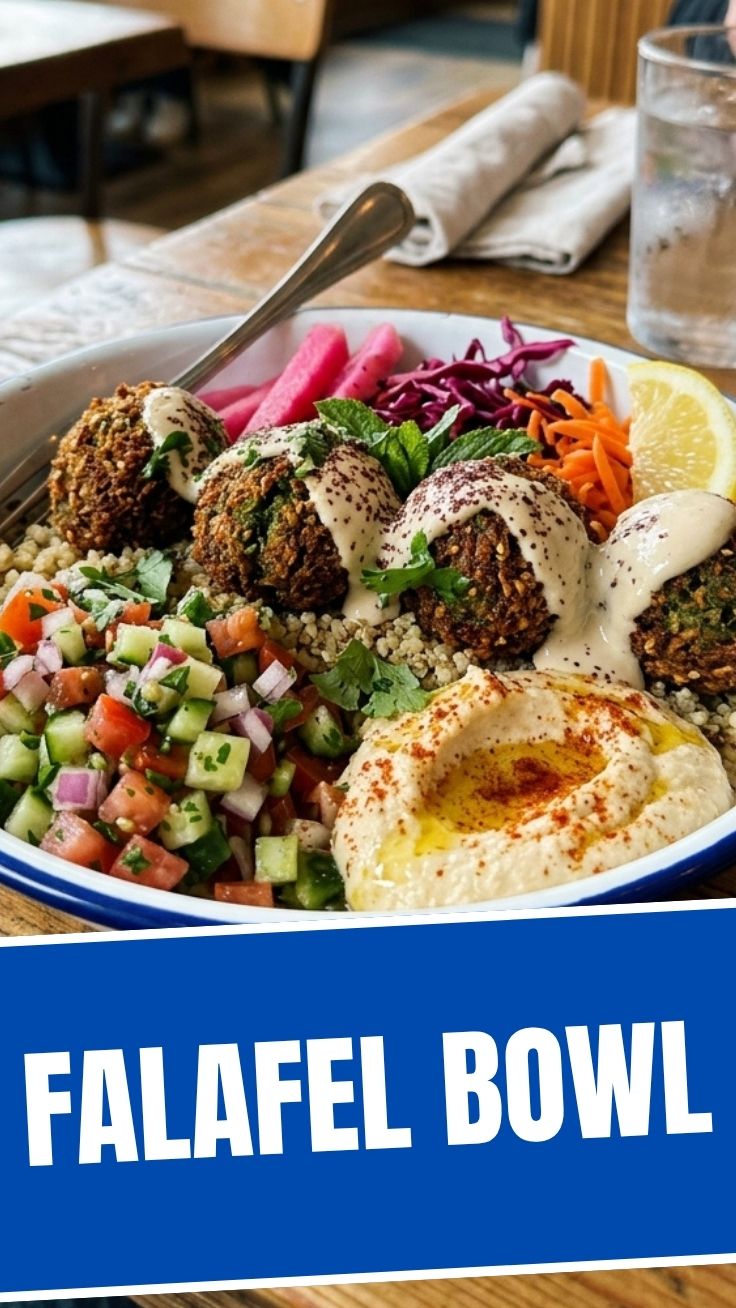
4. Assemble the Bowl: Divide cooked quinoa or rice among bowls. Top with greens, tomatoes, cucumber, red onion, and pickled turnips. Arrange 4-5 falafel on each bowl.
5. Make the Dressing: Whisk tahini, lemon juice, garlic, and salt. Slowly add water until smooth and drizzle over the bowl. Adjust water for a thinner or thicker sauce.
6. Serve Immediately: Garnish with extra parsley or a sprinkle of sumac for a tangy finish. This bowl is best enjoyed fresh, but components can be prepped ahead.
Pro Tip: For extra crispy falafel, ensure the oil is hot enough—test with a small piece of mixture; it should sizzle immediately. This step is crucial when preparing Falafel Bowl at home, as it prevents greasy patties. Pairing it with fresh vegetables and a tangy dressing is a hallmark of Mediterranean Food, where balance of textures and flavors is key.
Nutritional Benefits & Advantages
This bowl is a powerhouse of plant-based nutrition. Chickpeas provide 15 grams of protein and 12 grams of fiber per cup, supporting digestion and satiety. Quinoa adds complete protein with all nine essential amino acids, while tahini offers healthy fats and calcium. The rainbow of vegetables delivers vitamins A, C, and K, plus antioxidants that reduce inflammation. Compared to takeout, this homemade version cuts sodium by up to 60% and eliminates preservatives. It’s naturally vegan, dairy-free, and can be made gluten-free with simple swaps.
Tips Variations & Cooking Advice
– Flavor Variations: Add a pinch of cayenne or smoked paprika to the falafel for heat. Swap lemon tahini for a yogurt-dill sauce (use plant-based yogurt for vegan).
– Ingredient Swaps: Use lentils instead of chickpeas for a different texture. Replace quinoa with freekeh or couscous.
– Cooking Methods: Air-fry falafel at 375°F for 12 minutes for a crispy, oil-free result.
– Portion Changes: Double the recipe for meal prep—falafel freezes well uncooked or cooked.
– Dietary Adaptations: For a low-FODMAP version, omit garlic and onion, and use garlic-infused oil instead.
Common Mistakes to Avoid
– Over-processing the falafel mixture: This creates a dense, gummy texture. Pulse until just combined.
– Skipping the resting time: Chilling the mixture prevents falafel from falling apart during frying.
– Using cold oil: Oil that isn’t hot enough leads to greasy, soggy falafel. Always preheat to 350°F.
– Overcrowding the pan: Fry in batches to maintain oil temperature and ensure even browning.
– Dressing too thick: Add water gradually—a runny dressing coats ingredients better.
Storage & Meal Prep Tips
– Refrigeration: Store cooked falafel and dressing separately in airtight containers for up to 4 days. Keep vegetables and greens separate to prevent sogginess.
– Freezing: Uncooked falafel patties freeze well on a baking sheet, then transfer to a bag for up to 3 months. Cook directly from frozen, adding 2-3 minutes to cooking time.
– Reheating: Reheat falafel in a 350°F oven for 10 minutes or air-fry for 5 minutes to restore crispiness. Avoid microwaving, which makes them rubbery.
– Meal Prep: Cook grains and chop vegetables up to 3 days ahead. Assemble bowls just before serving for maximum freshness.
Conclusion
This Falafel Bowl is more than a meal—it’s a celebration of fresh, wholesome ingredients that come together in under an hour. By mastering this recipe, you unlock the secrets of Mediterranean Food at home, from the perfectly spiced falafel to the creamy tahini dressing. Whether you’re feeding a family or prepping for busy weekdays, this bowl offers endless customization and nutritional rewards. Try it tonight, and don’t forget to share your creation—tag us or leave a comment with your favorite variation!
FAQs
1. Can I use canned chickpeas for falafel?
Yes, but drain and rinse them well. Pat dry with a paper towel to remove excess moisture, which helps the falafel hold together.
2. How do I make falafel without a food processor?
Mash chickpeas with a fork or potato masher, then finely chop herbs and onion by hand. Mix thoroughly and proceed as directed.
3. Why did my falafel fall apart in the oil?
The mixture was likely too wet or not chilled enough. Add an extra tablespoon of chickpea flour and refrigerate for 20 minutes before frying.
4. Can I make the dressing ahead of time?
Yes, store it in the fridge for up to 5 days. It will thicken; whisk in a teaspoon of water before using.
5. What’s the best grain for a low-carb bowl?
Cauliflower rice works well, or try a bed of shredded lettuce for a lighter base.
Falafel Bowl
Ingredients
Equipment
Method
- Combine chickpeas, parsley, cilantro, garlic, cumin, and flour in a food processor, then pulse until mostly smooth but still slightly chunky.
- Form the mixture into small patties or balls and refrigerate for about 15 minutes to help them hold their shape.
- Heat a generous amount of vegetable oil in a pan over medium-high heat.
- Carefully place the falafel into the hot oil and fry for 3-4 minutes per side, or until golden brown and cooked through.
- In a small bowl, whisk together tahini, lemon juice, water, minced garlic (if using), and salt until smooth and creamy; add more water if needed for desired consistency.
- Divide the cooked quinoa or rice among serving bowls.
- Arrange the fried falafel, cherry tomatoes, diced cucumber, and sliced red onion over the quinoa or rice.
- Drizzle generously with the prepared tahini sauce and serve immediately.